












Asbestos removal requires rigorous procedures and robust controls
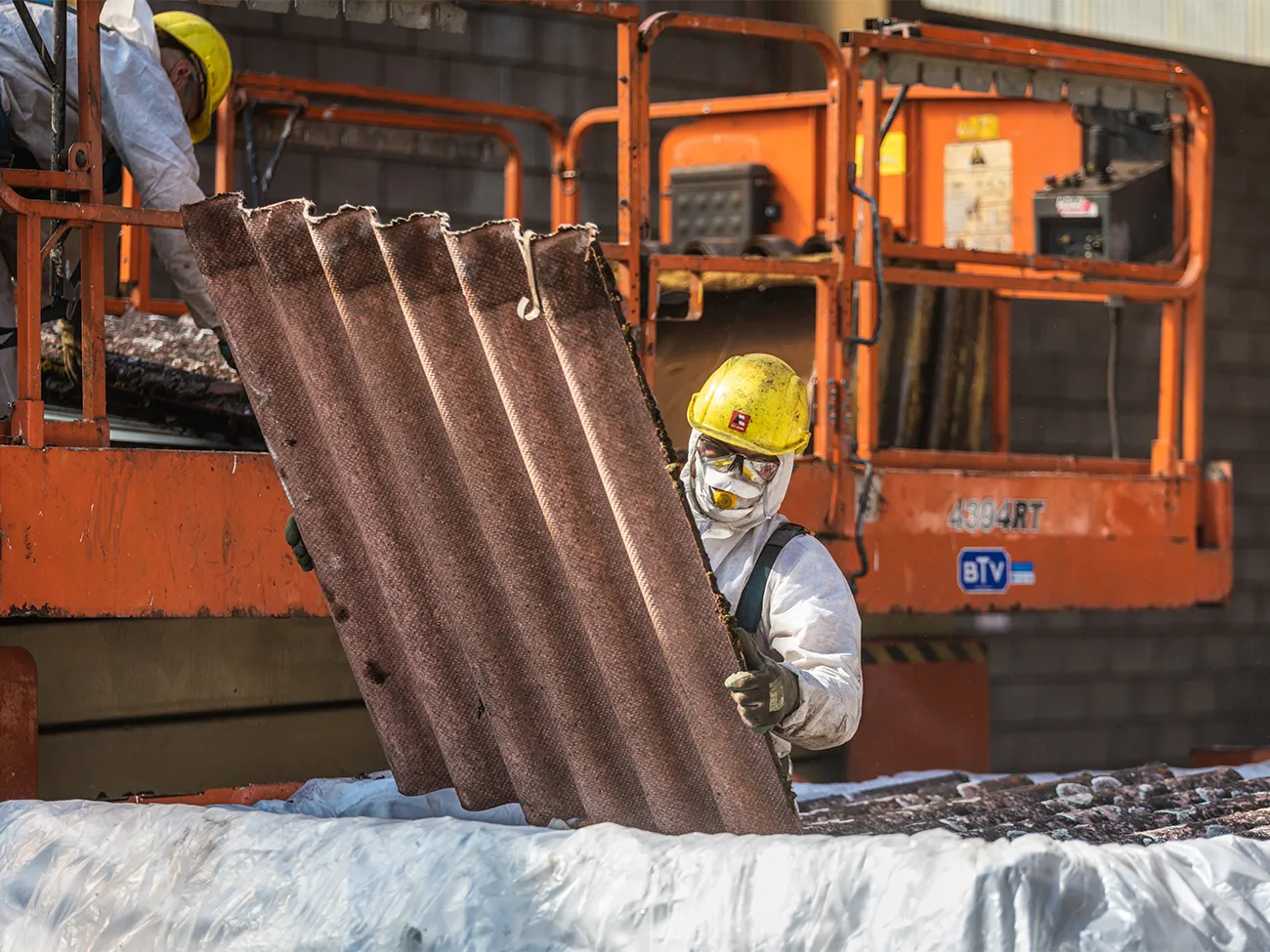
The harm asbestos can cause to health means that its removal must be given due attention. Knowledge and expertise, underpinned by the right procedures, are therefore a conditio sine qua non for safely removing asbestos from buildings. An interview with Marc Jonckheere, managing director of Aclagro, part of the Square Group.

Aclagro. What began in 1970 as a one-man earthworks business has grown into a class 8 contractor that helps clients prepare property projects for construction from start to finish. Jonckheere: “We want to offer our clients a complete package, from dismantling, asbestos removal and selective or total demolition to soil remediation and, subsequently, earthworks and landscaping. Aclagro also has its own services and expertise in water treatment, recycling demolition rubble and cleaning contaminated soil. Our 320 employees do everything they can to rid our clients’ properties of hazardous substances. Whether the project is difficult or straightforward, large or small, delivering peace of mind in safe conditions is always central to what we do.” As a result, Aclagro also frequently encounters asbestos. “It is an issue in which we have specialised, first and foremost to ensure our employees can always work safely and that hazardous substances are removed in accordance with the highest standards. The potential impact on health is extremely serious, too often underestimated, and may not become apparent for years.” Aclagro’s asbestos division employs around sixty people. The company has an extensive list of references from across the country.
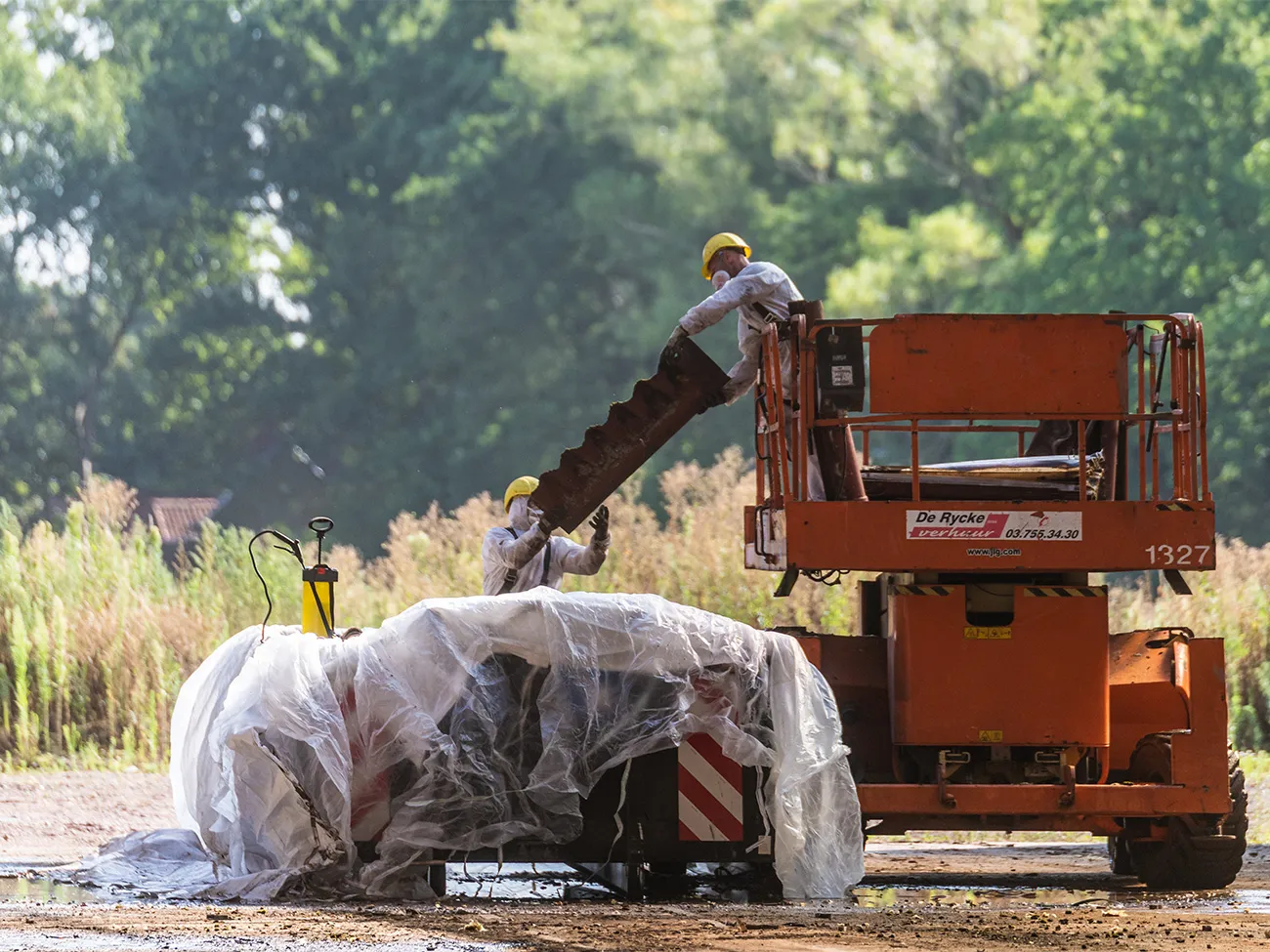
Asbestos removal a priority
The Flemish government has made making the environment asbestos-free by 2040 a top priority and expects this to be done by qualified professionals. Aclagro strongly welcomes this development. “An important step was making a demolition follow-up plan mandatory as part of the building permit application, for all non-residential buildings with a volume greater than 1,000 m³ and residential buildings with a volume greater than 5,000 m³. This plan must always include an asbestos inventory. The requirement has been in force for around four years. It is crucial to know what may be present in a building so that risks to our own employees, the owner and anyone working nearby can be reduced. With the government stating its ambition and, for example, entering into framework agreements with OVAM to work towards an asbestos-free Flanders, we have seen a clear acceleration on the ground. There is an action plan and a deadline for tackling the asbestos problem in a structural way.” Raising awareness will play an important role in this. “The average person is not sufficiently aware of the scale of the health risks posed by asbestos. In that respect, it would be a good idea to require people to use a licensed contractor in every case, including private individuals. We find that licensed companies are qualified to carry out the work properly. Lowering the 5,000 m³ threshold for residential buildings would also be another step in the right direction,” says Jonckheere.
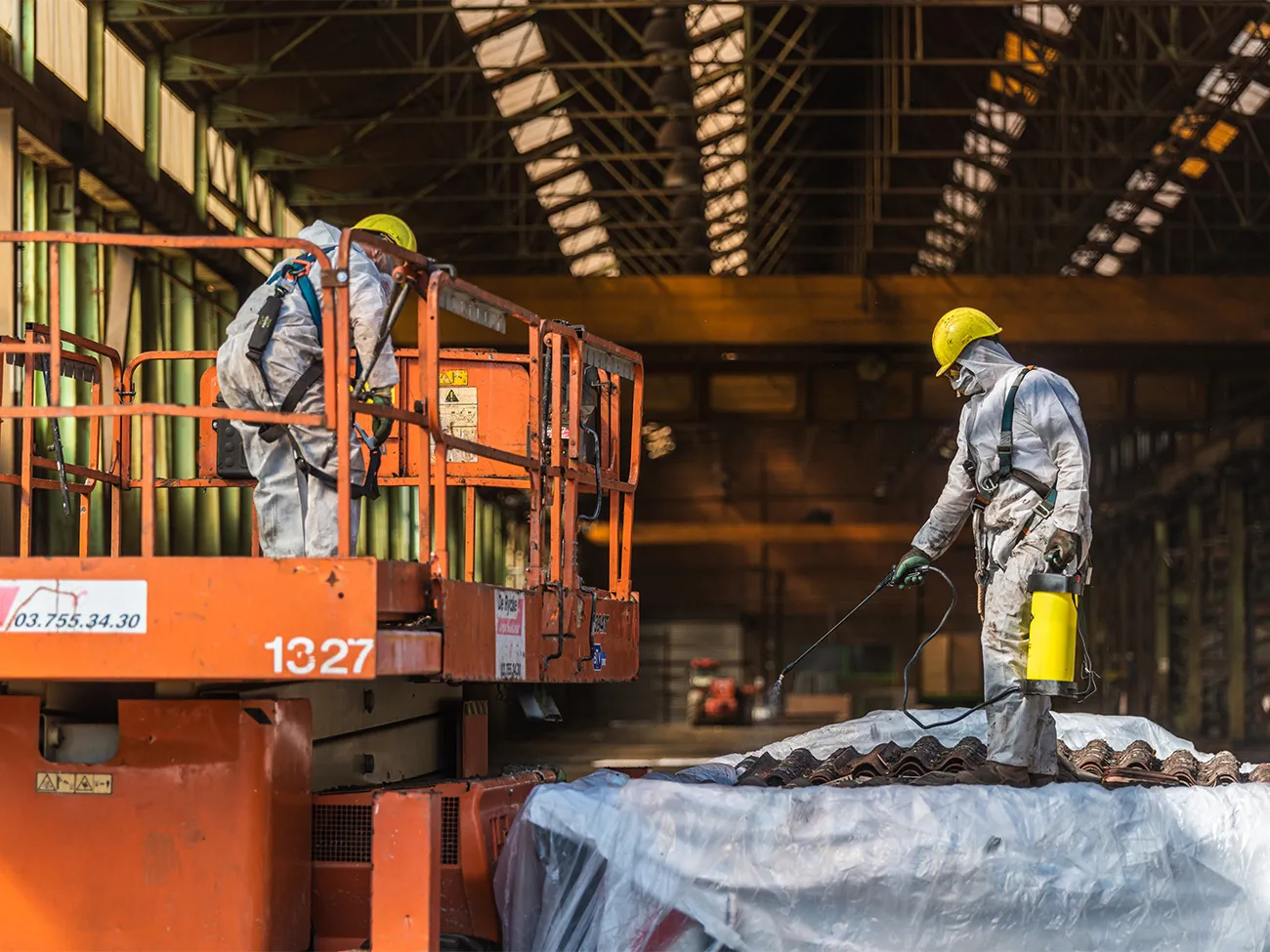
Work carried out to the highest standards
Jonckheere also points to several other challenges on the ground. “We find that the role of demolition and asbestos removal is still underestimated in construction projects, both in terms of time and cost. After all, it is less tangible than the new development that will eventually take its place. Owners need to understand how important it is to have this work carried out properly. So I would strongly urge them to call on a demolition expert, not only for the mandatory inventory but also for proper supervision during the work. Asbestos removal is not cheap. Order, cleanliness and discipline are key. You need well-balanced procedures to manage every process and step properly and keep them under constant control. That inevitably comes at a cost, but as far as we are concerned, there must be no compromise on safety and health. Asbestos removal is still largely manual work, after all. Expertise is therefore crucial in this field. The key is to embed that knowledge and pass it on to every employee through frequent theoretical and practical training, combined with experience on site.”
Question about this story? Ask your question
Companies in this story

Keep following this
Get an email when a new story is published. No account needed.
- ThemeSafe and clean processing
- SubjectNews
- CompanyOVAM







