












Ambition: 100% reuse of glass as a new raw material
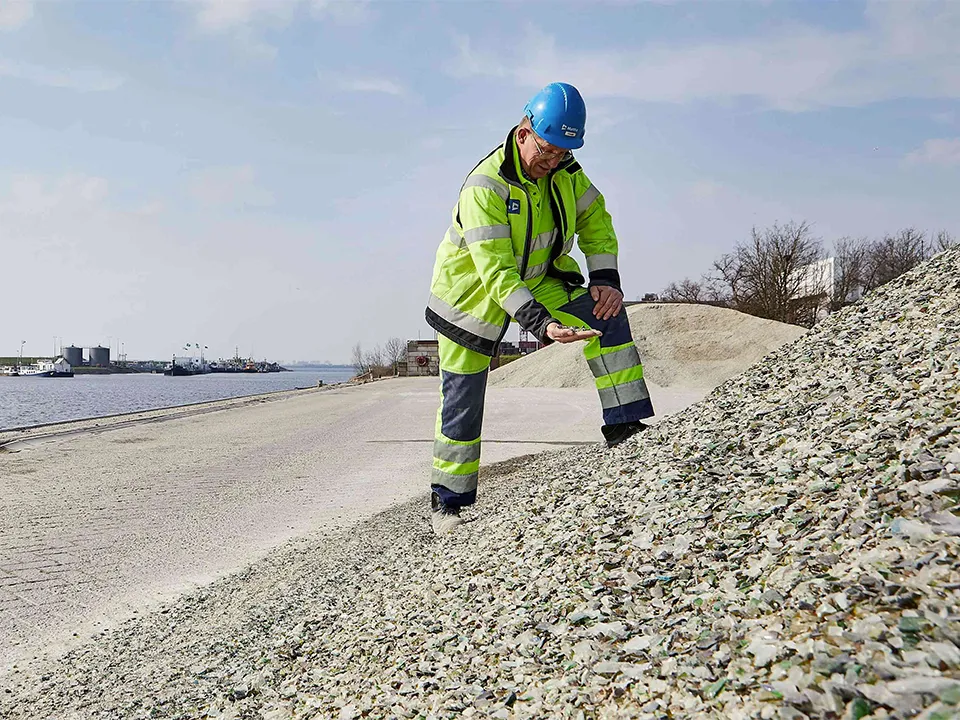
A centenary is an achievement not every company gets to celebrate. Maltha started out in the Rotterdam region in 1921 as a logistics company, with glass collection as a sideline.
In the meantime, the joint venture between Renewi and O-I has grown into the leading and most innovative glass recycler on the European market. The anniversary is an opportunity to highlight the unique potential of glass, which can be reused indefinitely without losing its properties. Maltha aims to turn all the glass it collects into 100% new raw materials and to be a supply chain partner that enables glass packaging made from 100% recycled material.
Headquartered in Heijningen, Maltha operates eight sites across the Benelux, France, Portugal and Hungary. The company continually invests in the most innovative technologies to optimise its sorting process, and processes more than 1 million tonnes of different types of container glass (jars and bottles) and flat glass (mirrors and window glass) every year into cullet and glass powder for reuse in the glass packaging and glass wool industries. Yet there is still room for improvement in many areas. “No other waste stream is as easy to recycle as glass, which can be reused 100% of the time. That is why we have set the ambition of recycling 100% of incoming glass streams into secondary raw materials, and of being a supply chain partner that enables glass packaging made from 100% recycled material,” says Eric Herman, managing director of Maltha Glasrecycling. “We see that the market is ready and that our supply chain partners share this ambition, including major producers in the brewing industry.”
Continuous innovation
Realising this ambition requires continuous innovation across the glass processing industry and the packaging supply chain. Over the years, operations have moved from manual sorting to a fully automated process using, among other things, high-tech optical sorting machines. Herman says: “This is essential because a tonne of recycled material may contain no more than 20 g of contamination, the equivalent of two small pebbles in 1 m³ of cullet.” The average recycled content in glass packaging in Europe is currently 52%. This figure can be increased in various ways, for example through more and better collection (colour separation), improved cleaning and greater use of cullet and glass powder in furnaces. In the short term, using more glass powder is a particularly promising option. From today and throughout the anniversary year, Maltha is taking the lead in advancing this sustainable solution even further.
Question about this story? Ask your question
Keep following this
Get an email when a new story is published. No account needed.
- ThemeCircular business under changing regulations
- SubjectNews







