












Aiming to lead the way in digesting food and garden waste once again
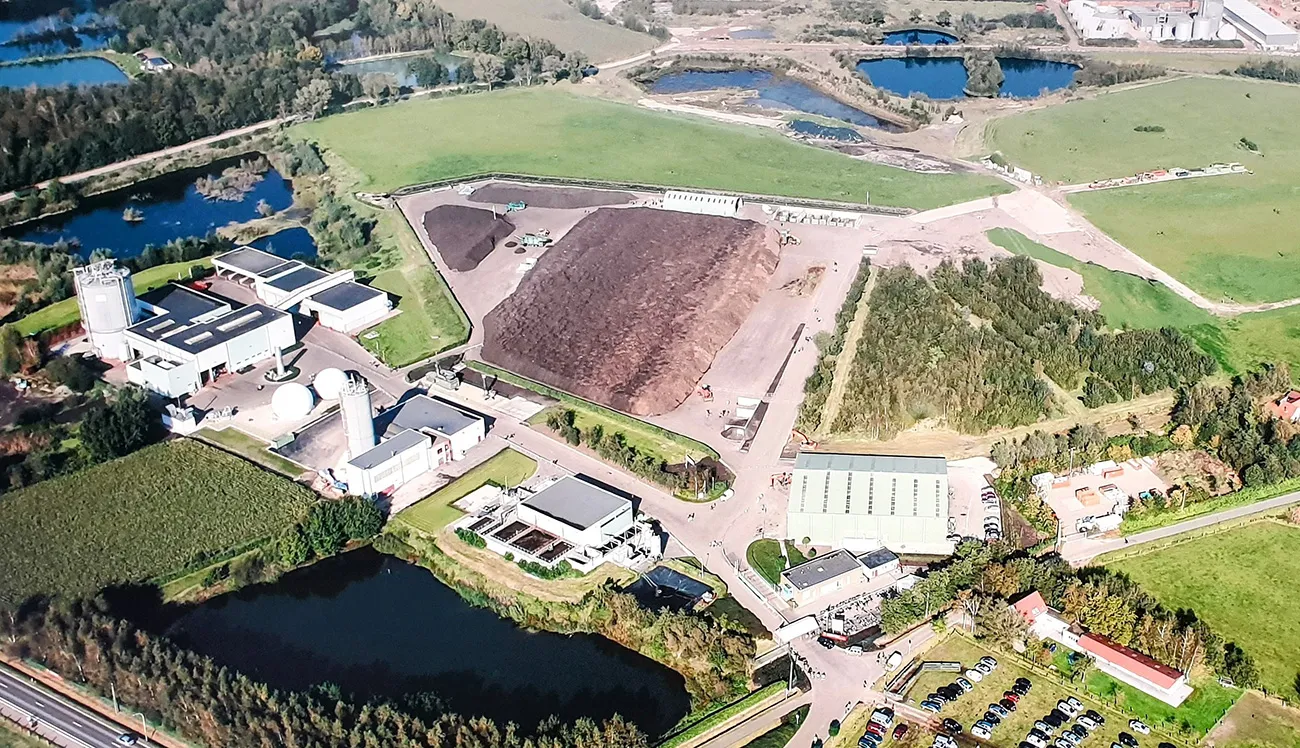
The better we sort, the better we can recycle. Yet all kinds of impurities still find their way into waste streams. To take the next steps, IGEAN is investing in a new anaerobic digestion plant for food and garden waste, which will recycle an additional 12,000 tonnes of waste each year. The plant also aims to be state of the art in every respect, with the goal of achieving 100% circularity. An ambition that also impressed Vlaanderen Recyclagehub.
The intermunicipal company IGEAN was established in 1969. Initially, it provided services to fifteen municipalities north of Antwerp. Today, IGEAN serves more than 1 million residents across thirty member municipalities, including the city of Antwerp. Its main activities are collecting household waste, both from homes and at recycling centres, and recycling green waste and food and garden waste at its site in Brecht. “The site is on a former landfill. Although OVAM remediated it, its unstable subsoil gives the site some very specific characteristics. Where organic material is still present below the surface, we cannot build anything,” explains project coordinator Jeroen Secuianu.
State of the art once again
That has never stopped IGEAN from being a state-of-the-art waste processor. Secuianu says: “The first plant built here, in 1992, uses dry anaerobic digestion to process green waste and food and garden waste, producing green energy in the form of electricity and biogas, as well as digestate that is further treated to produce compost bearing the Vlaco quality label. At the time, it was the first plant of its size in the world.” The second followed in 2000, replicating the same technology but on a slightly larger and more extensive scale. Together, the plants now process 55,000 tonnes of food and garden waste and 50,000 tonnes of green waste each year. That amounts to around 22% of Flanders’ food and garden waste. “In 2017, we started thinking about our activities and how we could bring them into the 21st century. A team of internal and external experts used a calculation and analysis model to map all the parameters, costs and benefits. No scenario was off the table. We also looked at how much it would cost if the plant were to close,” says Secuianu.
Higher-quality compost OR less waste but more raw materials
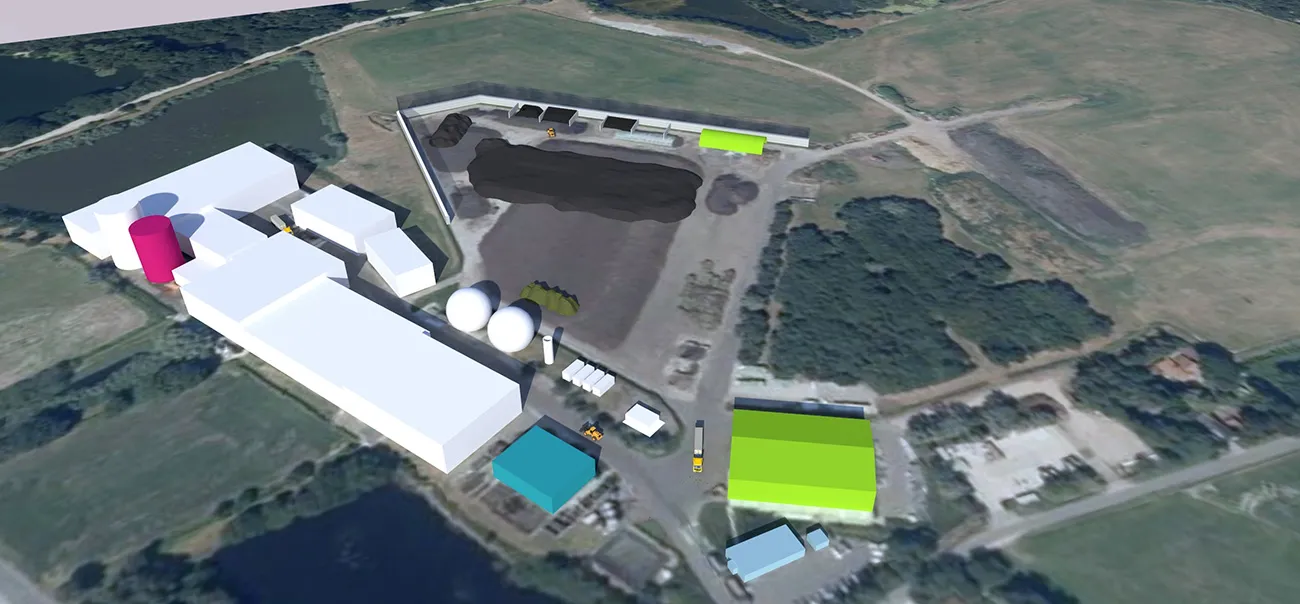
Whichever scenario it chose, IGEAN wanted the most circular solution possible. “In the end, that meant building a new plant to replace the first reactor. Processing capacity will remain unchanged. What we are adding to the process is more extensive pre- and post-treatment, allowing us to remove more impurities from the digestate. This will enable us to recycle an additional 12,000 tonnes. Among other things, we want to remove plastics, as well as stones, metal particles and wood. That will give us not only more compost, but also compost that already meets future standards,” says Secuianu. However, construction will be challenging. “Because the site is on a former landfill, the plant can only be built where the current plant stands. This means we will need to organise the work carefully and carry it out in phases, because we cannot afford any downtime here.”
Reducing the impact on the surrounding area
The new approach will bring IGEAN closer to a 100% circular solution and should also help limit the impact on the surrounding area. Secuianu says: “For several years, we have had a smell monitoring team made up of local residents, who let us know when odour nuisance occurs. This allows us to take targeted action straight away to reduce the nuisance. At the same time, we learn what caused it so that we can prevent it in future. It is an initiative that works well, as the team reports that things are steadily improving. With the new plant, part of the post-composting process, which produces most of the odours, will take place in an enclosed building under negative pressure. 30% less green waste will be stored outdoors, further reducing the potential nuisance. We want to be state of the art in this area too.”
Plenty of expertise in-house
If all goes to plan, the new plant should be operational by March 2025. Together, the two reactors will then produce 6 million m³ of biogas. Depending on demand at the time, it can also be converted into electricity or biomethane to maximise its value. The investment comes with a price tag of 40 million euros, to which Vlaanderen Recyclagehub is contributing three million euros in support from the Recovery Plan. “We are now in discussions about how best to define the technology. It has already been proven in other fields, but this will be its first application to food and garden waste. We want to combine technologies to create a solution perfectly suited to our challenges and the quality of the end products we are aiming for. Drawing on our experience and expertise in this field, we want to become a leader once again,” concludes Secuianu.

Project Toekomstvisie Site Noord
Co-funded by the European Union
Question about this story? Ask your question
Companies in this story

Keep following this
Get an email when a new story is published. No account needed.
- SubjectNews
- CompanyOVAM







