












AD REM presents its latest technology for WEEE plastics recycling in the United Kingdom
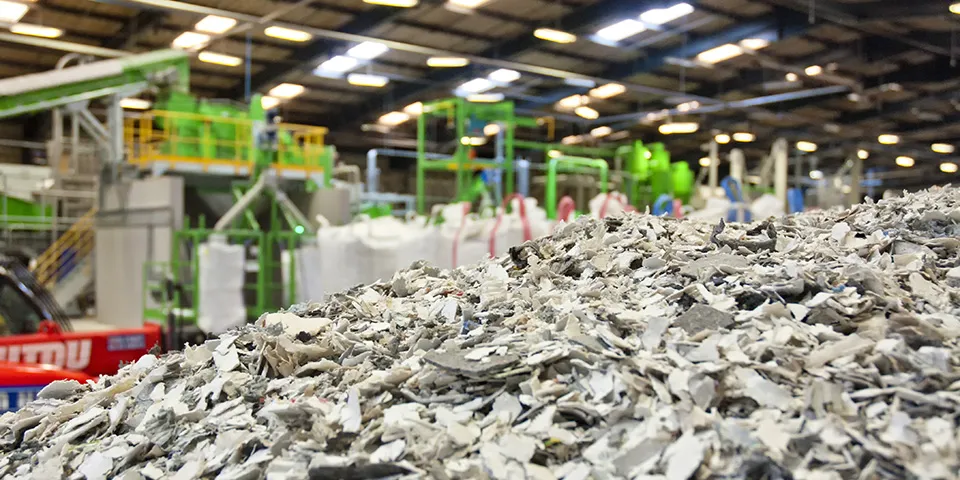
5 million tonnes per year. That is the huge volume of plastics previously exported to China that now remains in the EU and the UK. To tackle this problem, Ad Rem and Hamos have jointly developed a process covering the entire plastics recycling cycle, from waste to raw material. The first plant of its kind is now running at full capacity at AO Recycling in Telford.
AO.com is a major retailer selling a wide range of household appliances, including washing machines, dishwashers and fridges. Its recycling subsidiary was looking for a solution to process plastics from fridges so they could be reused in the manufacture of new fridges. Service company All Controls put them in touch with Ad Rem.
The WEEE plastics challenge
“There are many different types of plastic waste. Why focus specifically on WEEE plastics?”, says Jelle Saint-Germain, sales engineer at Ad Rem. “More than four million tonnes of WEEE are collected each year in the EU and the UK, of which more than 500,000 tonnes consist of recyclable PE, PP, PS and ABS. At present, most of these plastics are not recovered. This represents a huge loss of potential raw materials.”
The solution
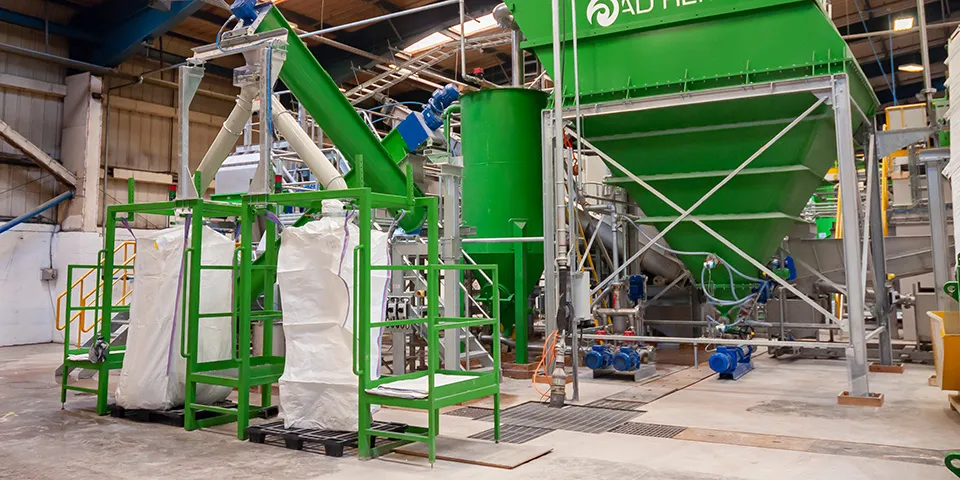
To tackle this problem, Ad Rem and Hamos joined forces to develop a unique process. It starts with a mixed stream of WEEE plastics, which is processed using Ad Rem’s flotation technology at a density of 1.09 kg/l. To achieve the required density, a patented pH-neutral component is added to the water. Unlike the salt used in the most common method, this component does not dissolve in water but remains in suspension, allowing it to be reused repeatedly. It is an inexpensive substance that does not interfere with the electrostatic separation further down the process. This is also why the technology is so well suited to use in combination with Hamos technology. In the next steps, the PE/PP is separated from the PS/ABS in a second flotation tank using water, after which the PS/ABS is separated using Hamos’s electrostatic line.
AO Recycling
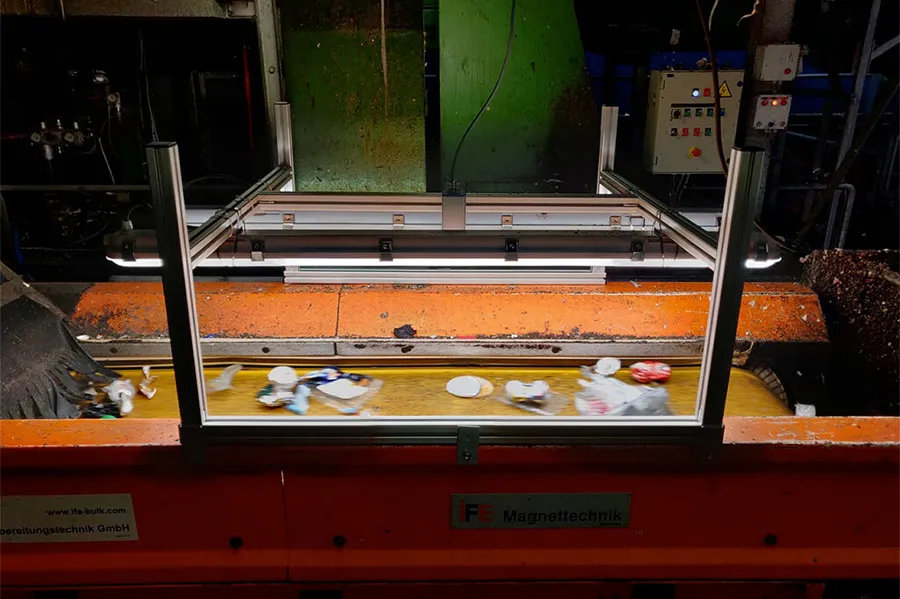
Both parties thoroughly tested the proposed process, with AO Recycling ultimately deciding to invest in a plant. Using the complete Ad Rem and Hamos process described above, it now processes a mixed stream of shredded fridge plastics into new ABS and PS.
The plant in question started up in October and is now running at full capacity. It processes 4 tonnes of fridge plastics per hour, equivalent to an annual volume of 20,000 tonnes.
Further development
Ad Rem and Hamos will continue to fine-tune the process together. Ad Rem has already sold the next similar project in Japan, where 40,000 tonnes of plastics per year will be processed into a new raw material.
Question about this story? Ask your question
Keep following this
Get an email when a new story is published. No account needed.
- ThemeMaking plastics and packaging circular
- SubjectNews







