












A sustainable, infinite cycle for solvents
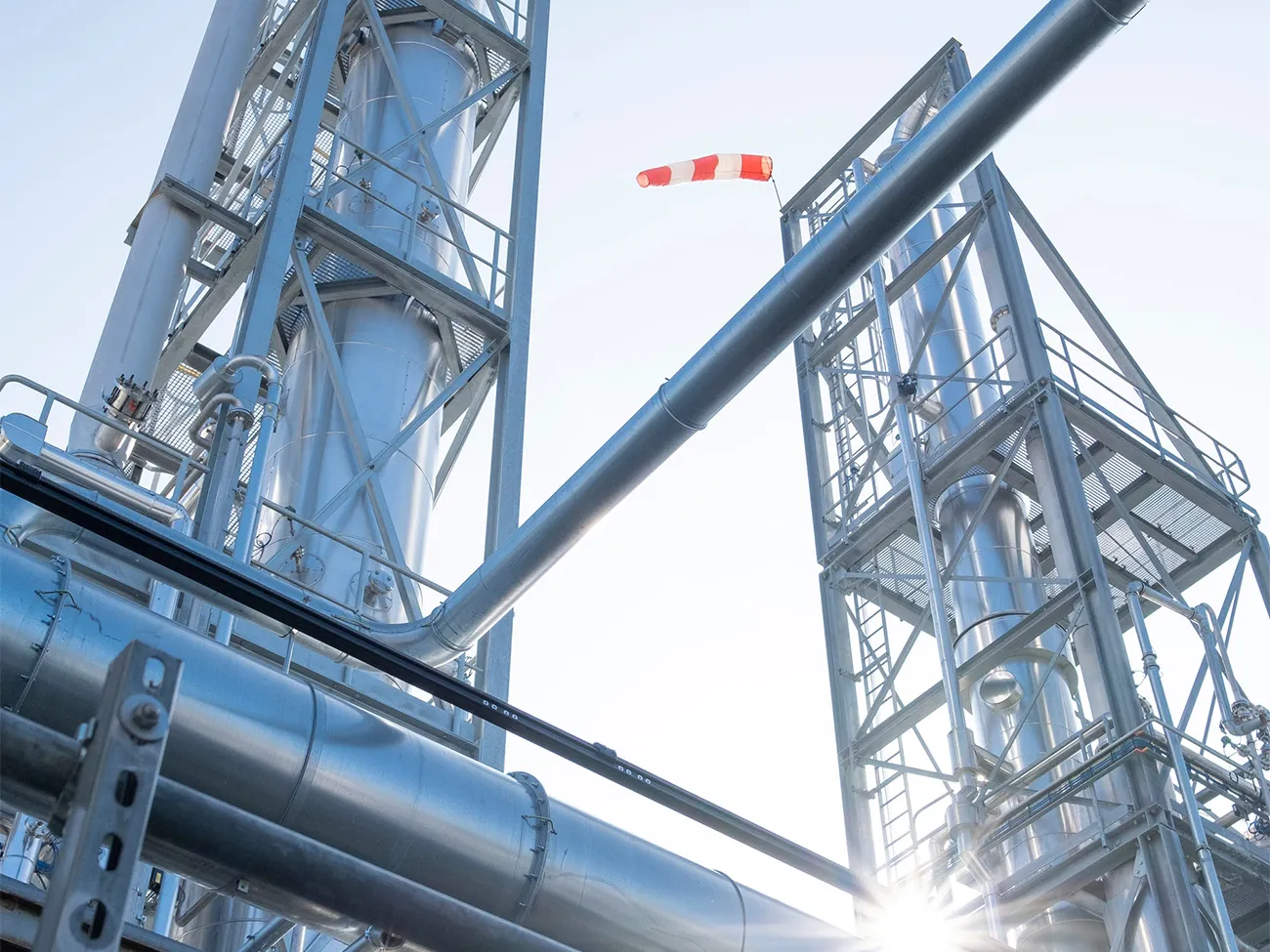
Not every waste stream is easy to handle. Since the 1970s, long before circularity became a buzzword, De Neef Chemical Processing (DNCP) has focused on recovering solvents.
The company continues to set the bar high: its ultimate aim is to supply 100% of used solvents again as raw materials. “As with any waste stream, the better it is sorted, the closer we get to fulfilling that mission. We are investing heavily in R&D to push the boundaries of what can be recycled,” says CEO Jelle Schoofs, summing up the company’s mission.
When Herman De Neef set up his company, the original aim was to market a product that could be used to seal off water during the construction of metro systems and tunnels. This was in the 1970s, when plans for a Brussels metro network were getting under way. “From the outset, alongside product development, attention was also paid to on-site application and to recovering the solvent used in production. Herman can rightly be called a pioneer of circular thinking. This part of the business continued to develop, turning us into the company we are today, a specialist in high-grade solvent recycling. We are the only player in Belgium specialising in this field to this extent, and we are determined to set the bar high. If the quality is right, you can guarantee an endless cycle of reuse. For us, it only counts as recycling if we can at least match the quality of the original raw material.” Those are the words of Jelle Schoofs, DNCP’s current CEO.
Reusing your own waste
You can take that statement at least literally. According to Schoofs, working with recycled solvents brings many benefits. “Companies that work with us can reuse their own waste. First and foremost, this benefits the environment: our CO2 emissions are just 10 to 20% of those associated with virgin materials,” says Schoofs. But choosing recycled solvents also makes good business sense. “80 to 90% of the residual or by-product stream supplied to us is returned as a raw material for new processes. This makes companies far less vulnerable to price fluctuations on the global market and less dependent on external supplies of raw materials, enabling them to become their own suppliers. The coronavirus pandemic and the temporary blockage of the Suez Canal made these market fluctuations even more tangible and showed that a global supply chain is not as reliable as we thought. The short supply chain we can establish offers virtually 100% delivery reliability.”
15,000 tonnes of solvents
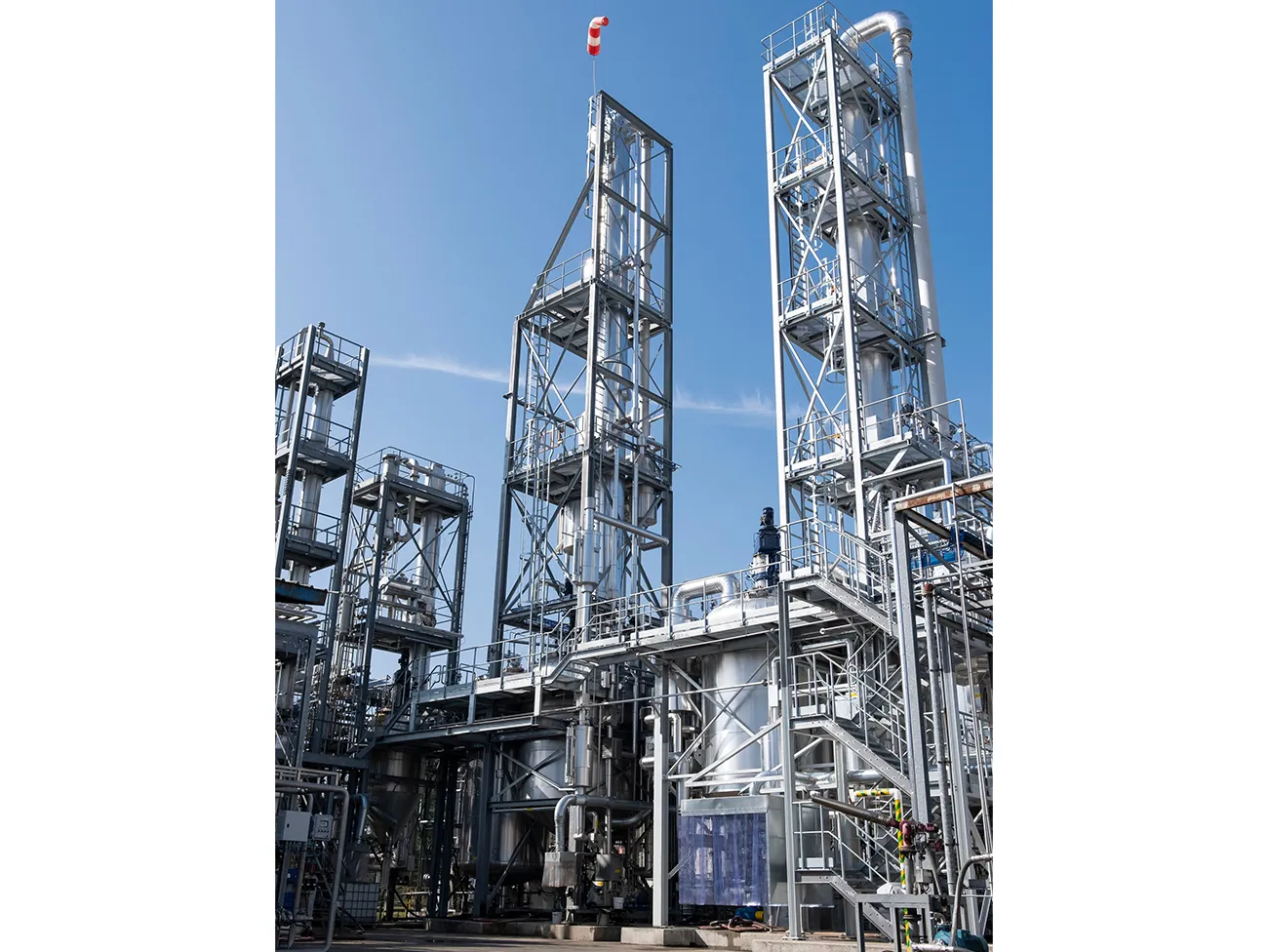
DNCP currently processes 15,000 tonnes of solvents a year across two sites. The original headquarters in Heist-Op-Den-Berg remains, and a site has been added on Linkeroever in the port of Antwerp. “It was an opportunity,” says Schoofs. “There was already a small-scale plant on site in 2000, which we were able to optimise using our expertise. The site also allowed us to expand further, to a total of fourteen plants today.” The sites are divided roughly according to the type of processing: continuous processing in Kallo, or batch distillation in Heist-Op-Den-Berg. The challenges are just as great at both sites. “There is a golden rule in our production: the incoming material is never the same, because levels of contamination always fluctuate. Knowledge of products and processes is therefore crucial to achieving the required quality. We anticipate fluctuations by agreeing limits with the customer in advance. Within those limits, we can proceed as agreed. Outside them, our team must assess the incoming material and work out how to achieve an outcome that works for both parties.”
Major investment plans
Last year, confidence in the company’s potential received a major boost when Soudal became the majority shareholder. “We have everything we need to keep growing in the years ahead, backed by substantial investment plans. By 2025, we want to double the volume of solvents we process. In the short term, that means locally and in neighbouring countries, but why not expand further? Circular thinking is gaining momentum across Europe. Companies realise that raw materials are finite and that alternatives need to be considered. The challenge now is to put this into practice. To make a difference, we focus on the quality of the end product, which we continue to improve through targeted R&D to make our plants more efficient. We are also investigating other streams beyond organic solvents alone. As part of our work on plastics recycling, we are looking into whether we can purify monomers. We also offer customers flexibility in how we handle their streams and arrange the logistics. For example, we have our own fleet of lorries. Finally, local roots matter. Our people are our greatest asset, and we do everything we can to retain them and attract new talent. That starts with believing in what we do. Circular working is a necessity.”
Question about this story? Ask your question
Keep following this
Get an email when a new story is published. No account needed.
- SubjectNews







