












A major player in waste wood reuse
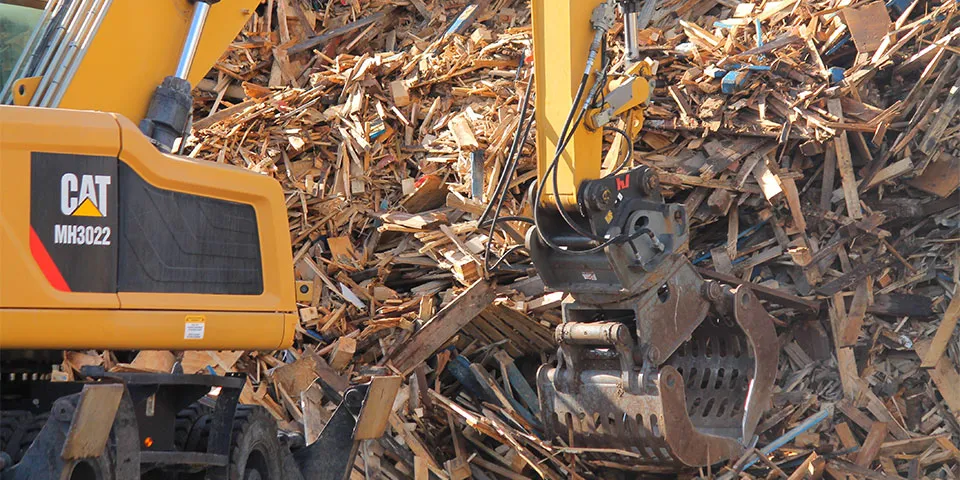
With 9 transfer sites and its own production lines for recycling A, B and C grade wood, HDF Recycling is a major player in waste wood reuse. HDF Recycling says it can reuse around 70 to 80 per cent of all the wood delivered to it. Most of the wood chips are supplied to the wood-processing industry. Ultimately, the company wants to bring more of its own products to market.
“We don’t collect the wood ourselves,” says Arvid Hekman, director of HDF Recycling and its German sister company RD Recycling Deutschland. “We source the wood through secondary waste producers, such as various collection companies, local authorities, and construction and demolition companies that deliver waste wood to us. We invest in sites for transfer operations, among other things, and in processing technology, such as shredders, screens and sorting plants. We have production lines at several sites where we make a range of products for the wood-processing industry and power stations.”
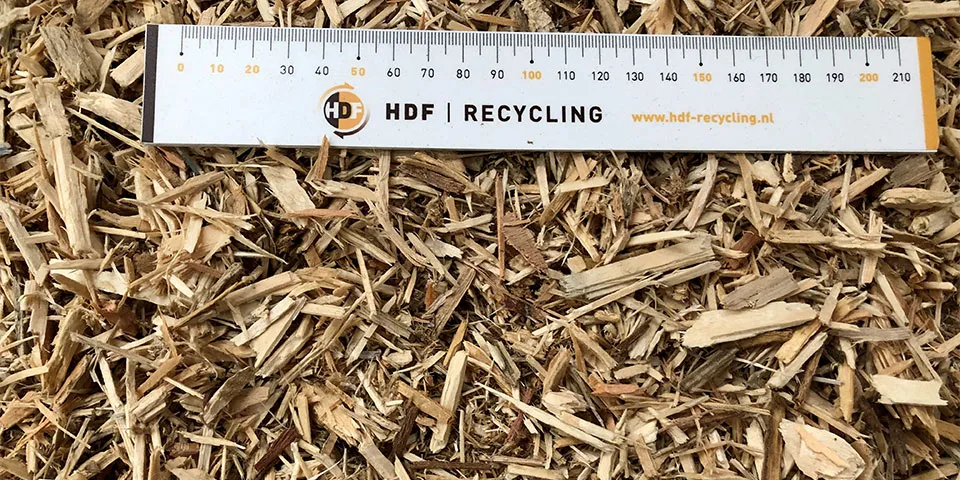
According to Hekman, HDF, which started out as Houtdrogerij Friesland, can reuse 70 to 80 per cent of all the waste wood delivered to it as a raw material for the wood-processing industry. “The non-reusable stream goes to power stations. That 70 to 80 per cent is twice what most of our competitors recycle. We aim to reuse the remaining 20 to 30 per cent too, but for now that isn’t possible. If we want to make wood 100 per cent circular, something will first have to change at source.”
Sorting
Wood arriving at HDF Recycling is immediately separated into A grade wood (clean and untreated), A/B grade wood (reusable B grade and lower-quality A grade wood that can still be recycled effectively), B grade wood (MDF, panel products, painted wood and window frames) or C grade wood (treated and impregnated). After acceptance, the A and A/B fractions are first sorted using a sorting grab, then further cleaned during processing in sorting cabins and with various screens that remove undersize and oversize material. The remaining chips are the raw material for reuse.
HDF Recycling has several sites across the Netherlands for two reasons. Hekman says: “First, waste wood is a bulky product and you’re transporting a lot of volume for little weight, so the challenge is to be able to unload it within a reasonable radius. We therefore try to be as close to the source as possible. The second reason is that we want to build up a buffer in summer, when wood deliveries peak and demand falls. That way, in winter, when the situation is reversed, we can still meet our supply commitments and provide additional service.”
GreenBlocks
To move beyond supplying raw materials to others and also make products itself from the wood it receives, HDF Recycling has entered into a joint venture with Suez. Under the name GreenBlocks, the two companies will produce pallet blocks from waste wood. Hekman says: “The plant is now being built, and I expect us to be operational in the first quarter of 2021. The first line we’re building now can process 40,000 tonnes, with the option to expand to 80,000 tonnes. That will make us the final processor of our own material.” Hekman is already looking further ahead: “Of course, this plant first needs to be profitable, but if all goes well, we’ll certainly look into developing more of our own products. That would also allow us to increase the reuse percentage further.”
Question about this story? Ask your question
Keep following this
Get an email when a new story is published. No account needed.
- ThemeCircular business under changing regulations
- SubjectNews







