












A lorry for households and businesses
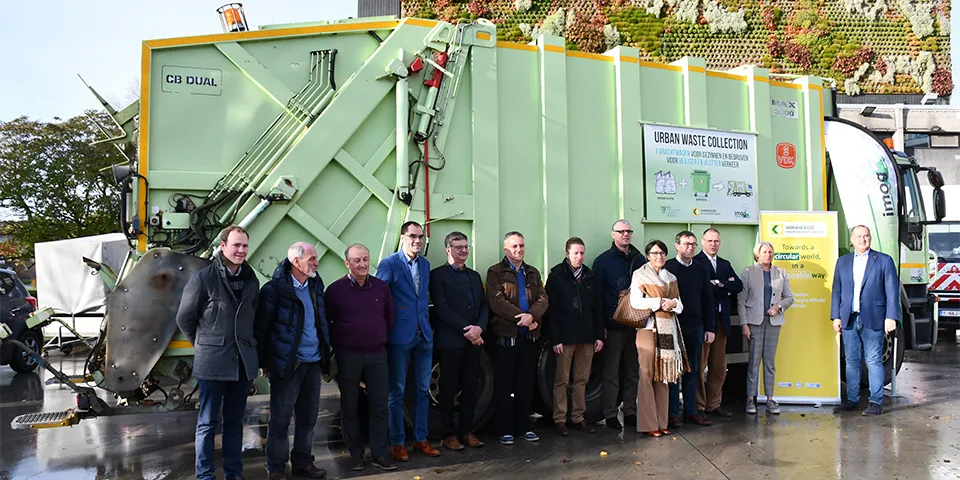
Several waste collection vehicles operate in town centres, run by both private and public collectors. This nevertheless leaves considerable scope for improvement in safety, mobility and the environment. Intercommunale Imog and Vanheede Environmental Services have therefore launched a pilot project in Waregem in which a single lorry collects household residual waste and the equivalent fraction of commercial waste. The partners want to shift the focus from who puts the waste out to what waste is collected and how much.
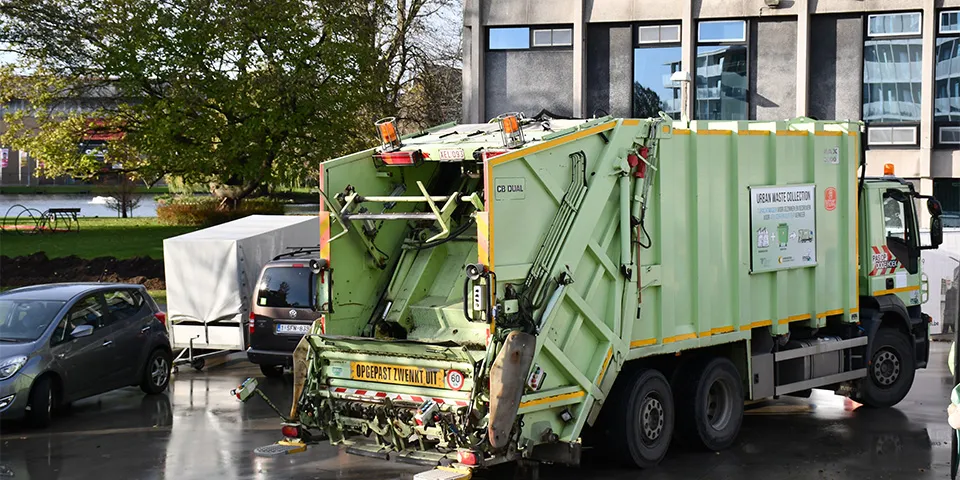
A vehicle from Imog’s fleet was modified. Chassis weighing was added, along with an on-board computer from Vanheede.
In the wider area around Waregem, Imog is responsible for collecting household waste. It collects residual waste from 38,000 residents on five collection days. Commercial waste is subject to free-market rules, and each business can choose which collectors to hire. Yet many waste fractions are similar: a box from a bakery is commercial waste, while a box from the baker’s household is domestic waste. As well as the confusion this can cause, this individualised approach generates a great deal of traffic. Collectors X, Y and Z, along with the regular refuse lorry serving households, all travel along the same streets. Vanheede has around 200 collection points in Greater Waregem, spread over three collection days, with an average weekly weight of around 16 tonnes.
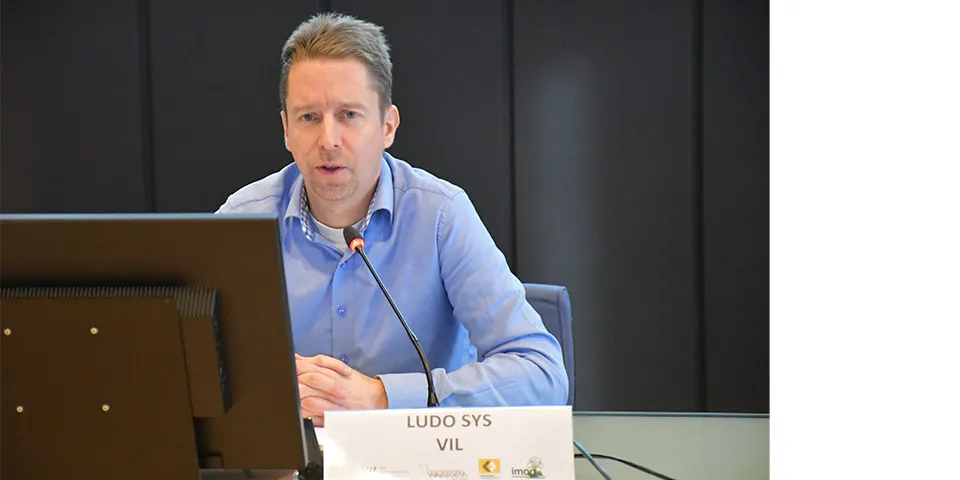
Ludo Sys: “We will analyse and map current waste flows and the restrictions imposed.”
Looking for solutions
Collecting commercial and household waste is becoming increasingly difficult because of the restrictions local authorities impose on heavy traffic, each in response to its own concerns, such as reducing particulate matter, preventing damage to historic buildings, mobility and road safety. Making collections more efficient requires investment in technology and equipment. But what is the best way for businesses to approach this, and what should they invest in? As part of the VIL project ‘Urban Waste Collection’, Imog is seeking answers to these questions together with Vanheede and the City of Waregem. To this end, a vehicle from Imog’s fleet was modified. Chassis weighing was added, accurate to 5 kg for wheelie bins. A Vanheede on-board computer was also installed to display the jobs and record the weights.
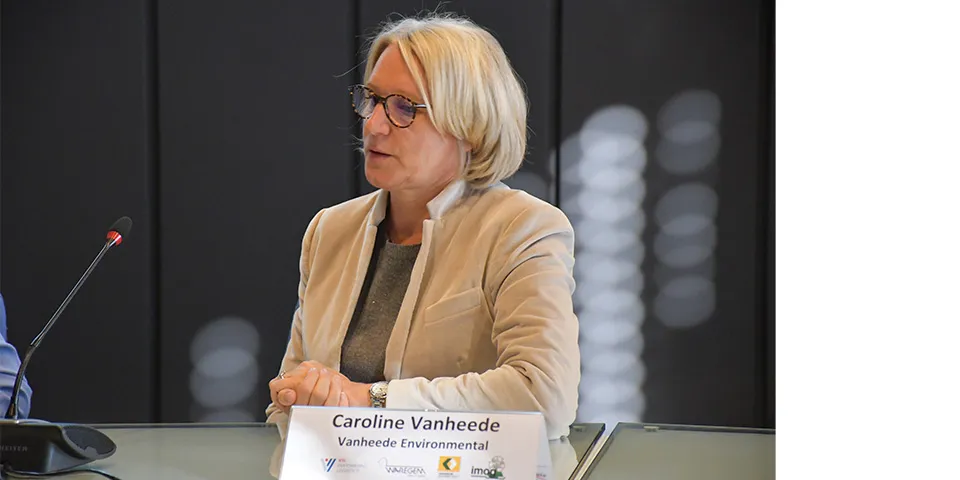
Caroline Vanheede, executive director of Vanheede Environmental Group, is also keen to support this initiative. “We cover fewer kilometres to collect the same waste.”
Sustainable logistics solutions
The project aims to include Vanheede’s business customers in household waste collections. For some customers, the service will change in terms of day and time. Communication will therefore be key to success. VIL aims to bring the stakeholders involved together to develop and test logistics solutions that are commercially viable, practical and widely supported. “We will analyse and map current waste flows and the restrictions imposed. Together with the participating partners, we will define and develop potential solutions and assess their impact,” says Ludo Sys, project leader at VIL. The logistics concept developed will be applicable in all Flemish cities. An interim evaluation will take place after six months, followed by a decision on whether to invest in a CNG vehicle: buy a new one or convert an existing vehicle? All parties involved are fully committed to making the pilot a success and aim to continue afterwards, explore geographical expansion and involve other partners in the project.
“Collaboration between a private organisation and a public organisation is innovative, but it is in our DNA,” says Imog managing director Johan Bonnier.
Unique collaboration
Imog has long been a pioneer in waste collection. “Collaboration between a private organisation and a public organisation is innovative, but it is in our DNA,” says Imog managing director Johan Bonnier. Private operators retain their customers and manage the commercial relationship. Waste collected from their customers is weighed and recorded separately. “This means that only one unbranded lorry has to enter the town centre, while the market principle continues to apply to private operators and we, as a public-sector partner, provide a sustainable solution for our member municipalities.” Caroline Vanheede, executive director of Vanheede Environmental Group, is also keen to support this initiative. “We cover fewer kilometres to collect the same waste. Through innovation and co-creation, we are making the most of opportunities for sustainable mobility in town centres. Measures are needed to align private and public operators with the applicable regulations, and we need to develop innovative solutions together that can be implemented. The VIL project Urban Waste Collection is an initiative that will help us do just that.”
Question about this story? Ask your question
Keep following this
Get an email when a new story is published. No account needed.
- ThemeImproving waste collection and transport
- SubjectNews







