












200 kg of pure aluminium from 100 tonnes of residual waste
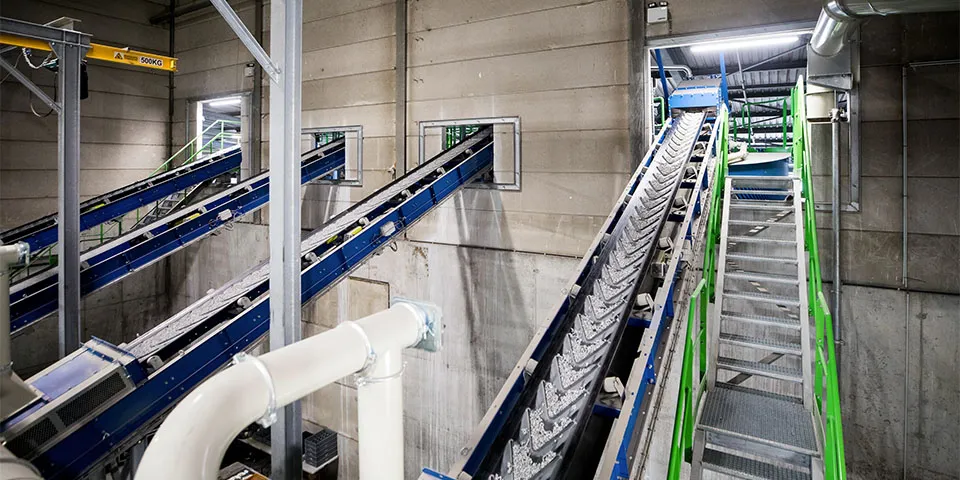
At the port of Ghent, the impossible is becoming possible. The Valomet team at SUEZ recovers valuable metals from the bottom ash left over after residual waste is incinerated. Until recently, this fraction was considered unusable and economically unviable. It is now yielding valuable raw materials for a sustainable circular economy. Flemish Minister-President Jan Jambon was a proud guest at Valomet’s official opening in February.
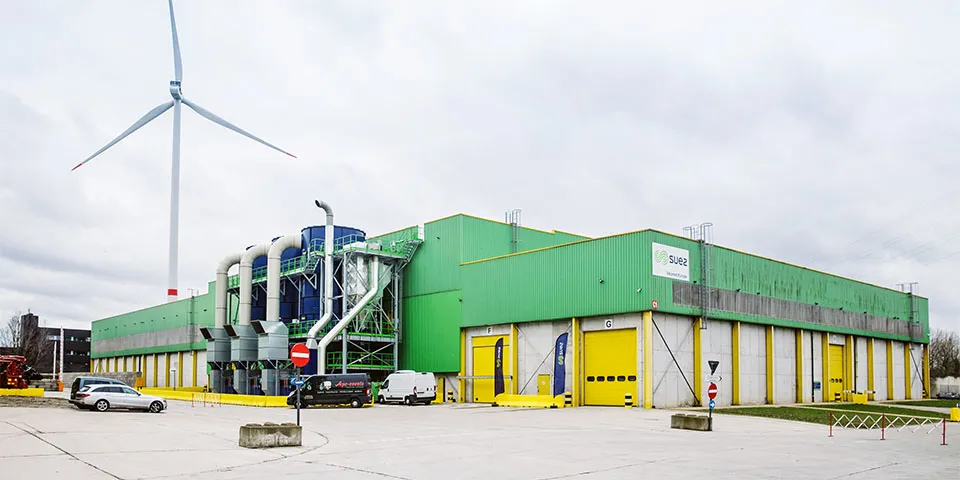
With the Valomet pioneering project, SUEZ is proving that bottom ash is not the end of the waste treatment chain.
Ballpoint pens, SIM cards, light bulbs … these are just a few examples of items that end up in residual waste despite still containing valuable metals. Karen De Boeck, Non-Ferrous & Energy from Waste Supply Manager at SUEZ, explains how they can still be put to use. “We live in a throwaway society. A great deal still ends up in residual waste, often because there is no separate collection stream for it. And yet there is still plenty of value in it. The tiny circuit boards in SIM cards, for example, contain minute traces of precious metals. Metals that can in fact be recycled indefinitely. The Valomet process is the best proof of that. Even after going through all the recycling stages, including incineration, we can still recover and valorise them.”
From waste to value
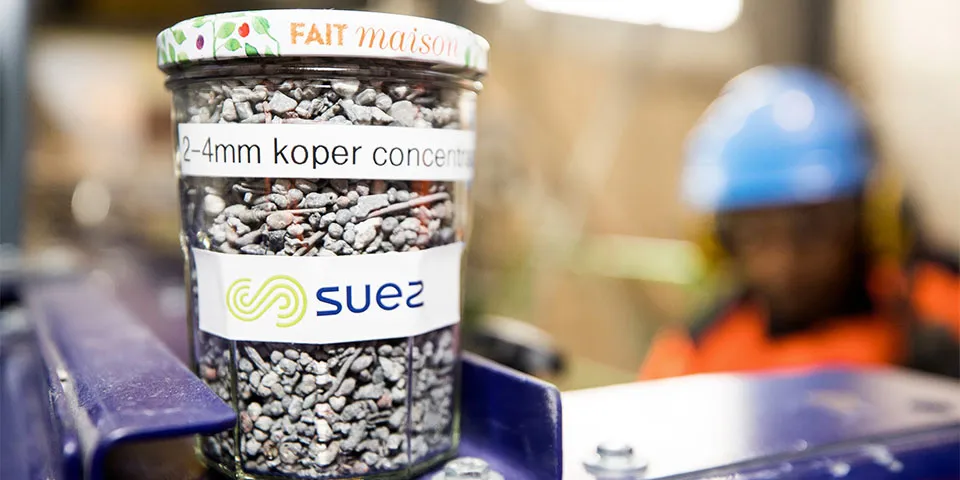
Valomet began as a pilot project in 2014 at the port of Ghent. De Boeck explains: “Bottom ash contains an average of between 92 and 95% mineral matter. At our site in Grimbergen, we further process it so that it can replace primary sand and gravel in construction applications. The metal fraction it still contains has always been filtered out. This is an ultrafine fraction, a non-ferrous metal concentrate consisting of particles between 0 and 20 mm in size. The difference is that we can now make something particularly valuable from a stream that was considered waste and unusable.” Unfortunately, there was not enough space at the Grimbergen site. The land SUEZ still had available in Ghent was a perfect alternative, right at the crossroads of supply from the various residual waste-to-energy plants at home and abroad (the United Kingdom, France, the Netherlands, Germany, Poland and Serbia).
“This was a non-recyclable residual stream that can now breathe new life into other products and thus help reduce CO2 emissions.”
Pure and dry
The official launch took place in February. The pilot project has made way for full-scale industrial processing of 12,000 tonnes of metal concentrate a year. “The techniques we use to homogenise and separate the material in successive stages are not new. The machines already existed for other applications. We have adapted them to our needs and brought them together in an innovative puzzle,” says De Boeck. The most important lesson from the testing phase was the importance of clean streams. “The key is to purify the aluminium (30 to 40%), copper (10 to 15%), zinc (+/- 2%) and mix of precious metals (1%), and separate them from one another and from the mineral matter (more than 50%) so that we obtain single-metal streams. That is where the economic value lies. Quality is everything, because we supply directly to smelters, where acceptance criteria are very strict. Moisture, for example, is out of the question. That is why we use a 100% dry process, a world first.”
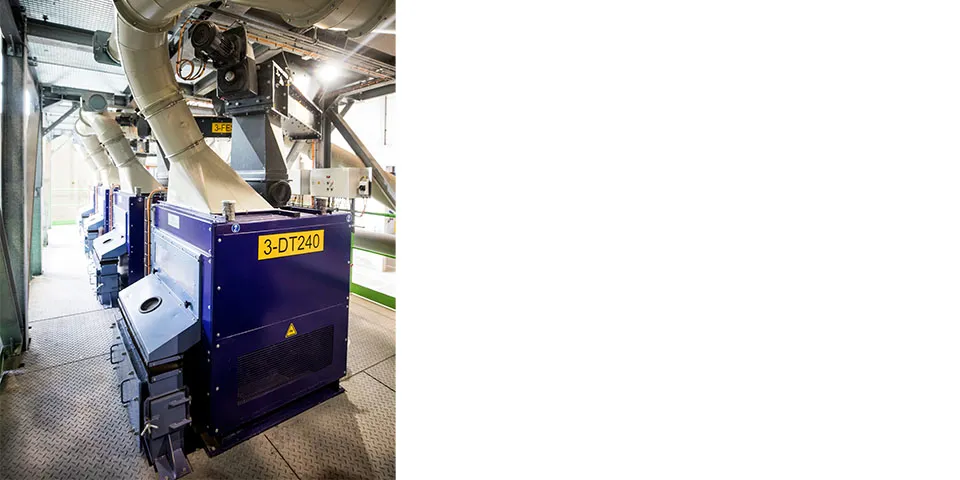
The most important lesson from the testing phase was the importance of clean streams. Quality is everything because Valomet supplies directly to smelters.
Doubling by 2022
In the best-case scenario, Valomet can recover 200 kg of aluminium from 100 tonnes of residual waste. The biggest challenge in the coming years will be securing sufficient volumes of incoming material. “We would like to double capacity by 2022. The plant has been designed so that it can be expanded with a few minor modifications.” De Boeck is particularly proud of what she can achieve with Valomet:
“This was a non-recyclable residual stream that can now breathe new life into other products and thus help reduce CO2 emissions. It feels incredible to be able to work for a company like this, one that is willing to invest in new processes to push boundaries. We all throw away too much. It is worth continuing to try to extract value from it.”
Question about this story? Ask your question
Keep following this
Get an email when a new story is published. No account needed.
- ThemeRecovering metals and creating value
- SubjectNews







