What you need to know about environmental damage
Text Paul-Emmanuel CasierImage Group Casier

The recycling sector plays a crucial role in the circular economy and the sustainable management of raw materials. But the sector is also exposed to environmental risks that can have serious consequences for nature and human health. They also pose financial risks for the parties involved in the supply chain.
Environmental damage is a measurable negative change in the condition of our natural resources. It includes damage to protected species, natural habitats, water and soil. Environmental damage can result from an accident, negligence or an error by an operator carrying out a professional activity listed in Annex IV of the Flemish Environmental Damage Decree (MSD) of 21 December 2007. These are activities that pose a particular risk to the environment, such as manufacturing, using, storing or transporting hazardous substances, discharging wastewater or dumping waste. The recycling sector encompasses several of these activities, including the processing of metal, plastics or electronic waste.
What are the possible consequences of environmental damage?
- Environmental damage can have serious consequences for nature, human health and the financial position of the parties involved.
- Possible consequences for nature: loss of or damage to biodiversity and habitats, and to the goods and services that ecosystems provide to society (ecosystem services);
- Possible consequences for human health: exposure to harmful substances, diseases and allergies;
- Possible consequences for the financial position of the parties involved: liability, compensation, fines and remediation costs.
Under the Flemish Environmental Damage Decree (MSD) of 21 December 2007, which is based on European Directive 2004/35/EC3, an operator that causes or threatens to cause environmental damage is required to take preventive or remedial measures and report them to the competent authority. The operator may also be held liable for the costs associated with those measures. The MSD provides for strict liability for professional activities listed in Annex IV of the Environmental Damage Decree. This means that those responsible for environmental damage can be held liable for damage caused by their actions, even if those actions were not unlawful.
How can you prevent or limit environmental damage?
Good environmental safety and management practices are essential to preventing or limiting environmental damage. These include:
- Complying with the legal requirements and permit conditions that apply to your activities;
- Having an adequate environmental management system in place;
- Regularly inspecting and maintaining your installations and equipment.
- We also strongly recommend taking preventive measures to reduce the risk of accidents or incidents. Examples include:
- Limiting the amount of hazardous substances you use or store;
- Applying best available techniques (BAT);
- Having emergency plans and procedures in place.
What cover do public liability and property insurance provide for environmental damage?
Business public liability insurance provides only limited cover for accidental environmental damage, while property insurance excludes environmental damage. Examples include:
A tanker carrying heavy fuel oil was struck, tearing off its shut-off valve and spilling its entire contents onto unpaved ground. The nearby stream was unaffected. The business public liability insurer’s contribution was limited to skimming off the top layer of soil. Storage, transport and soil remediation were not covered;
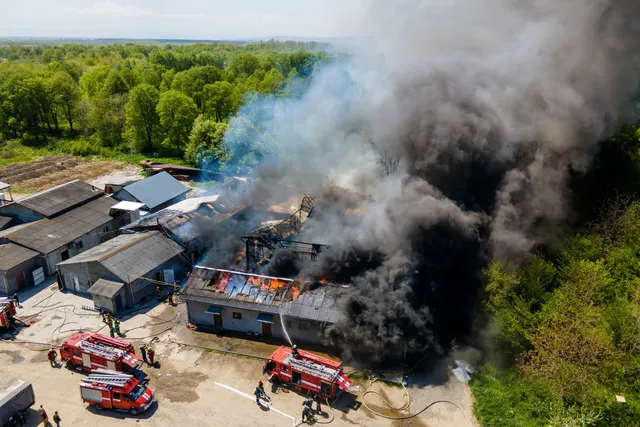
A fire completely destroyed the storage facilities of a plumbing business. The spread of soot and smoke to neighbouring properties was limited. However, the smoke also contained particles from the asbestos-cement sheets covering the buildings. The property insurer paid for the smoke and soot damage to surrounding properties, but not for the removal of asbestos particles from the wider area;
A devastating fire broke out at a galvanising plant. A large quantity of chromium-6 leaked from the tanks and seeped into the ground. The property insurer paid for the removal of the debris and the remediation of the parts of the building that could still be salvaged. The heavily contaminated soil, however, was not covered.
Can you take out additional insurance for environmental damage?
It is strongly advisable to take out specific environmental liability insurance, which provides broader cover for both accidental and non-accidental environmental damage and also covers the costs of preventive and remedial measures. Do not underestimate the importance of well-prepared, comprehensive communication with the media and the competent authorities, whatever the nature of the incident.
Conclusion
Environmental damage in the recycling sector is a serious and current issue. Preventing and limiting such damage deserves your utmost attention and care. Good environmental safety and management practices, together with robust preventive measures, are therefore crucial. You can also limit the potential financial consequences for your business by taking out specific insurance that covers environmental damage.
As a risk adviser and insurance broker, Group Casier can help you identify, manage and insure your environmental risks. Would you like to have an initial discussion with us? Please contact Maarten Vanhalst, consultant at Group Casier, [email protected], 056 261 331.
Question about this story? Ask your question
Keep following this
Get an email when a new story is published. No account needed.
- ThemeSafe and clean processing
- SubjectGroup Casier