Five rules of thumb for safe, well-insured electric vehicle charging points
Text Nadine Saint-PolImage Group Casier
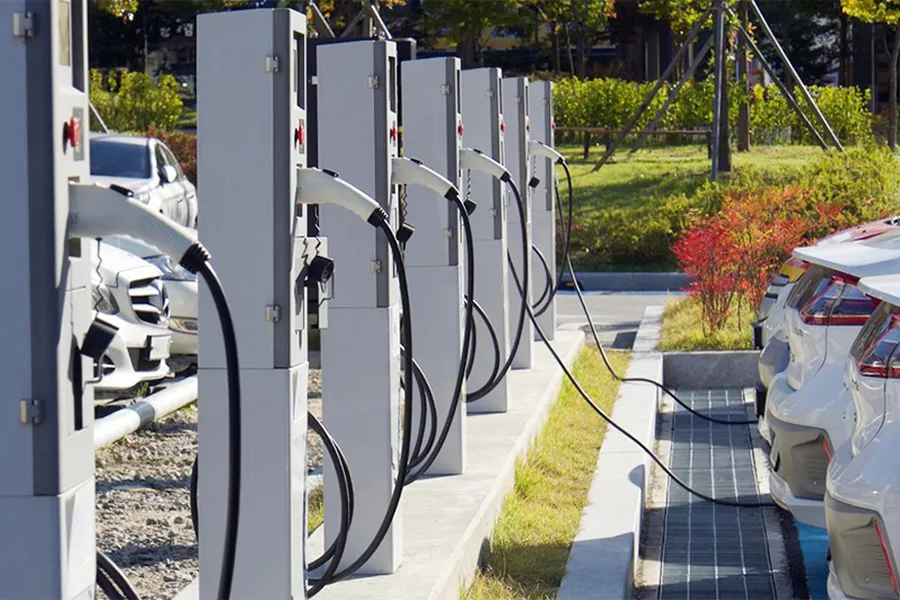
Electric vehicle charging points can increase the risk of fire. That is why it is important to follow strict safety rules when installing and using them, and to ensure that the charging infrastructure is properly insured. Group Casier summarises five rules of thumb.
1. Check whether the site is suitable
Is there sufficient electrical capacity at the site where you want to install the charging point, and is it easily accessible to users? Once you have answered these two questions, select the charging point hardware, ranging from AC chargers (for domestic and business use) to DC chargers (for commercial use and larger charging stations). Then make an informed choice between wall-mounted or freestanding units, with or without a permanently attached charging cable. Carefully weigh up the pros and cons. Do not place combustible materials near the charging points, and make sure they are not too close to or mounted on your business premises. Your business premises, stock and equipment can also catch fire.
2. Ensure the installation is correct and safe
Safety at and around electric charging points is crucial. Have the installation work carried out by a qualified electrician who is familiar with the specific requirements for charging stations. This reduces the risk of errors and incidents. Naturally, charging points must comply with the applicable safety standards and regulations. Follow the General Regulations on Electrical Installations (AREI) and the new provisions that have applied since 1 November 2022. The latter place even greater emphasis on protection against indirect contact and overcurrent. You may also need to take into account specific recommendations from the municipality where you are installing the charging points, or from the local fire brigade. Other considerations for a correct and safe installation include:
Provide a safe working area for the electricians carrying out the work;
- Use the correct cabling;
- Use the correct electrical fuses;
- Have your installation inspected by an independent, accredited inspection body (see also 4).
3. Arrange proper, regular maintenance
The service life of electric vehicle charging infrastructure depends to a large extent on preventive maintenance. This mainly involves checking the hardware, ensuring it works correctly and updating the software if necessary. Installers usually offer a maintenance contract in the form of a subscription, at an additional cost on top of the installation price. If the installation is at a business park, we recommend supplementing a three-yearly inspection by the installer with internal checks by a competent person.
4. Observe inspection intervals
In addition to maintenance by the installer, inspections are also mandatory. In Belgium, inspection intervals are annual, five-yearly or 25-yearly, depending on whether the installation is high or low voltage. Charging points must be inspected:
- every 25 years for domestic installations;
- every 5 years for business installations. We recommend including charging points when your business has an annual or biennial inspection.
5. Agree clear terms with your insurer
From an insurance perspective, Assuralia, the umbrella organisation for the insurance sector, has no uniform recommendations. Each insurer applies its own requirements. This often results in significant differences in approaches to fire prevention, including whether or not sprinklers are required, and in the premiums charged by fire insurers. Work with your insurance broker to agree clear terms with your fire insurer(s), and certainly with your liability insurer(s) as well.
Conclusion
Installing electric vehicle charging points requires careful planning and a thorough preliminary assessment. It is essential to work with professionals, both for the installation and for related matters, including insurance. Correct installation, compliance with safety measures and appropriate insurance cover ensure that electric vehicle charging points are used safely and efficiently. This helps support the growing success of electric vehicles and a more sustainable future.
Do you have any questions about this topic, or would you like an exploratory discussion about the best way to insure your electric vehicle charging infrastructure? Please contact Nadine Saint-Pol, Corporate Consultant at Group Casier, [email protected], +32 56 26 13 30.
Question about this story? Ask your question
Keep following this
Get an email when a new story is published. No account needed.
- SubjectGroup Casier