New shredding site set to become a model of sustainability
Text Valérie CouplezImage Galloo
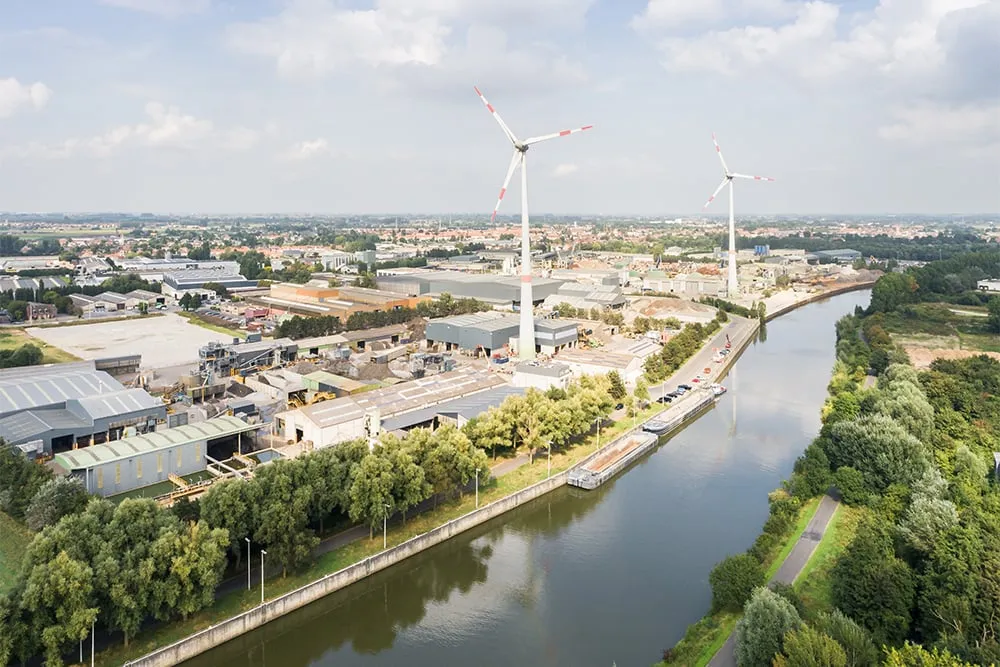
Galloo plans to open a new site in Harnes, France, in 2027. It will be a copy of what the company does at its other sites, but built around the best available techniques for air, soil and water. “We have a 30-year vision for this part of the port area. You start building that future by setting an example in every respect,” says CEO Rik Debaere.
In April, media reports said that Galloo was embarking on its biggest investment ever. With a price tag of €32 million, the company plans to process scrap from end-of-life vehicles and discarded electrical equipment, among other sources, into new raw materials in Harnes. “It will amount to even more than that,” Debaere reveals. “We have spent years getting to where we are today. The permit application alone was no less than 28 cm thick.” Harnes was no accidental choice. Galloo already has facilities around Lille and is now pushing further into France. “To operate profitably, we source our materials from within a 150 km radius of our shredder. With new investments, we want to spread out like an inkblot, moving ever further south. The Harnes site opens the door to Paris, provides additional capacity and could eventually take over the role of the smaller, ageing shredders around Lille.”
Access to a waterway
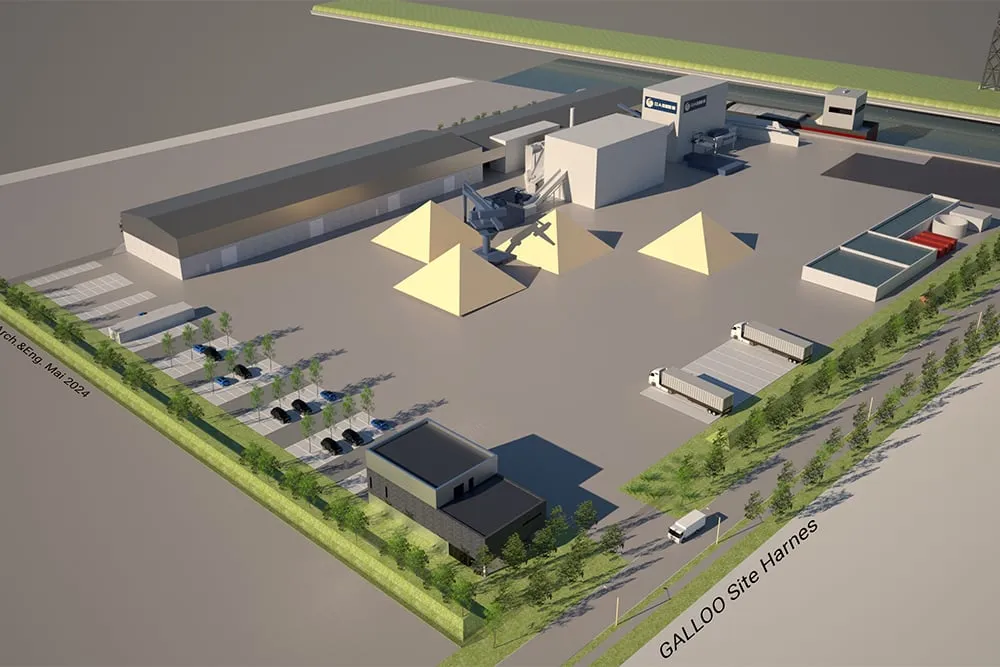
One key consideration for Galloo was access to a waterway. Debaere says: “The scrap we process is intended for local steel mills. We also have an export hub at the port of Ghent. With two of our own inland-waterway push barges, we can transport the material there without putting extra lorries on the road. In time, we want to transport loads of up to 2,000 tonnes.” The quay it will build in collaboration with a specialist architectural firm will be 130 m long and 10 m wide. “It will be the starting point for the construction work. The rest will then be built onto it to ensure a smooth transition.” At the heart of the site will be a new 4,000 hp shredder, a copy of the unit currently operating in Menen. “That makes sense in terms of spare-parts compatibility. But the ancillary equipment around it will be entirely state of the art.”
Best available techniques
For every aspect of the site, Galloo has sought the best possible techniques to minimise its impact on the surrounding area. The plans include biological wastewater treatment, solar panels for renewable energy, noise barriers and technology to reduce emissions. “Society’s expectations are constantly changing. Factory chimneys once belching smoke were a sign of prosperity; now that is unacceptable. By applying stricter standards than those in force today, we want to look 30 years ahead and build a facility that is fit for the future.” One of the principles it will introduce is ultrafiltration, a technique developed in collaboration with Lybover for other shredders. Galloo will also apply its new process for producing low-copper-content scrap. “It is an answer to the CO2 challenge facing steel mills,” Debaere explains. “By supplying higher-quality scrap, they can produce ‘green steel’.”
Ready for the future
The permits are in place and the machinery has been ordered. Galloo now hopes to start construction as soon as possible. Debaere says: “This idea has been taking shape since 2008. We eventually settled on this 6 ha site. Economic circumstances forced us to put the brakes on for a while, but after several good years, we have room to move again. Everything should be completed by the end of 2026, with operations starting in 2027. The facility is designed to process 150,000 to 200,000 tonnes a year and will eventually provide jobs for 80 employees.” Galloo is also continuing to raise the bar at its headquarters in Menen. It has just completed an investment of €14 to €15 million to take the separation of non-ferrous materials further. “It is also a dry process, using cameras and artificial intelligence to identify materials as they pass through. We can now also separate different aluminium alloys from one another.”
Question about this story? Ask your question
Keep following this
Get an email when a new story is published. No account needed.
- ThemeSmarter use of machinery and plant
- SubjectShredders