Voluntary and non-binding measures are inadequate: ‘Use of raw materials is barely falling’

Several raw materials trends are moving in the wrong direction.
More and more land is needed worldwide in production chains to meet Dutch consumption. Six of the seven national waste targets are expected to be missed. And supply risks for the Dutch economy have increased, particularly for critical metals. These are the findings of the PBL’s first Integrated Circular Economy Report.
The Integrated Circular Economy Report (ICER) sets out the current state of the transition to a circular economy in the Netherlands and offers recommendations for government policy on the transition. The report describes the actions taken by stakeholders, the resources they devote to these actions and government interventions. It provides an overview of Dutch raw materials consumption and the associated environmental pressures and socioeconomic effects.
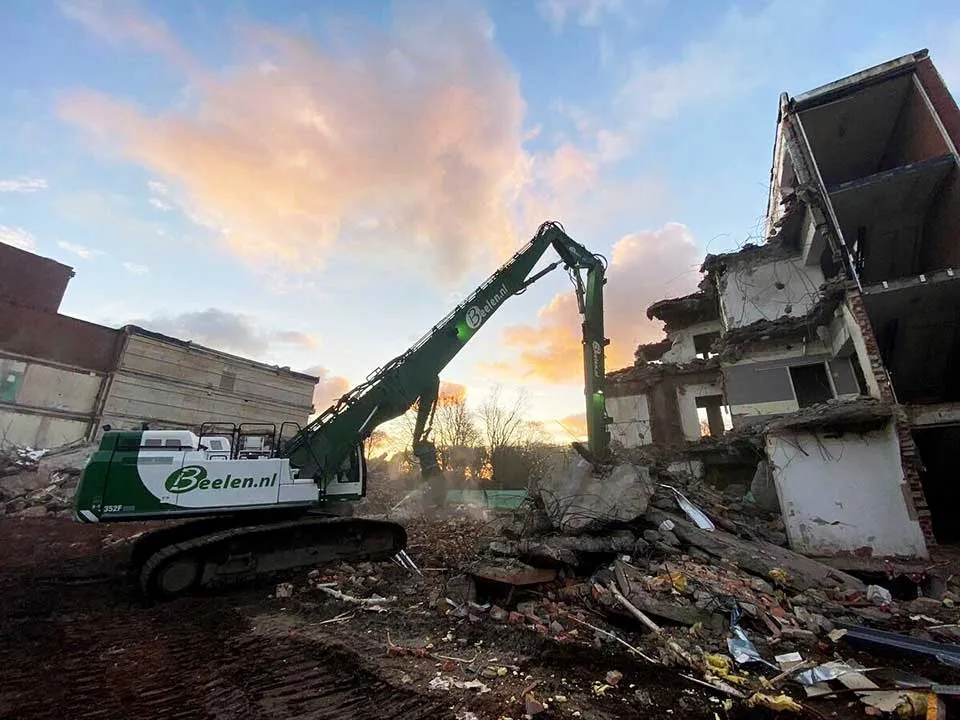
Much more needs to be done to tackle the waste of raw materials in the Dutch economy. After all, by 2030 half of the raw materials used by the Dutch economy must be recycled, and by 2050 the economy must be fully circular. At the current pace, these ambitions are unattainable, the ICER says.
To achieve this, however, “voluntary and non-binding measures will ultimately prove inadequate”, the PBL writes, expressing the hope that a new government will do more to act on the findings.
For example, the environmental damage caused by fossil raw materials should be reflected in the prices of products and services. “If you use a lot of the environment, you should pay a lot, and vice versa,” says Frank Dietz, one of the report’s authors. “That is emphatically not the case at present.”
Foundation
“In recent years, the Dutch government and other parties have laid a foundation and put structures in place for the transition to a circular economy. So far, the approach has focused primarily on broad cooperation between public, private and civil society organisations, and on encouraging and facilitating circular initiatives. Examples include developing knowledge and voluntary agreements such as the Betonakkoord and the Plastic Pact. The government has also identified the main instruments for accelerating the transition to a circular economy. These include extended producer responsibility, legislation and regulation, market incentives, monitoring, knowledge and innovation.”
According to the planning agency, the number of circular businesses remains small, and their share of the Dutch economy as a whole has actually fallen in recent years. “The vast majority of companies with a circular approach focus on repair, recycling and reuse, and were already active in these areas before circular economy policy was introduced. Examples include garages and charity shops.” Today’s innovative companies, startups, scientific research, subsidies and projects focused on the circular economy are largely technological in nature and centred on recycling. Less attention is paid to innovations that could radically improve the efficiency of raw materials use, new business models in which customers pay for use rather than ownership, and forms of financing or pricing that could support these. More attention needs to be paid to these areas as circular economy policy is further developed.

Incentives and compulsion
Given the government’s ambitious goals of achieving a fully circular economy by 2050 and halving primary abiotic raw materials consumption by 2030 as an interim target, policy will need to rely more on ‘incentives and compulsion’ to deliver them. This could include levies and regulation, including the setting of standards. Environmental damage should be reflected in the prices of products and services. Legislation and regulation must not put circular initiatives at a disadvantage compared with existing production practices. “This also calls for action at EU level. The vision of a fully circular economy by 2050 and the interim target for 2030 must also be made concrete and specific for the various sectors, such as construction and manufacturing, production chains and product groups. This is not the responsibility of a single ministry, but requires a government-wide approach in which each ministry has its own role and responsibility as part of a coherent whole.”
Question about this story? Ask your question
Keep following this
Get an email when a new story is published. No account needed.
- ThemeSafe and clean processing
- SubjectScreens & crushers