Robust baler boosts efficiency in foam waste processing
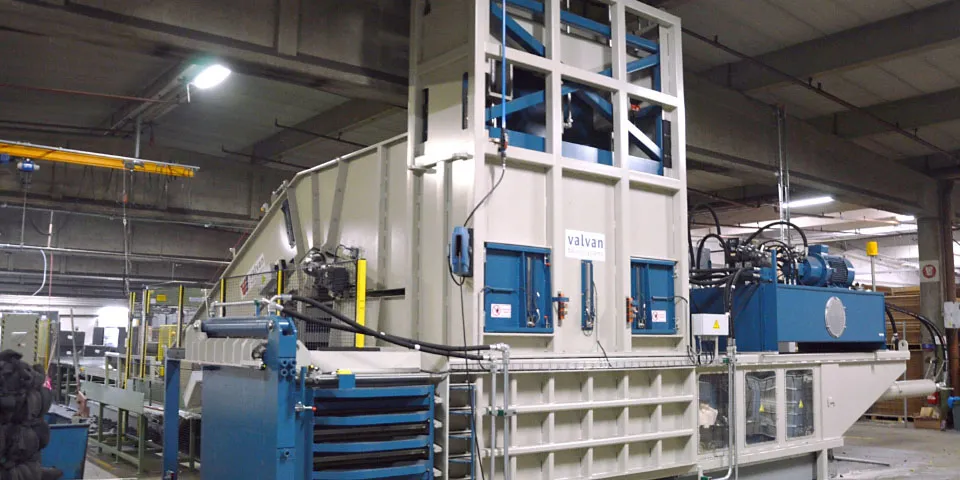
Foam waste is more difficult to compress because of its resilience. A durable solution therefore requires robust machines that can withstand heavy use and provide sufficient pressing force. Recticel therefore partnered with Valvan Baling Systems to replace its balers. By tailoring the equipment to its needs, both the Wetteren and Kesteren (the Netherlands) plants gained an efficient solution that produces heavy, well-shaped bales that can be stacked safely.
Recticel is a Belgian listed group specialising in products made from polyurethane foam. Since CEO Olivier Chapelle took office, sustainability has been more central than ever. Management aims to make polyurethane a sustainable product in every sense of the word. The company has, for example, invested in a unique pilot line to give the foam filling from old, used mattresses a second life. Production waste from its own manufacturing operations is also being addressed. The materials are collected and compressed into bales. However, the old balers had seen better days. The result? They were increasingly prone to breakdowns, with all the associated costs. Moreover, the bales no longer met current requirements. Low bale weights and a
poor bale shape made transport less efficient. The number of hours employees still had to spend baling these bulky materials was also too high.
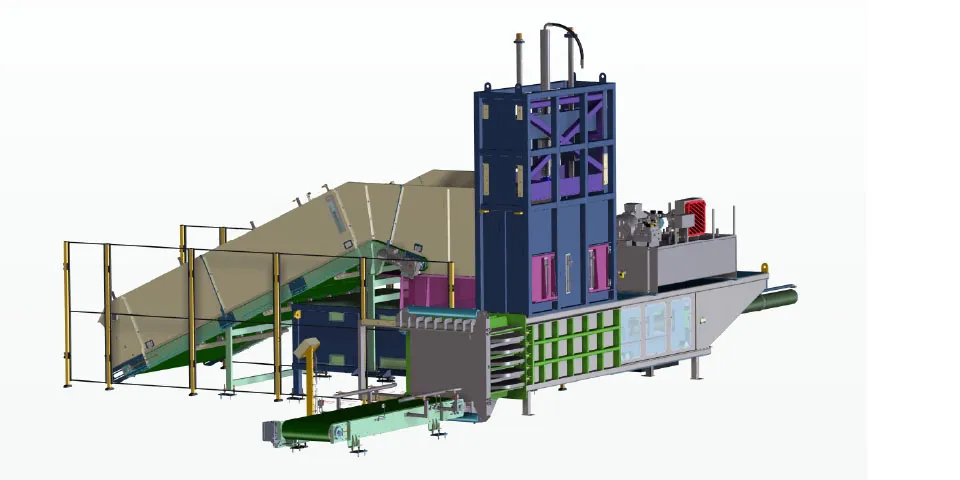
Both plants are getting the same baler, with a few minor modifications to suit their working methods. “Our engineering team can adapt the equipment accordingly and, in effect, deliver a bespoke solution,” says Conrad Verplancke.
Complex material
Foam waste is highly resilient, making it far from straightforward to compress. Recticel therefore chose a baler from Valvan Baling Systems. Valvan is part of the Valtech Group, which together has considerable engineering and production capacity, enabling it to offer complete recycling solutions. The company’s machines have an excellent reputation in the market for their quality. They are built especially heavily and robustly to withstand heavy use. The model selected was an H75DL2500L baler. Sales engineer Conrad Verplancke explains why it was the ideal choice for Recticel. “With a feed opening measuring no less than 2.5 m x 2 m, large volumes of material can be processed very easily and safely. This also drastically reduces the manual work involved in cutting up oversized foam blocks.” To accommodate this large feed opening, the machine has a 25-tonne side press that can slide open and shut what is effectively the entire side wall of the loading chamber.
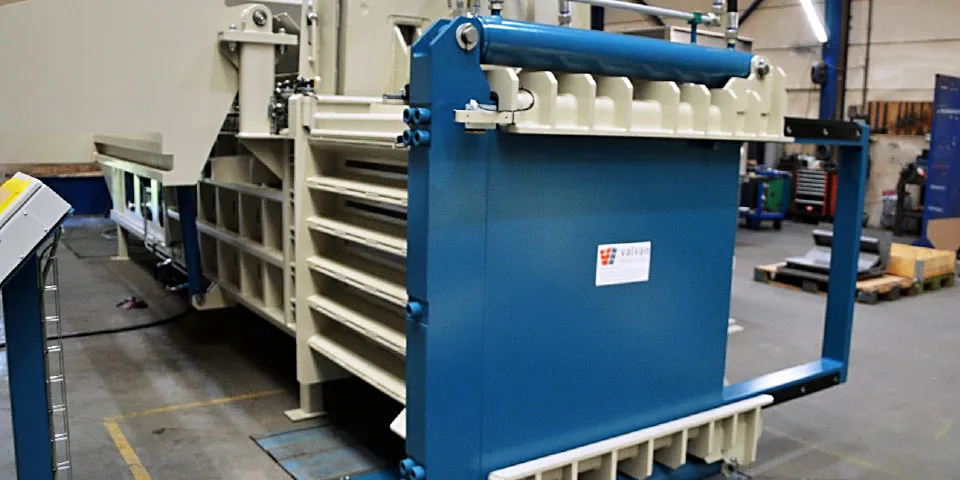
Recticel opted decisively for a new development from Valvan Baling Systems. The 25-tonne vertical pre-press plate also pre-compresses the bulky material vertically.
A new development in closing the chamber
The next important step in the baling cycle is to close the loading chamber before high-pressure pressing begins. Previously, this was done with a hinged loading flap, which was prone to wear. Recticel opted decisively for a new development from Valvan Baling Systems. The 25-tonne vertical pre-press plate also pre-compresses the bulky material vertically. Verplancke explains: “This makes pre-compression even more effective and straightforward. Once both the side press and the vertical press are in the closed position, the material is compressed forwards. We use a robust press ram on hardened steel wheels, which is guided precisely along the long baling channel. The foam waste is now compressed with a force of 75 tonnes in the pressing chamber against the heavy-duty end door.”
Listening to customers’ needs
After a few loading cycles, Recticel achieves its target bale weight of 400 to 500 kg. All that remains is tying the bales, which can be done quickly and efficiently in the Valvan balers thanks to the wire-guiding systems, both horizontally and vertically. The result is heavy, well-shaped bales that can be stacked safely and then transported by lorry or in containers to recycling companies. Recticel was also particularly pleased that its needs were listened to carefully. Both plants are getting the same baler, with a few minor modifications to suit their working methods. “At Wetteren, the large foam offcuts are first sawn up and fed in on a conveyor belt. At Kesteren, there is more cutting waste, which is taken from the production lines to the baler in carts and tipped straight in. Our engineering team can adapt the equipment accordingly and, in effect, deliver a bespoke solution for the customer,” Verplancke concludes.
Question about this story? Ask your question
Companies in this story
Keep following this
Get an email when a new story is published. No account needed.
- ThemeSmarter use of machinery and plant
- SubjectEquipment
- CompanyValvan