From shooting ranges to decorative bark: how screening machines make a difference
Text Els GoethalsImage SMO
Recycling takes many forms, shaped by the goals of each company or organisation. That is certainly the experience of machine builder SMO, based in Eeklo. FleXiever screening machines demonstrate their versatility across a wide range of sectors, from earthworks and horticulture to construction and metal processing. Two recent case studies once again show just how broad and surprising their applications can be.
Who would have thought that FleXiever screening machines could also prove useful at shooting ranges? The Mini-Screener 3 fractions is indeed the ideal solution for separating rubber, bullets and fine dust. How does it work? “At shooting ranges, where police officers train to use their service weapons safely and responsibly, strict quality requirements apply. A bullet trap, usually a rubber backstop designed to stop bullets, is essential for safety. After repeated training sessions, lead fragments, fine dust and other residues build up in the rubber granulate. Regular cleaning is therefore essential,” says sales representative Michael De Craene. “The FleXiever Mini-Screener 3 fractions is the perfect solution.”
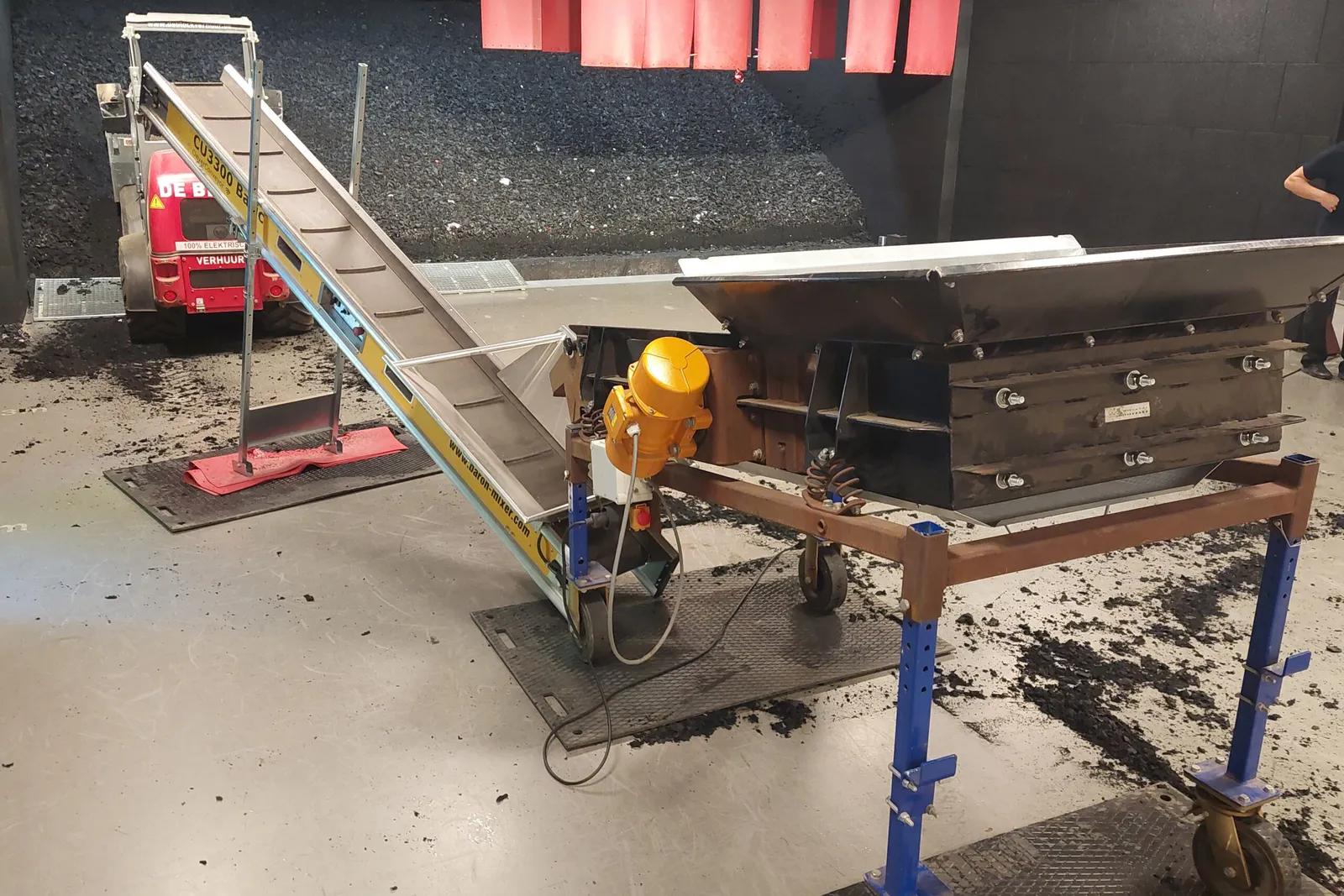
FleXiever screening machines in action at the shooting range
“The Mini-Screener 3 fractions separates the material into three streams: large pieces of rubber, a fine fraction consisting of dust and small particles, and an intermediate fraction roughly the same size as the bullets,” De Craene continues. “After screening, the intermediate fraction is vacuumed up, leaving the bullets as a clean fraction. What’s more, the clever positioning of the discharge opening and conveyor belt means that the rubber fractions are blown back towards the shooting range.” An unexpected application, then. It shows how machine builder SMO, the manufacturer of FleXiever screening machines, meets specific customer requirements. Thanks to modular production, every model can easily be upgraded, with a wide choice of screen decks and additional options such as conveyor belts and feed hoppers. In this shooting-range application, the Mini-Screener 3 fractions delivers faster separation, less manual work, clean material streams and easy recovery. The rubber fractions can therefore be returned to the shooting range, while the copper and lead, both valuable non-ferrous metals, are given a second life through a metal recycling company.
Adding value to decorative bark fractions
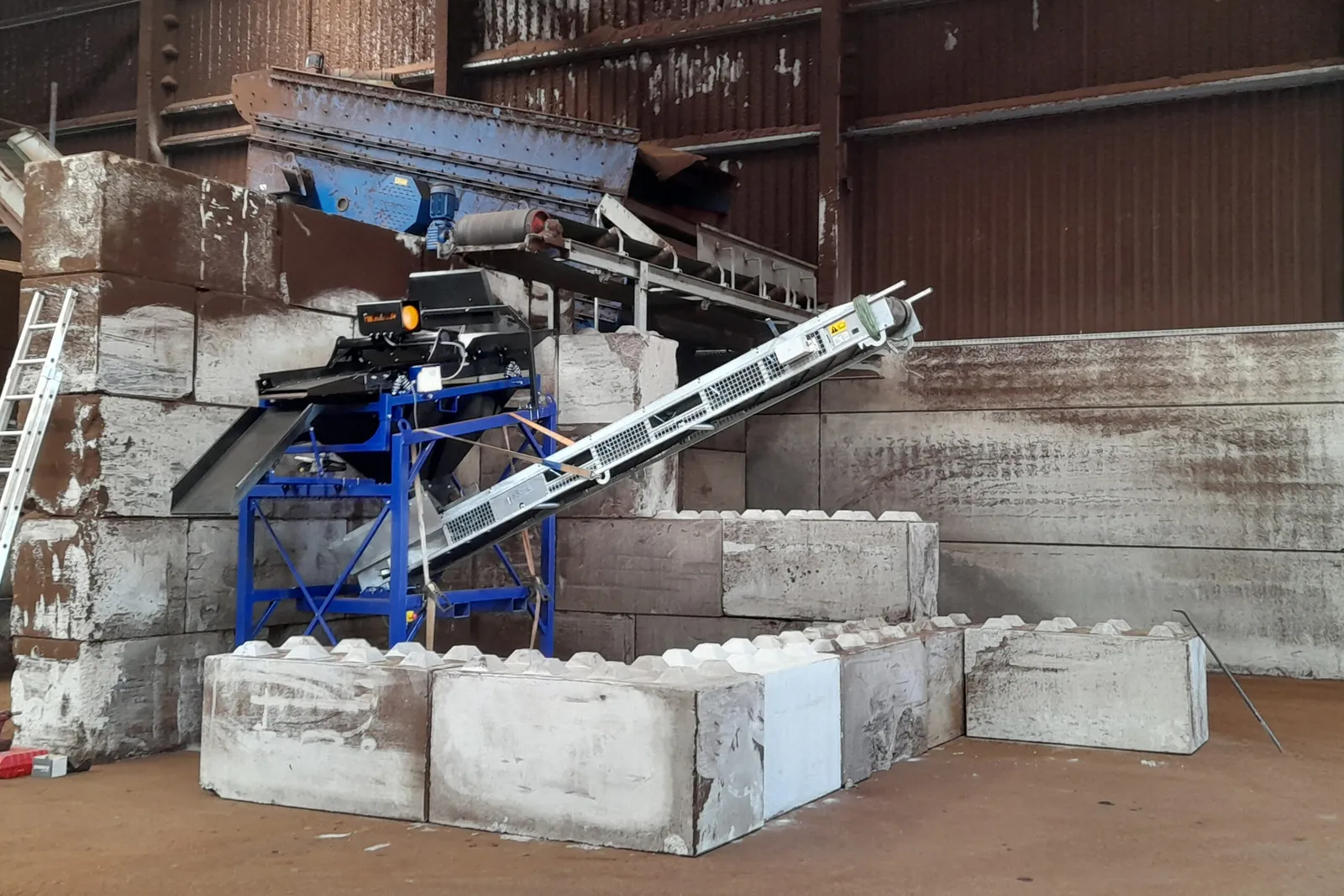
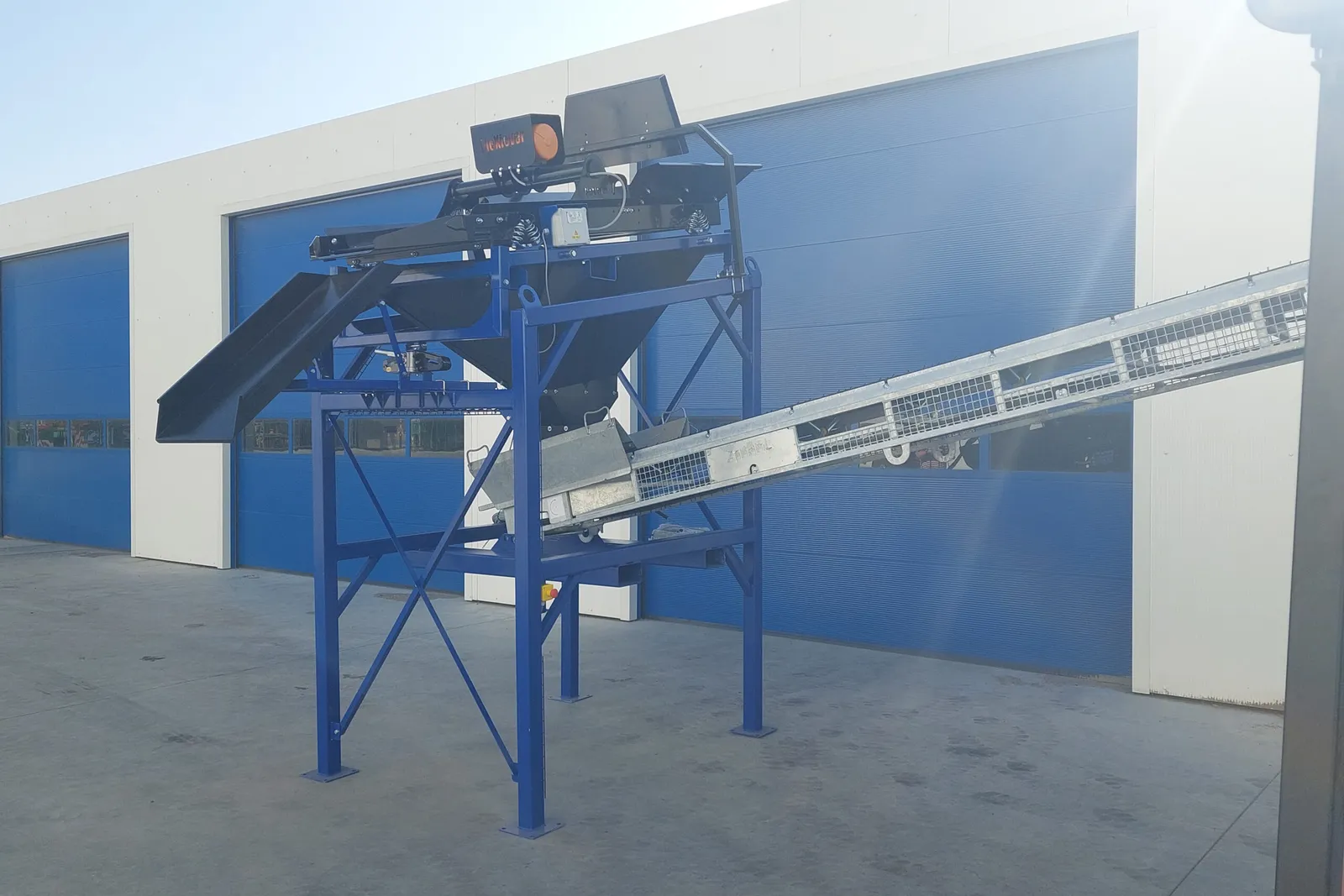
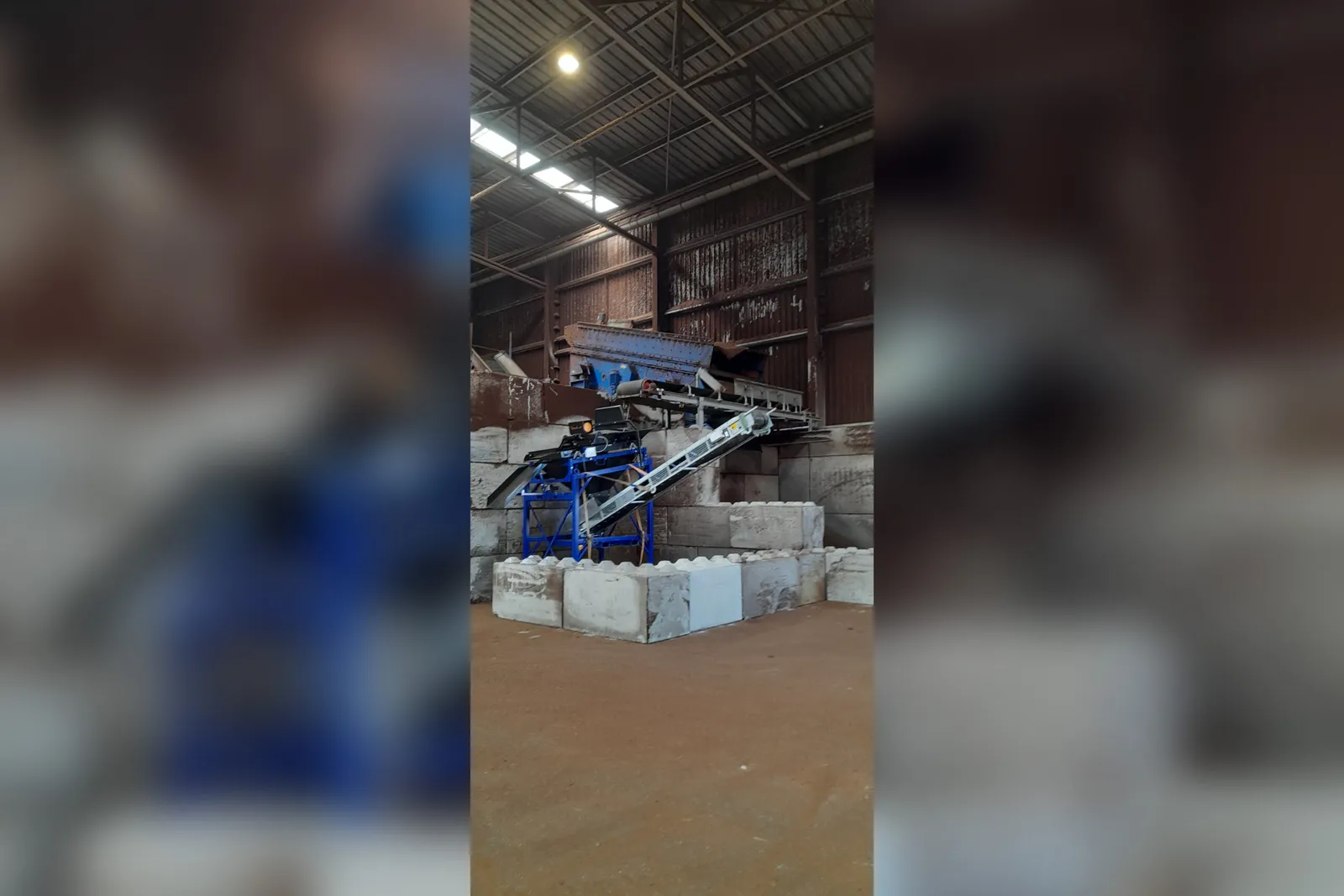
The second case study showcases a completely different application. At Bank Terminal in Puurs, a FleXiever Mini-Screener 2 fractions is used to separate bark fractions. This has enabled its parent company, Group Op de Beeck, a producer of ground cover and soil improvers, to further refine its end product. “The customer ordered a FleXiever Mini-Screener with a custom-made frame and a 4.5 m-long conveyor belt to discharge the fine fraction,” says De Craene. “This new addition serves as a highly efficient final stage in a series of screening processes, separating long, thin twigs from the bark fraction smaller than 15 mm. The enclosed section of the screen deck allows the twigs to slide horizontally in a controlled manner, so they do not slip through the mesh. Quite literally, in this case. Bark Terminal can thus expand its decorative bark range with an even finer grade, while also recycling pieces of wood that would otherwise go to waste. Alongside these case studies, you can explore the versatility of our applications on our brand-new website. Or visit our YouTube channel to watch FleXiever screening machines in action in more than 250 videos. Live demonstrations are also available, of course,” De Craene concludes.
Een zakelijke vraag aan SMO — Home of FleXiever? Get in touch
Companies in this story

Keep following this
Get an email when a new story is published. No account needed.
- ThemeRecovering metals and creating value
- SubjectEquipment
- CompanySMO — Home of FleXiever