Fine grinders: versatile powerhouses in a circular economy
Growing pressure to tackle climate change is prompting many pioneers to rethink how they use raw materials. A few are sticking their necks out and investing in recycling to keep their raw materials in circulation for longer. The snowball effect is beginning to take hold: more and more companies now recognise that circular business models can also be profitable. Fine grinders are an essential link in the chain: in many cases, waste can only be returned to the loop once it has been cleaned and reduced in size.
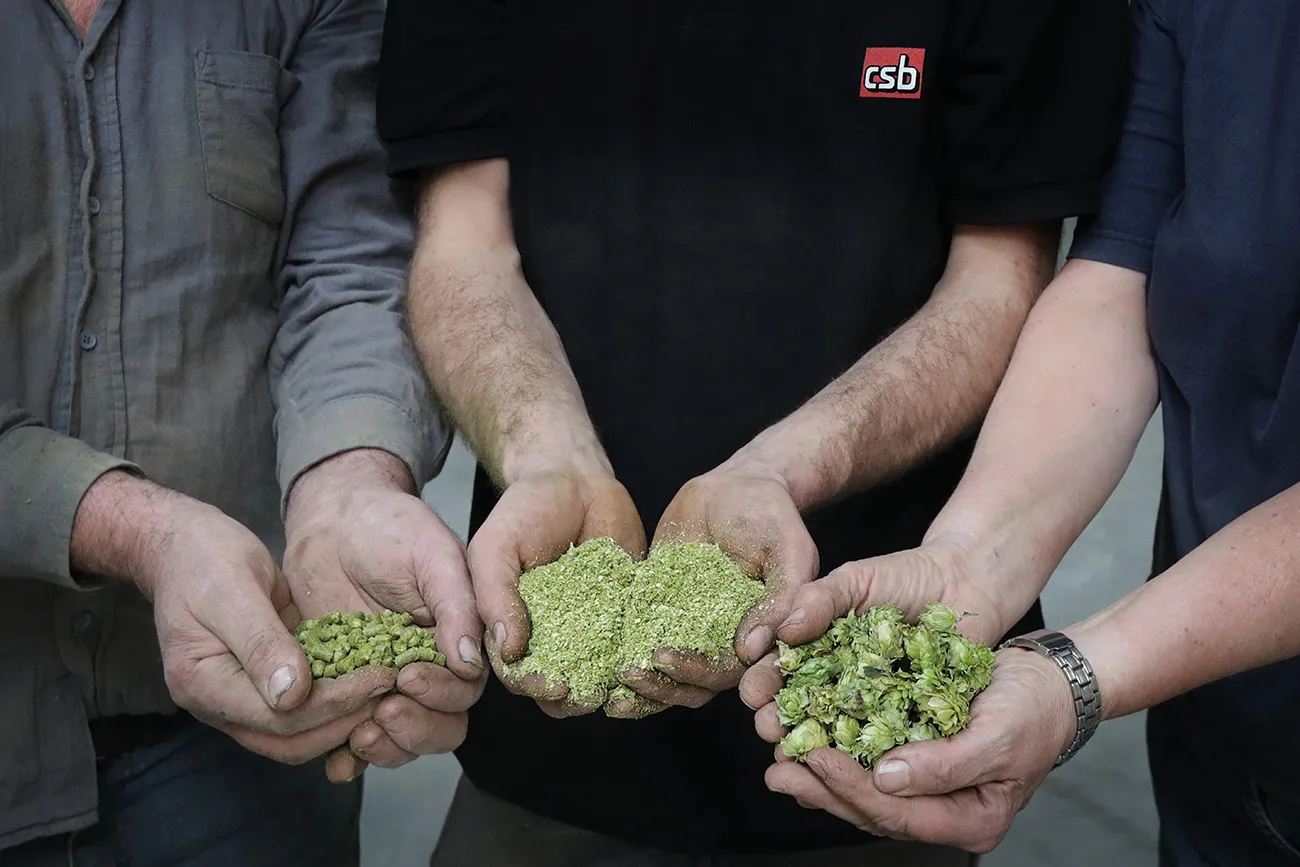
A fine grinder reduces raw materials to tiny particles measuring around 5 mm or less, down to as little as 250 µm. There are many applications beyond the recycling sector. CSB Waste Solutions, for example, recently installed one at a hop farm. “A first in our country,” says managing director Stefaan Paulus. “The machine micronises the hop cones, allowing their aromas to come through even better when brewers use them. This stainless-steel machine can be used safely in the food and pharmaceutical industries, including for producing spices or pulverising medicines.” For the waste-processing specialist, it was interesting to apply the technology in another sector. “Here, the technology is used to upgrade a virgin raw material, but the same kind of installation can just as easily be used to turn waste into new products.”
Cradle-to-Cradle
This Cradle-to-Cradle principle is already being applied in specific branches of the plastics industry. When post-consumer plastic is collected, cleaned and reduced in size correctly, it can once again serve as a feedstock for new products. Recycled plastic window profiles made from 100% recycled material are already on the market. The manufacturer collects the old profiles itself and processes them into a compound that forms the basis for new windows and doors. The fine grinder is used to reduce old plastic to a fraction suitable for extrusion. Paulus says: “It shows that it is entirely possible today to turn waste into high-quality products again, but despite the urgent need, this is not yet happening on a large scale. Extensive recycling could help reverse the negative perception of plastic. It is not known as the most environmentally friendly invention, yet it is hard to imagine a world without this versatile, flexible and inexpensive material.”
Recognising the value of raw materials
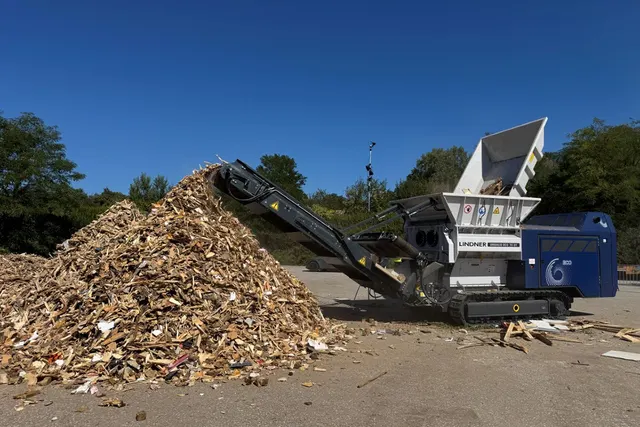
The wood-processing industry also uses fine grinders, including to turn waste wood into new particleboard. “By making use of waste in this way, companies give the circular economy a considerable boost,” says Paulus. “Wherever possible, we want to reuse raw materials to extend their life cycle. It also pays not to write off production residues as waste too soon. By grinding them down to a smaller fraction, they can often be saved from the waste pile.” For example:
• New feedstock: what counts as production waste for one company can be a feedstock for another. By grinding the wood finely, with as little wood dust as possible, it can be used to make wood pellets and cat litter, and as a feedstock for extrusion. Wood residues can also be used as a soil improver, while wood chips are increasingly being used in playgrounds, where they help children land softly.
• Energy recovery: wood-processing companies can reduce wood residues to produce valuable fuel. This fuel can be used, among other things, to generate process heat (steam) or to heat the company’s own buildings. The resulting savings on energy bills are a welcome bonus during an energy crisis.
New legislation to promote recycled content
“The technology is ready and the possibilities are extensive, but the market mechanism is holding back a major breakthrough,” Paulus explains. “As long as virgin materials are cheaper than recycled alternatives, manufacturers will be hesitant. Especially when end consumers are also unwilling to pay more for a product containing recycled material.” He believes new legislation and/or other incentives could help: “If it were stipulated that every product had to contain, say, 10 to 15% recycled material, we could move towards a more sustainable future faster.” Alongside its own range of size-reduction machines, CSB Waste Solutions also specialises in IQR mobile crushers, SID industrial shredders and wood-fired heating systems with heat recovery.
Question about this story? Ask your question
Keep following this
Get an email when a new story is published. No account needed.
- ThemeCircular business under changing regulations
- SubjectEquipment