Custom seals extend service life
Text Valérie CouplezImage Rubix en SKF
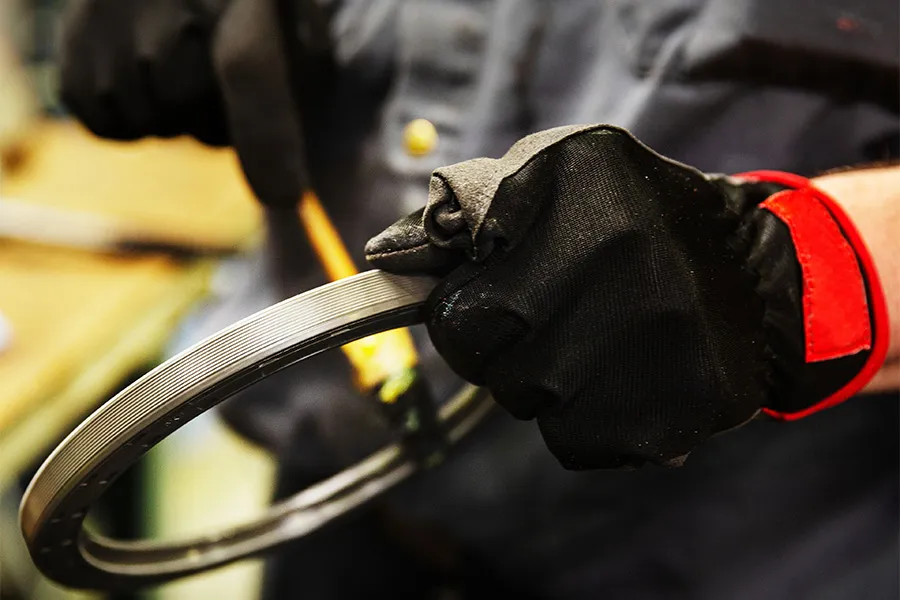
Dust, moisture, dirt and rotating parts … To put it mildly, that is not a good combination. Particularly in the demanding applications typical of the recycling industry, the solutions provided by the machine manufacturer may not always be sufficient. Rubix and SKF are therefore drawing on their combined expertise to explore how the service life of your application can be extended. A good example is so-called ‘machined seals’. These are made from polyurethane to the exact specifications of your machine, component or shaft, allowing it to run for longer without interruption.
Know the feeling? The warranty period has just expired when your shaft seizes up completely. A common cause is dust, moisture or dirt entering the shaft as a result of wear on the sealing ring. You can replace it with the same seal, but the same failure will happen again. “Unexpected downtime is like toothache: it never comes at a convenient time. We try to support our customers by finding a solution as quickly as possible so they can get back to work, while also investigating the root cause of the problem. That way, at the next maintenance shutdown, we can opt for a more durable solution,” explains Dick Van Elsen, commercial director at Rubix Competence Center Bearings & Power Transmission.
Machined seals to extend service life
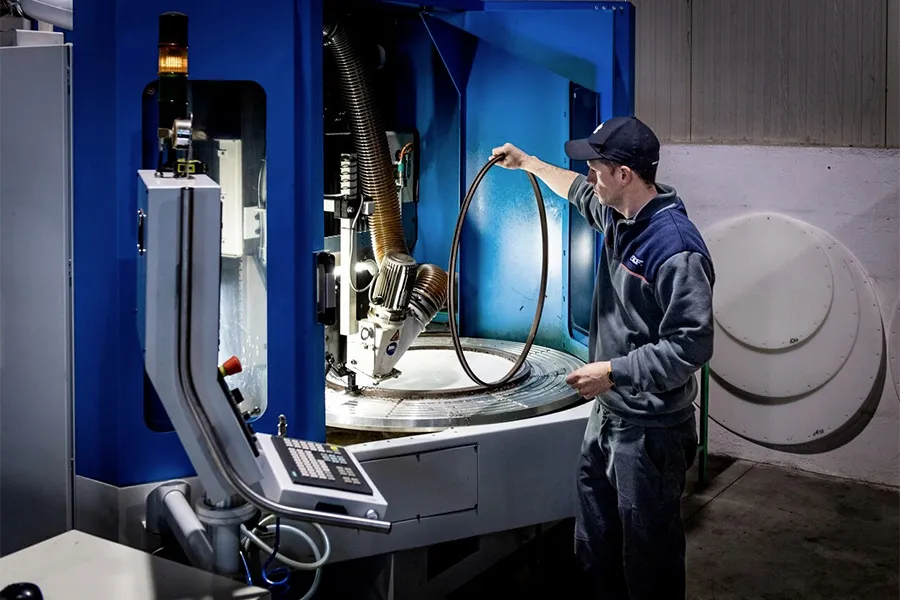
The main driver behind these improvement programmes is often extending the service life of rotating components. And this does not always require major interventions. “We often find that seals are a vulnerable point. They are small components, but they can have a major impact,” says Van Elsen. Geoffrey De Ram, SKF Business manager Seals Benelux, adds: “Machine and component manufacturers develop solutions that work very well for most applications. But in the demanding environment of the recycling sector, they sometimes fall short. Or technological advances may have made better alternatives possible. The great advantage of ‘machined seals’ is that they are always made to measure and do not have to be ordered in large quantities. After the necessary research and engineering work, during which all the application parameters are mapped out, the material is machined to suit the application. If the engineering work has already been completed, the seal can be with the customer in as little as four weeks.”
Greater wear resistance with polyurethane
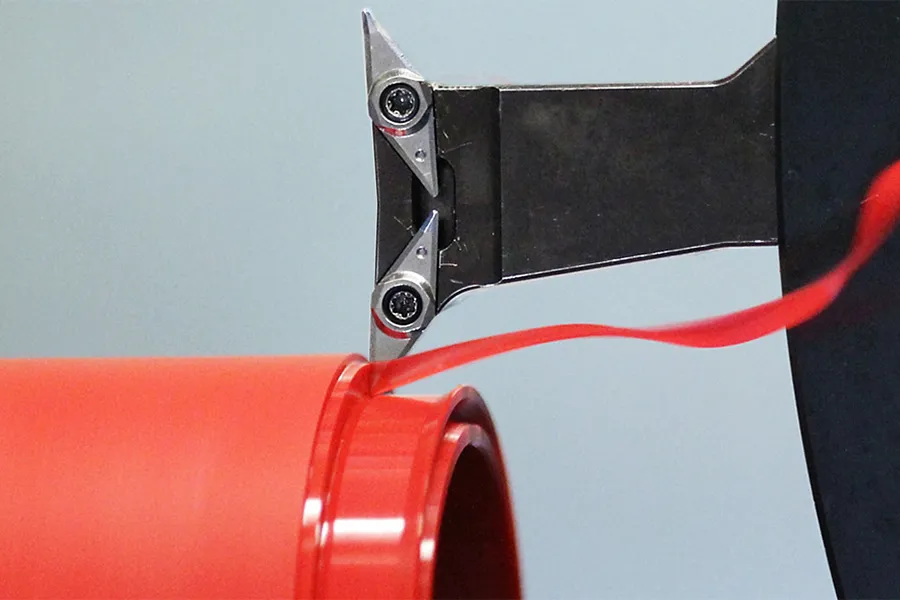
The choice of material and profile design are key to the process. The SKF team of specialists responsible for this service recommends polyurethane as the material of choice. And for good reason. “DIN tests have shown that its wear resistance is five times higher than that of conventional rubber. As a result, the material can last up to three times longer. In addition, there are many variants within the polyurethane family, making it possible to achieve the right combination of physical and chemical properties for the application in question,” says De Ram. Another important advantage of the material is that split sealing rings can be made. “If the seal cannot be fitted around the shaft in one piece because a particular machine component cannot be dismantled, or is difficult to dismantle, we can split the sealing material and then join it back together without compromising its performance.”
Clear communication
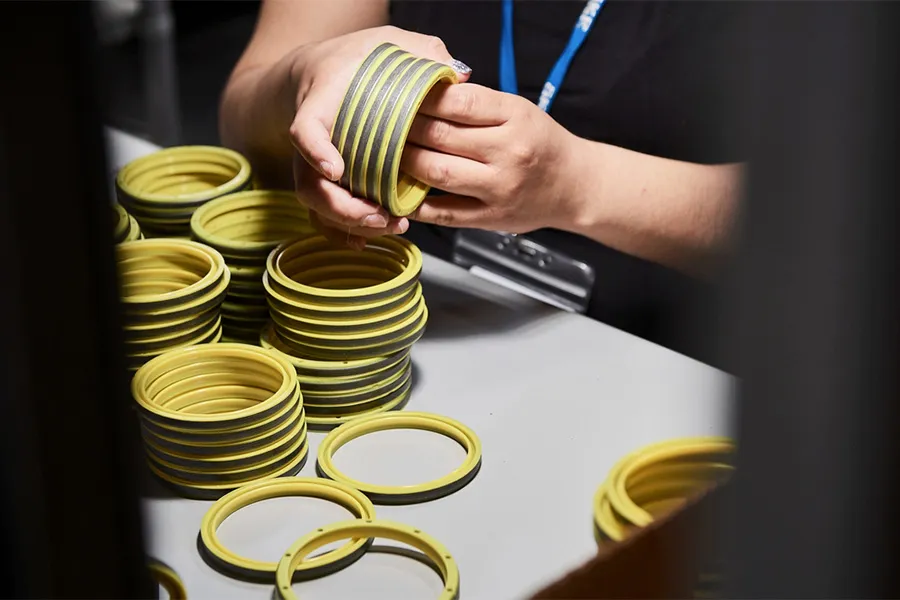
The results achieved by these machined seals speak for themselves. “We cannot predict how much longer the seal will last compared with the conventional solution. But we can guarantee the customer that its service life will increase. If required, we can also carry out calculations, for example to see how the material will respond under pressure. That is why we focus on open communication. After a thorough analysis, we are clear about what we can deliver,” De Ram concludes.
Example from practice
A project to improve the seals on one of the water baths was launched for a Belgian company active in plastics recycling. The sharp plastic flakes were causing the gland packing to wear quickly, resulting in frequent leaks. This critical process component needed replacing on average every three to six months. De Ram’s team set out to investigate what a better solution might be. The answer was a teardrop-shaped profile, designed to keep as much dirt as possible out from the outside, preventing build-up and wear. The material chosen was S-ECOPUR, a hydrolysis-resistant polyurethane with self-lubricating properties. And the result? “We’ll have to wait and see. We’ve already delivered on our promise: it’s now more than six months later and the seal has not failed.”
Question about this story? Ask your question
Keep following this
Get an email when a new story is published. No account needed.
- SubjectEquipment