












What is the employment impact of the circular economy?
The circular economy is gaining momentum. The many promising projects emerging across the country are just one indication of this. And after 100 Flemish partners signed a declaration of commitment at the Circular State of the Union on Monday 25 April 2022, each formally pledging to help make the transition to a circular Flemish economy a reality in their respective fields, we know this trend will only accelerate. The question now is what impact this will have on employment. Will the circular economy really become a driver of growth for local jobs?
A driver of growth for local employment
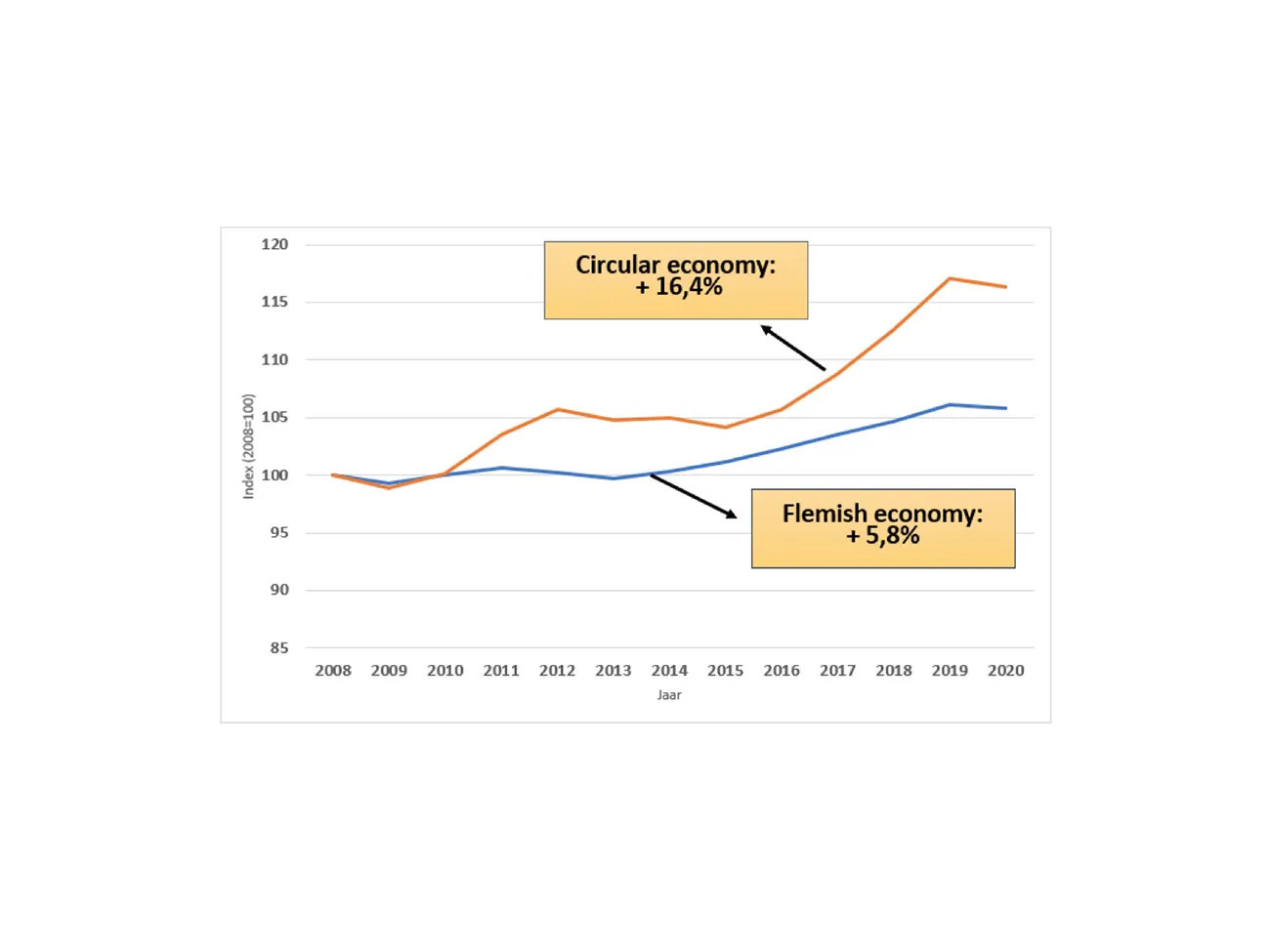
Research by KULeuven Research Manager Kris Bachus shows that it will. Employment in circular sectors in Flanders rose by 16% between 2008 and 2020. This means circular employment grew three times faster than the Flemish economy as a whole, where growth was 5.8%.
The waste and recycling sector recorded the same employment growth, confirming its status as a key circular sector.
The outlook is bright, too. According to various studies, the transition to a circular economy will increase employment in Flanders by 1% between 2016 and 2030. That may not sound like much, but in figures it means as many as 30,000 additional jobs. Over the same period, the number of jobs in companies involved in waste recovery is expected to rise by as much as 21%.
Growing demand for technical talent
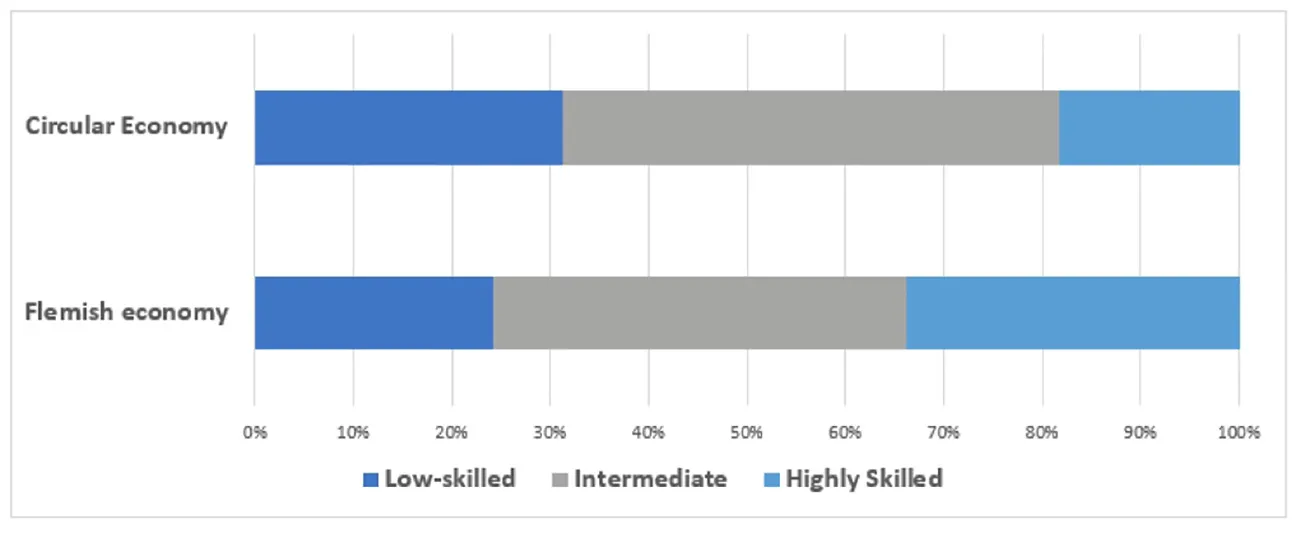
What do we know about these circular jobs? Current figures show that they are predominantly held by men (85%). Compared with the Flemish average, a larger proportion of workers in these jobs also have a lower level of education.
But, as in other sectors, the circular economy is also competing for people with an intermediate level of education. Many of these roles are technical positions that are difficult to fill.
The onus is on businesses
The search for technical talent will only intensify in the coming years. The rise of the circular economy is not the only trend having a major impact on the labour market. Others include an ageing population, digitalisation and the transition to a low-carbon economy. Efforts to persuade young people to choose a technical STEM pathway are therefore essential to increase the supply of technical talent.
Businesses in circular sectors can also take a range of initiatives to recruit the technical talent they urgently need:
- Businesses can promote technical education in their own way. For example, they can give employees the opportunity to share their knowledge and experience in schools. Or they can do the opposite, giving people from the education sector a taste of working life and helping them gain a better understanding of economic realities.
- Invest in ‘reskilling’, retraining workers from other sectors, and lifelong learning.
- Relax recruitment requirements so that more people are eligible. By providing on-the-job training and making training a regular part of work schedules, businesses can help employees reach the required level of competence.
Opportunities and challenges
In short, the circular economy is a real driver of growth in local employment, but businesses in these sectors face considerable challenges in finding the people they need to fill the additional jobs. It is up to entrepreneurs and business leaders to innovate and invest in their HR policies. They cannot afford to stand on the sidelines: although there is no generally binding policy in place yet, circular economy policy targets will only become more ambitious in the coming years. The demand for technical talent will rise accordingly.
Question about this story? Ask your question
Keep following this
Get an email when a new story is published. No account needed.
- ThemeCircular business under changing regulations
- SubjectDenuo







