












What can manufacturers do to prevent lithium-ion fires in the recycling chain?
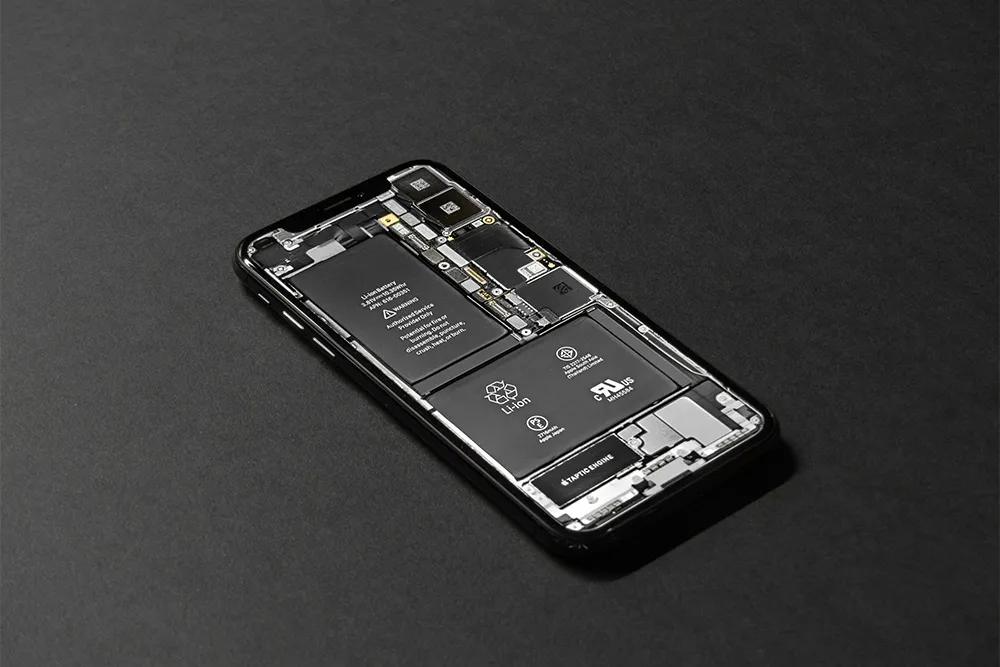
As theory predicted, significant work is currently under way to develop new lithium-ion batteries that are inherently safer, including in terms of fire risk. Manufacturers are therefore being explicitly urged to take responsibility for all the consequences their products may have throughout the entire waste and recycling chain. But those new batteries are not just around the corner. Which solutions should be prioritised today to reduce the number of fires in our sector? Eric Dewaet of Recupel and Tess Pozzi of Federec shared their insights.
Of the electrical appliances coming onto the market today, 80% contain a battery. That means there is considerable potential to give these batteries and their raw materials a second life, provided they can be collected separately as effectively as possible. According to Recupel figures, this is already working fairly well. Only 1% of appliances still contain a battery when collected. That said, manufacturers could certainly step up their efforts to make batteries easy to remove, whether by consumers or by waste treatment companies.
New plant goes up in flames
Batteries still end up in other waste streams, however, where they can cause extensive damage. This is not just happening in Belgium. Tess Pozzi of the French recycling federation Federec says an Observatoire has been set up in France to better assess the risks at industrial facilities. In 2021, 83% of recorded incidents were found to have been caused by fires. A very recent incident reduced a new packaging materials plant, built at a cost of 40 million euros, to ashes. Prevention measures are now being imposed based on the waste streams received. These are often disproportionate measures that fail to take the specific characteristics of each site into account.
Batteries are everywhere
The rise in the number of fires comes as no surprise. There were more in the past year than in the previous ten years combined. In France, too, electronic waste is being blamed, as it increasingly contains batteries. Even some sunglasses now contain batteries. For the past two years, electronic waste has therefore no longer been allowed to be transported in bulk. Specially designed containers are intended to reduce the risk of fire. This has been the case in Belgium for longer.
Fund for damage recovery
But who should bear these costs? Taking out fire insurance for recycling operations is gradually becoming unaffordable as a result of all these incidents. Yet the waste and recycling sector itself is not responsible for the problem. So, how about a fund to stimulate innovation and finance damage recovery? The audience pointed to manufacturers (65%) and government (19%) as those who should cover the costs. Recupel, however, believes manufacturers are already doing enough and points to the start of the chain. If separate collection is done properly, the risk of accidents is reduced.
Deposit-return schemes and eco-modulation as levers
Other organisations share this view. They see the introduction of deposit-return schemes as the most important weapon in the fight against lithium-ion fires. The government could also step up its efforts. A principle such as eco-modulation, whereby the environmental contributions paid by manufacturers depend on ecological criteria, for example how easily the battery can be removed, could provide a lever. In France, a bill is currently making its way through the legislative process to ban the sale of single-use e-vape products. These, too, often end up in the wrong bin.
Question about this story? Ask your question
Companies in this story
Keep following this
Get an email when a new story is published. No account needed.
- ThemeCircular processing of electronics and batteries
- SubjectDenuo
- CompanyRecupel







