












Waste producers and collectors work together to close material loops
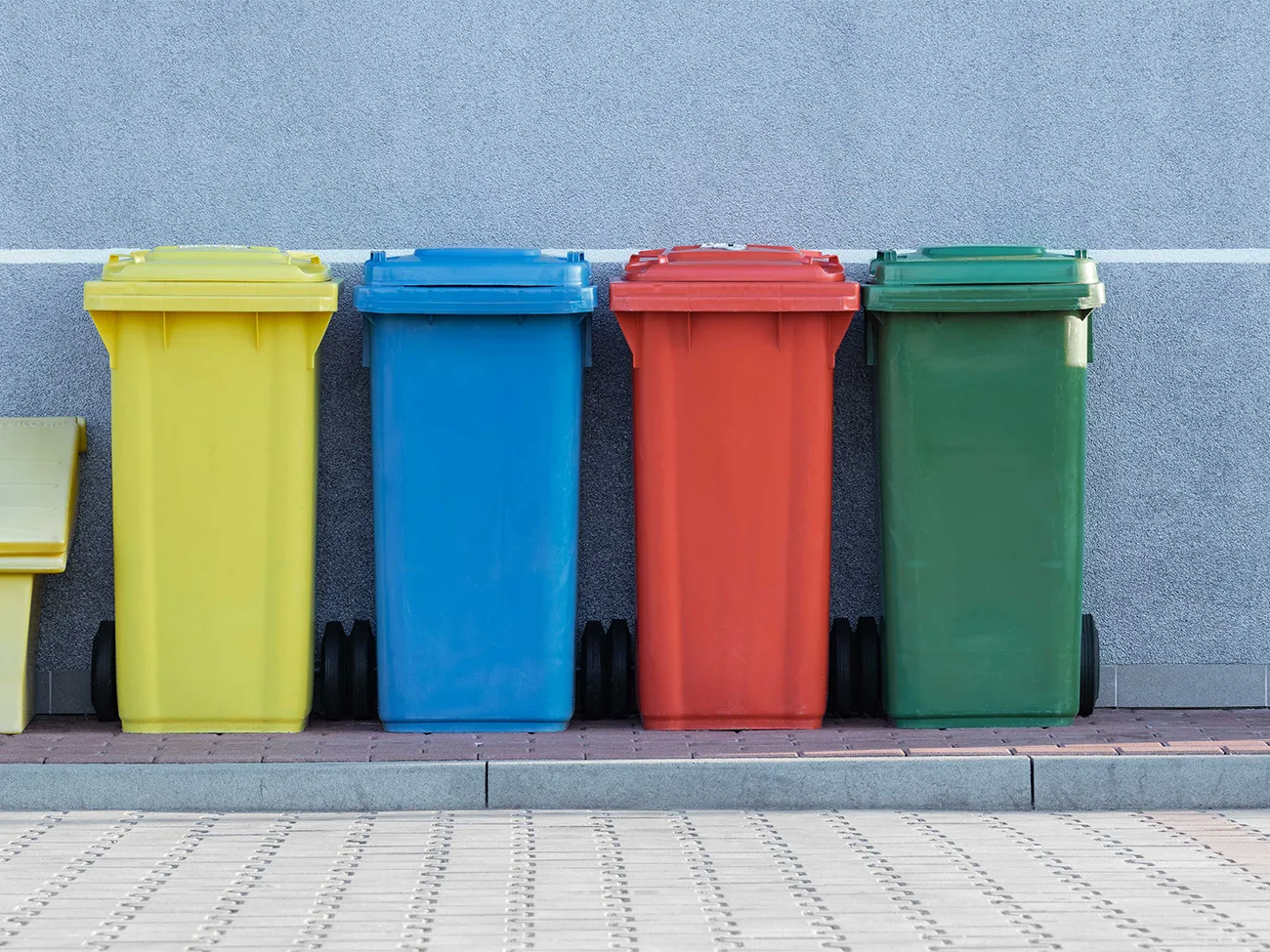
Over the years, we have increasingly sorted our waste in Flanders. Why? Because sorting is the first step towards recovering and recycling materials so they can then be reused in new products. This prevents us from having to extract and import raw materials again and again. And that brings not only environmental benefits, but economic ones too.
Sorting has been compulsory for years
To realise these benefits, the Flemish government requires businesses to collect at least 22 types of waste separately. These requirements are set out in Flemish legislation, namely the Materials Decree and VLAREMA.
This sorting requirement is not new. Collectors have been advising and assisting waste producers for years. Together, they work out the most effective collection arrangements, such as collection frequency, adding a new waste stream, placing containers, setting up waste sorting areas and collecting several non-hazardous dry waste streams in a single container. If we want to make the Flemish economy more circular, we need to be more ambitious and recover even more recyclable materials from residual waste.
New: waste collectors also monitor correct sorting
To support this, the Flemish government has assigned waste collectors a new responsibility. It requires all collectors of commercial waste to monitor compliance with the sorting requirement. This new obligation is set out in section 5.5 of VLAREMA, which comes into force on 1 September 2021.
In practice, this means that the waste collector must provide the waste producer with precise information about the sorting requirements and supply the necessary bags and containers so that waste can be presented separately. In addition, the collector will now inspect the residual waste presented for collection to check that the sorting rules have been followed correctly. In other words, it must not contain hazardous waste or waste covered by the sorting requirement.
Whenever the waste collector finds hazardous waste or waste covered by the sorting requirement in commercial residual waste, Flemish legislation requires the collector to take one of the following actions:
• Refuse to collect the waste. This will always happen if hazardous waste is found in the residual waste. This gives the waste producer the opportunity to remove the waste that must be presented separately from the residual waste, and have the remaining residual waste collected by their collector.
• Take the waste away and sort it, incurring additional costs. The collector must also record this in their own non-conformity register or in the OVAM register.
• Take the waste away for incineration and record this in OVAM’s non-conformity register. The Flemish government consults this register to address businesses about their sorting practices.
The waste collector must record all feedback given to customers. OVAM can also request the collector’s internal register to address businesses about their sorting practices.
The set of non-conformities is intended solely to give the government a clear picture of the situation. It therefore does not constitute direct or indirect evidence of a breach of legislation in any circumstances. Only the environmental inspectorate can establish that a breach has occurred, on the basis of its own inspection at the business premises.
What happens if a business does not sort its waste?
If a waste producer does not sort its waste, it is in principle in breach of environmental legislation. An inspection by the Enforcement Division could therefore result in a warning or an official report, which may lead to fines.
Question about this story? Ask your question
Companies in this story

Keep following this
Get an email when a new story is published. No account needed.
- ThemeCircular business under changing regulations
- SubjectDenuo
- CompanyOVAM







