












Towards an asbestos-safe Belgium
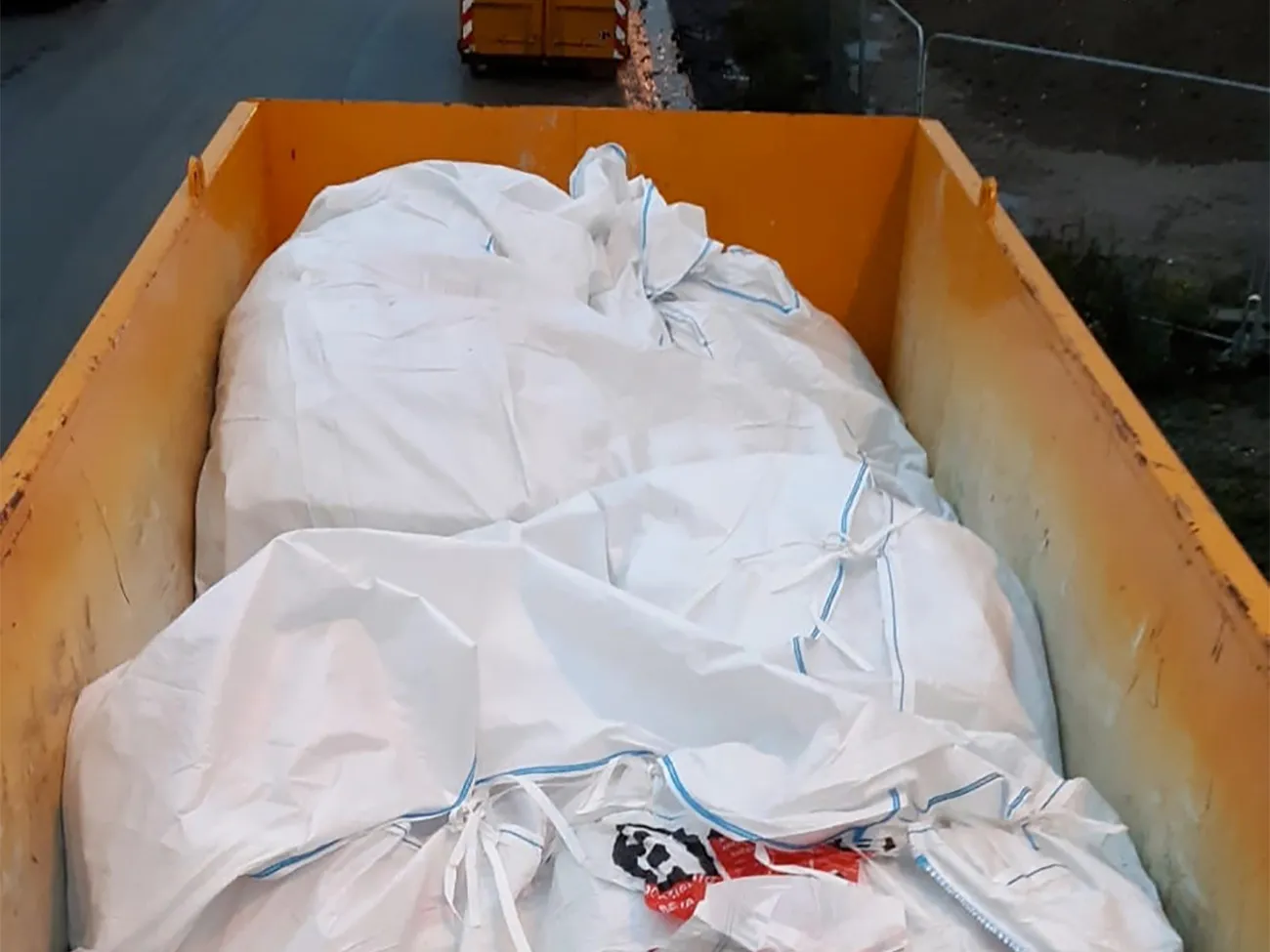
With Flanders’ current asbestos phase-out plan, pressure on landfill sites and legal and regulatory uncertainties, asbestos is more topical than ever. Our ambition as a sector is to help make not only Flanders, but Belgium as a whole, asbestos-safe by 2040.
According to the Asbestfonds, an estimated 9,000 people in Belgium have fallen victim to asbestos-related diseases (mesothelioma, asbestosis, lung cancer, etc.) over the past ten years. These figures clearly demonstrate that asbestos is a dangerous material that we should remove from our society as far as possible. In our vision paper, we therefore sought to assess Belgium’s asbestos legacy. Based on available data from the three regions, and estimates where data were missing, Denuo calculated that an estimated 5 million tonnes of asbestos still need to be removed and processed. Given that around 150,000 to 200,000 tonnes are currently being disposed of, this represents a considerable task.
Balancing safety and circularity
As with other hazardous materials, asbestos policy must take account of both safety and circularity. On the one hand, asbestos must be collected, transported and processed safely. On the other, these materials must continue to be processed in an economically and technically viable way. Both aspects are equally important, creating a tension between them.
What is needed?
Belgium’s waste and recycling sector wants to support policymakers in their asbestos phase-out policies by ensuring asbestos is removed and processed safely and professionally. To do so, we are committed to professional practice, starting with active communication with both customers and employees. This means providing information and raising awareness so that everyone involved understands the dangers of asbestos, how to handle it safely, and the opportunities for circularity when asbestos is collected and treated selectively. Achieving our ambition also requires commitment from policymakers. A clear policy vision is an important first step. Flanders has taken the lead, but a similar approach is needed in the other regions. Finally, as a sector, we would also like to stress that disposal remains the main method of processing asbestos today. Although certain asbestos-contaminated soils can still be cleaned, sufficient capacity will still be needed to dispose of other asbestos and the residues from this treatment. We therefore urge policymakers to consider not only Belgium’s total available capacity, but also how it is distributed geographically. Unnecessary journeys with a hazardous material such as asbestos are an unacceptable risk, both for circularity and safety.
Download our asbestos vision paper
Asbestos is also an important issue for our sector, which is why Denuo has drawn up its asbestos vision paper. You can download it here:
https://denuo.be/standpunten
Question about this story? Ask your question
Keep following this
Get an email when a new story is published. No account needed.
- ThemeSafe and clean processing
- SubjectDenuo







