












The waste and recycling sector is going up in flames: lithium-ion batteries are the leading cause
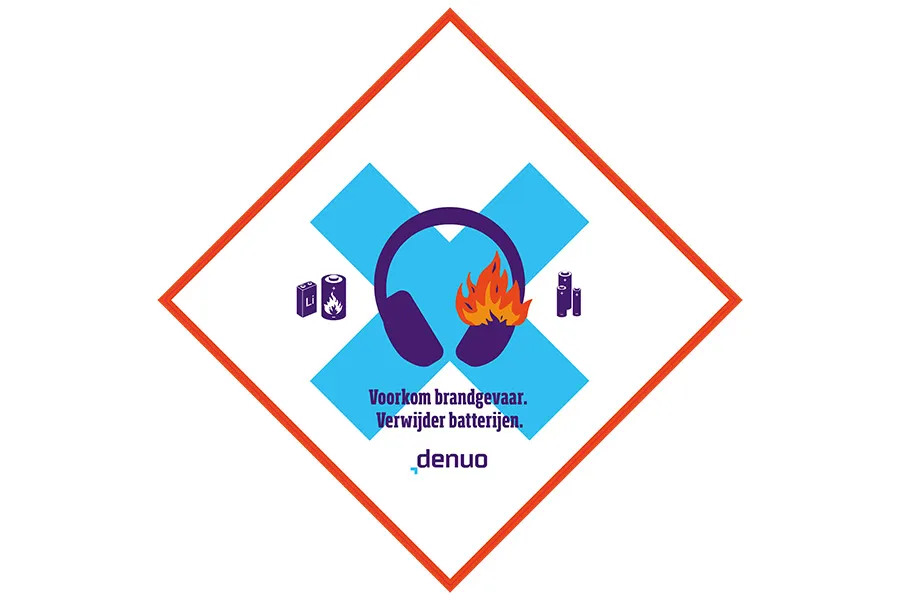
Musical greeting cards in the paper bin, an electric toothbrush in residual waste, electric bikes in the scrap container: they do not belong there. More than that, they pose a danger to workers and facilities in the waste and recycling sector. What few people probably know is that if the batteries in these products are damaged, for example by being crushed, they can explode and cause a fire that is difficult to extinguish.
Fires are breaking out increasingly often in waste containers, waste collection vehicles and recycling plants. The leading cause: incorrectly sorted products containing a lithium-ion battery. How serious is the problem? Serious, according to the sector.
“Hardly a day goes by without an incorrectly sorted lithium-ion battery causing a fire at a waste processing company, in a waste collection vehicle or in a container,” says Stany Vaes, Managing Director of Denuo, the Belgian federation of the waste and recycling sector. The seriousness of the situation is also confirmed by a 2018 European study, which says that the number of fires caused by lithium-ion batteries in the recycling sector tripled over ten years. “We are also seeing these batteries turning up in every waste stream: paper and cardboard, residual waste, scrap and plastics…” Vaes adds.
Serious consequences
Fires caused by incorrectly discarded lithium-ion batteries can be serious. Despite significant investment in fire detection and suppression systems, lithium-ion fires spread quickly and are difficult to extinguish. The consequences can therefore be severe, ranging from serious, potentially fatal injuries to staff to the destruction of entire recycling plants and the loss of valuable recyclable materials. And as if that were not enough, more and more recycling companies are being refused insurance cover. The human and financial costs can also be considerable. According to a 2020 study, the average cost of a lithium-ion fire ranges from 190,000 to 1.3 million euros.
Growing risk
And the risk is only likely to increase. The use of batteries, and their energy density, continues to rise, along with the risk of fires. Without additional preventive measures, it is only a matter of time before such fires cause more than just material damage.
Time to act
The waste and recycling sector is therefore sounding the alarm and calling on politicians and manufacturers to take urgent action to tackle this huge problem. Specifically, sector federation Denuo is calling for the following measures:
Ecodesign. 80% of lithium-ion batteries sold are integrated batteries that are difficult to remove. Policymakers should therefore incorporate ecodesign principles into product standards, so that manufacturers design their products to make the batteries easy to remove. In line with the new European Battery Regulation, products containing lithium-ion batteries should also be clearly marked, for example with a specific colour. In addition, policymakers are being urged to ban products that are not sustainable and pose risks that are barely manageable, such as disposable e-cigarettes.
Establishing a fund by compliance schemes (such as Bebat and Recupel) to support research and development into solutions. Manufacturers are responsible for contributing to the fund for every lithium-ion battery they place on the market.
Establishing an emergency fund by insurance companies to support affected businesses in the event of damage.
Raising awareness and providing information. For batteries to be recycled correctly and safely, it is essential that consumers sort them properly. Awareness campaigns at federal and/or regional level are therefore needed to inform the public about the correct sorting rules and the potential dangers of incorrectly sorted batteries.
A deposit scheme for lithium-ion batteries rewards people for keeping batteries separate. This financial incentive could encourage people to sort more and do so more effectively, helping to prevent incidents further down the recycling chain.
Additional collection channels. Given their potentially hazardous nature, separate door-to-door collection of lithium-ion batteries is a solution worth considering. This is already the case in the United Kingdom, where a compliance scheme is responsible for the separate collection of lithium-ion batteries.
Compiling statistics. Developing statistics can improve understanding of the scale of the problem posed by lithium-ion batteries. These statistics can serve as a decision-making tool for policymakers. Denuo is willing to work with fire services, insurance companies and compliance schemes to obtain relevant figures.
“Something needs to be done,” says Stany Vaes. “With demand for batteries expected to increase by more than 20% by 2030, now is the time to develop a sustainable, circular approach to lithium-ion batteries.”
Question about this story? Ask your question
Companies in this story

Keep following this
Get an email when a new story is published. No account needed.
- ThemeCircular processing of electronics and batteries
- SubjectDenuo
- CompanyBebat vzw
- CompanyRecupel







