












The hard facts
The adage says that what gets measured gets managed. That is why RecyclePro is once again presenting figures on the waste sector in every 2020 issue. It is up to you to draw insights from them that could optimise your production process or boost your returns. You could already read in the latest issue of RecyclePro in 2019 that waste paper is in a sorry state. This year, we start with the hard facts to back this up.
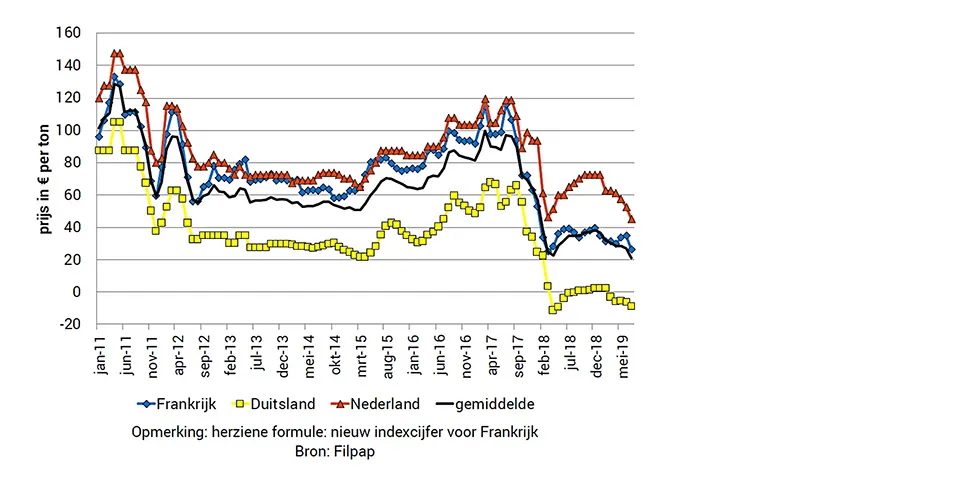
Paper is made not only from new fibres derived from virgin pulp. Recycled pulp made from waste paper has long been an important raw material for the paper industry. According to figures from the Paper Chain Forum, 50% of the wood fibres in paper already come from recycling. Prices remained fairly stable for a long time, but began to rise gradually from 2015. September 2017 marked a turning point in this upward trend. Prices in all neighbouring countries plunged, and it was not until April 2018 that a reversal began to emerge, but this proved temporary. Prices began falling again in 2019. The main cause is China’s stricter import policy. Since then, the contamination rate has been allowed to be no more than 0.5%, while the European limit is 1.5%.
8 million tonnes of surplus paper
If waste paper and cardboard in Europe and Belgium do not meet this contamination limit, they end up on the European market, creating an oversupply and putting downward pressure on prices. Europe, however, does not have enough capacity to recycle these large stocks of waste paper itself. According to Belgian sector federations go4circle and COBEREC, 8 million tonnes more paper is collected than the European paper industry needs. Belgium also has an annual surplus of around 700,000 tonnes of paper. As a result, in 2018 Belgian companies had to settle for half the price they used to receive for waste paper. At the same time, paper and cardboard production is declining.
Question about this story? Ask your question
Keep following this
Get an email when a new story is published. No account needed.
- ThemeMaking use of textiles and other waste streams
- SubjectDenuo







