












The better the separate collection, the lower the fire risk
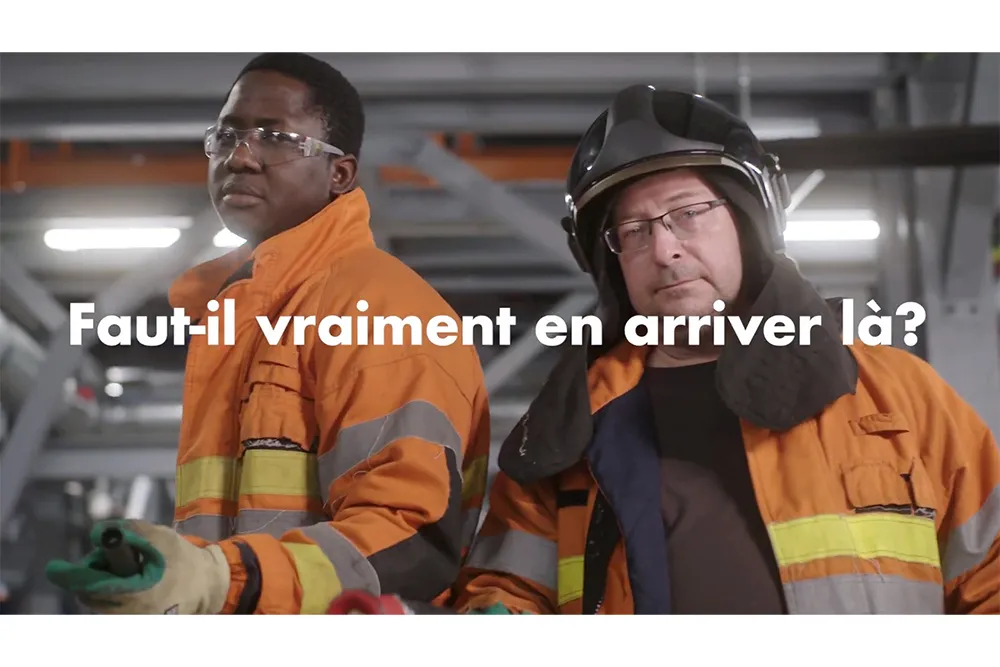
So, better separate collection of batteries is the way forward. Despite the many awareness campaigns, things still often go wrong because batteries do not end up in the right channels. Both businesses and the public need to make a greater effort to safeguard the safety of everyone working in the waste and recycling sector. Grégory Souvereyns (Tibi, COPIDEC) and Martine Vanheers (Bebat) explained what is already being done.
Waste analyses show that the good habits people have developed at home are not always maintained at work. PMD is the clearest example. There are hardly any sorting errors in household waste, yet plenty of PMD is still found in commercial residual waste. Awareness-raising will remain an important lever in the future. People need to understand the dangers their sorting mistakes can pose to those working in the waste and recycling sector. This is what COPIDEC, the federation of Wallonia’s intermunicipal waste associations, aims to highlight with its campaign.
New collection containers for safer collection
What proportion of the batteries placed on the market are collected separately today? With a collection rate of 59%, Belgium ranks first in Europe. This is partly thanks to Bebat’s many awareness campaigns and efficient collection system. Bebat is the management body responsible for organising the collection, sorting and recycling of batteries in Belgium. To ensure the batteries can also be handled safely, Bebat recently adapted its collection systems. The 24,000 collection points remain in place, but the containers for use at home, in schools and in retail outlets now have a new opening that only smaller batteries can fit through. These still account for more than 90% of batteries. Larger and damaged batteries should instead be taken to a recycling centre, where they are collected in fire-resistant units.
1 battery in every 100 kg of residual waste
But how many of the batteries that are not collected separately cause problems? Household waste analyses show that there is now only 1 battery in every 100 kg of household residual waste. However, there are no figures yet for the other waste streams. Even one battery is one too many, so there is certainly no room for complacency. A campaign has been running since June 2023 to draw attention to ‘invisible’ batteries. A major media campaign will also run in 2024, in collaboration with Recupel. These campaigns should help make the next targets, 63% in 2027 and 73% in 2030, achievable. However, none of the campaigns addresses the potential danger posed by lithium-ion batteries.
Is a deposit scheme the answer?
Would introducing a deposit scheme be a good way to meet these revised targets? Bebat is not in favour, since 80% of lithium-ion batteries are built into devices. COPIDEC also sees this as a complex issue. Wallonia’s intermunicipal associations point to the significant differences in lifespan between the various types of batteries. It would also mean having to adapt the entire existing battery ecosystem.
Who is responsible?
There is no doubt that new tools and mechanisms are needed. The risks and costs are borne entirely by waste and recycling companies. But who is responsible? The consumer who sorts waste incorrectly, or the producer that places the batteries on the market? It is estimated that around 10% of the population is unwilling to take part in recycling. This means batteries will continue to end up in the wrong waste streams, with all the associated risks and dangers for the waste and recycling sector.
Question about this story? Ask your question
Companies in this story

Keep following this
Get an email when a new story is published. No account needed.
- ThemeCircular processing of electronics and batteries
- SubjectDenuo
- CompanyBebat vzw
- CompanyRecupel







