












Recycling end-of-life vehicles: what should we do about the manufacturers?
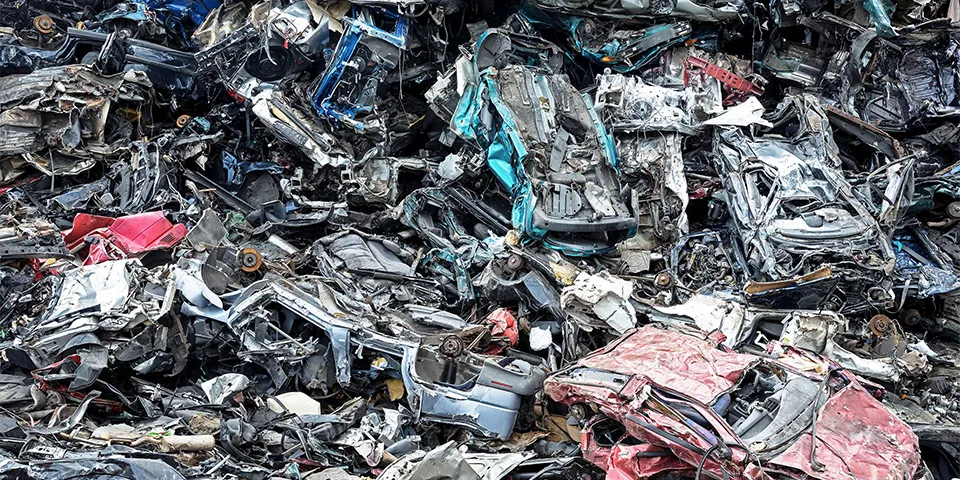
In Belgium, treatment centres and authorised shredders process around 120,900 end-of-life vehicles each year. The average age of end-of-life vehicles in the country is over 16.4 years. On 5 December 2019, the federation took these figures to Minister Marghem’s office and the FPS Environment to explain the recycling challenges surrounding end-of-life vehicles.
As part of our Design for Recycling study, the federation also examined the barriers to recycling end-of-life vehicles. The study identified thirteen recycling problems linked to vehicle design. Although end-of-life vehicles contain a wealth of materials, the federation identified some components that are difficult to recover and recycle.
European directive
European Directive 2000/53/EC on end-of-life vehicles provides a framework for managing these vehicles. It sets targets for reuse, recycling and recovery. The Commission is in the process of revising the directive. For this reason, a public consultation has been launched with the various players in the end-of-life vehicle sector, inviting them to contribute on waste management, pollution and the circular economy. The directive sets out the minimum technical requirements for the treatment of end-of-life vehicles. These cover the following: storage sites, treatment sites, treatment operations for end-of-life vehicles and storage operations for components.
Belgium opted for a voluntary agreement
At national level, a voluntary agreement on the management of end-of-life vehicles was concluded in 1999, before the European directive referred to above was adopted. The agreement provided for the free take-back of an end-of-life vehicle when a new vehicle of the same category was purchased. The main provisions of the regulations concern the stages of depollution and destruction. These regional legislative frameworks could be strengthened to ensure that the targets set continue to be met: 95% reuse, recycling and energy recovery. During the recycling stages, operators are increasingly encountering obstacles related to vehicle design.
New standards for manufacturers?
Car manufacturers are developing new, complex technologies without taking into account the challenges involved in recycling an end-of-life vehicle. The federation has particularly highlighted the importance of designing vehicles so that depollution, recovery and recycling are easier. The recommendations aim to introduce common design standards at European level to promote the development of the recycling sector. Based on the first seven studies carried out, the federation will prepare a discussion paper in English so that this issue can become a priority for Europe.
Question about this story? Ask your question
Keep following this
Get an email when a new story is published. No account needed.
- ThemeCircular business under changing regulations
- SubjectDenuo







