












PODCAST: Plastic recycling action plan: Between crisis and capacity shortages
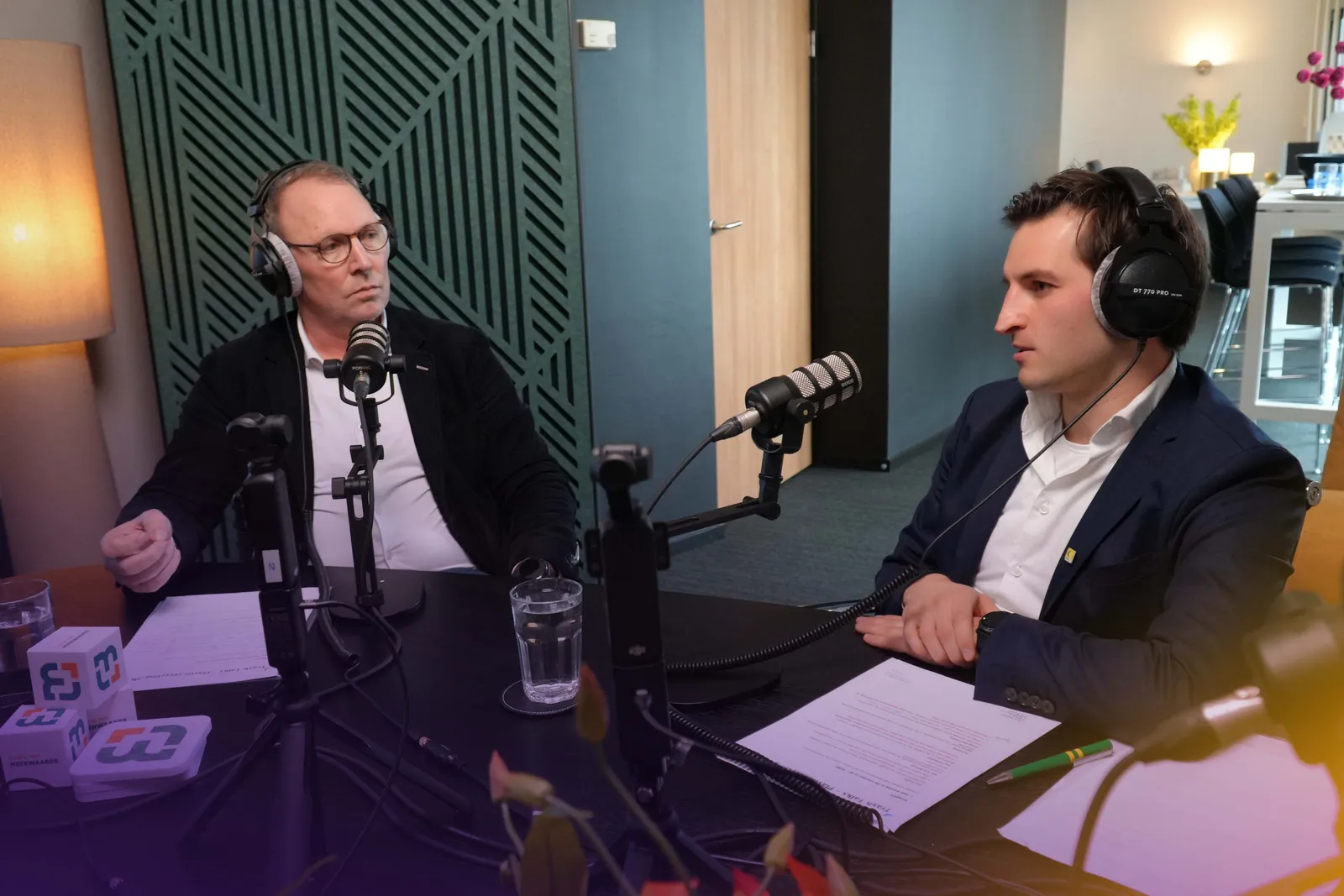
The plastic recycling sector is caught in a difficult squeeze. The market is under pressure from low virgin material prices, international competition and shrinking margins. At the same time, the EU’s recycled content requirements for 2030 are approaching, just as recycling capacity is disappearing.
In this episode of Trash Talks, host Nele Roobrouck speaks to Eric Van Roekel (Van Werven Plastic Recycling Holding) and Jeroen Blancke (Vanheede Environment Group) about the current market situation, the loss of capacity, the role of policy and producer responsibility, and the need for phased requirements and demand creation.
The discussion highlights the main bottlenecks, including energy, permits, price pressure and unfair competition, as well as the levers the sector considers necessary to make the transition towards 2030 achievable.
Question about this story? Ask your question
Full transcript
All chapters (27)
- Introduction and overview of the sector
- Van Werven: Activities and presence across Europe
- Vanheede: Collection, sorting and mechanical recycling
- A perfect storm in the recycling sector
- Marketing difficulties and colour issues
- Red light: Capacity is falling when it needs to grow
- Investing during a crisis and preparing for 2030
- Capacity shortages towards 2030 and a slow response
- A circular economy with a linear end point
- From recycling rates to genuine circularity
- Bottlenecks in the chain and producer responsibility
- Price gap with virgin material
- The paradox looking towards 2030 and capacity losses
- Expansion, energy and permits
- European timing and political context
- Energy prices and survival mode
- Demand creation, incentives and extended producer responsibility
- Export ban and processing in Europe
- Export ban in the Netherlands and the need for stability
- A level playing field and international competition
- Cooperation with the chemical industry and strategic autonomy
- Quality standards and traceability
- Figures policymakers should remember
- Concrete policy measures
- Collaboration across the value chain and product design
- Confidence in the future of plastic recycling
- End of the episode
Introduction and overview of the sector
Nele Roobrouck Welcome to this new episode of Trash Talks, a collaboration between Recycle Pro and Dino. Today we’re discussing the future of plastic recycling. The sector is under severe pressure. Low prices for virgin plastics, growing international competition and, at the same time, ambitious European targets for recycled content from 2030. It seems paradoxical. Today, demand for recycled material is too low, but tomorrow we may face a capacity shortage. There’s plenty to discuss. We’re joined today by two key players in the value chain: Eric Van Roekel, managing director of Van Werven Plastic Recycling Holding, and Jeroen Blancke, Material Recovery Specialist at Vanheede Environment Group. Welcome, Eric and Jeroen. Could you each explain what your company does in the plastics value chain? Eric?
Van Werven: Activities and presence across Europe
Eric Van Roekel Yes, I’m with Van Werven Plastic Recycling, a company that has been around for 80 years. We’re a third-generation family business. We’ve been active in plastic recycling since 2005, focusing on rigid plastics. We produce new circular raw materials from discarded plastics, and we do this across Europe: in the Netherlands, Belgium, England, Denmark, Sweden, Poland and, more recently, France.
Vanheede: Collection, sorting and mechanical recycling
Nele Roobrouck Jeroen?
Jeroen Blancke Like Van Werven, Vanheede is still a genuine family business. We haven’t been around for 80 years, but we’re approaching 60. Many people know us from seeing our yellow lorries and green containers on the streets. We’re a waste management company. We collect all kinds of waste, including plastics, and we also process it. We’re active in plastic sorting, for example, the blue bag that people put out every day will be familiar to many. We sort PMD waste, among other materials, and try to find the highest-value markets for it. Where that isn’t possible, we have a safety net in the form of a pre-treatment line for chemical recycling. Where it is possible, we send the material for mechanical recycling. We also have our own processing plant, which has been operating for two years, where we reprocess HDPE and PP packaging into flakes.
Read the full transcriptCollapse transcript24 more chapters
A perfect storm in the recycling sector
Nele Roobrouck So, two companies with a long track record. Now let’s move on to the topic at hand. There’s talk of a perfect storm in the recycling sector. Let’s explore that further. Eric, are you feeling the pressure on demand for recycled plastic in practical terms? And what does that mean for production and prices?
Eric Van Roekel Yes, I think that’s quite a difficult question. The question is whether demand for recycled material is under pressure, or whether the desire to buy cheaply is driving things. What we’re actually seeing is that, because there’s a lot of low-priced material on the market, material made from recycled feedstock is pricing itself out of the market. That makes demand appear lower. In any case, the mechanism between receiving materials, the gate fee we get for them, the cost of processing and ultimately supplying the customer is out of balance at the moment. There’s not much we can do about that. At the front end, we’re competing with incinerators and landfill sites, which charge a particular rate for taking waste. If we charge more at that stage, people won’t bring it to us. At the other end, the market is heavily influenced by oil prices. When virgin materials become cheaper, recycled materials can’t be more expensive. So we can’t raise our price at the front end, because then everything will be incinerated. And at the other end, we have to lower our price to remain competitive. That means there’s less and less money left over.
Marketing difficulties and colour issues
Nele Roobrouck Jeroen, are you finding it more difficult to sell your plastic streams at the moment?
Jeroen Blancke I’ll speak from the perspective of our processing plant, where we turn PP and HDPE packaging into flakes. We’ve invested in what we call advanced mechanical recycling, with several washing steps and colour sorting. We’re seeing that demand for light colours could be better, but it’s still reasonable. Dark colours are the main problem. As Eric explained, it’s primarily about the price we can get for the material. Demand is lower at the moment, while supply is relatively high, and we know what that does to prices. I think this is also a bit of a call to brand owners and others who put products in different colours on the market, which is perfectly possible and fine. But if we want to supply them with high-quality material, they often say it has to be natural or white. So we need to be able to discuss this with them too. It’s particularly difficult to find markets for dark colours.
Red light: Capacity is falling when it needs to grow
Nele Roobrouck If you had to sum it up in one sentence, how serious is the situation today? Could we compare it to traffic lights? Is it already red, or is it orange at the moment?
Jeroen Blancke I’d say that we’ve lost almost 1 million tonnes of recycling capacity over the past three years. And when you see that even companies with long-term contracts with, for example, Fost Plus have to stop, I think we’re in a very difficult phase.
Eric Van Roekel I agree. You need to look closely at what’s happening at the different companies that are closing. But I do think we’re now at a point where the companies that are still operating are finding it difficult, and some are finding it very difficult indeed. Yet our vision, which we try to align with Europe’s vision, both nationally and internationally, is that we need to recycle much more and grow. And now we’re seeing everything come to a bit of a standstill, even though the task ahead is growing. So I do think the traffic light is red, because there’s a risk that companies will leave the Netherlands, Belgium or Europe, further reducing capacity that is already falling, when it should actually be increasing. So regardless of whether companies survive, we’ll lose market share. And we’ll also lose our leading position.
Investing during a crisis and preparing for 2030
Nele Roobrouck We’re seeing companies cut production capacity or put it on hold. How do you deal with a situation like this as a business leader?
Eric Van Roekel We’re naturally an optimistic company. When the market is struggling, we could sit in a corner and join everyone else in complaining, but we’ve made a conscious decision to look for opportunities in this market. We’ve decided to keep growing. The capacity that’s being lost has to go somewhere, so we see opportunities there too. We recently started up in France. At a time when all the factories are closing, Van Werven is opening one in France. That’s partly because we’re naturally entrepreneurial, but it’s also because when the world is going through a difficult period, it’s time to prepare for the future. There’s a lot of plastic on the market. There’s a theoretical shortage of recycled material. If everyone starts using recycled material, there won’t be enough available. So I’m actually surprised that we’re not getting calls every day from companies asking if they can join us, because they want to secure a share of our production for the long term, as they’re going to take recycled content seriously in 2028 or 2030. I’m surprised so little is being invested. Financing is also part of the issue. We have a family behind us with patient capital that looks a generation ahead. They say: plastic matters to us. Even if we make little or no money from plastic recycling, we have several activities, and we’ll still invest in the growth of plastic recycling. If we had to rely on the banks, they’d look at the figures and say: you’re not making much money here, so why do it? The formulas banks use make it very difficult to finance major steps at the moment. As a result, many companies’ investment capacity is close to zero. And if you have to repay loans from profits when there are no profits, your free cash flow comes under pressure. I understand why it’s very difficult for many companies right now.
Capacity shortages towards 2030 and a slow response
Jeroen Blancke If you look at the packaging legislation, the PPWR, the Packaging and Packaging Waste Regulation, it sets out mandatory recycled content requirements for 2030. There are also measures coming in the automotive sector, two years later. If you look at the capacity we’ll be short of by 2030 and 2032, focusing only on polyolefins, to keep it within scope, we’re talking about a shortfall of around 5 to 6 million tonnes of capacity. And as Eric says, our phones should be ringing off the hook with companies already preparing, because 2030 is not far away when it comes to securing these raw materials and getting all those projects started. But it’s not as simple as saying: I have recycled material, so I’ll be ready tomorrow. There’s also a development process that has to be completed. Given the current economic situation, we’re seeing preparation get under way very slowly. I think we need to work with other stakeholders, and especially with industry and brand owners, to consider how we can achieve circularity. What’s needed? What problems are holding back preparations at the moment? And how can we address those problems to make the transition towards 2030?
A circular economy with a linear end point
Eric Van Roekel We have almost created a circular economy with a linear end point. We have almost got everything in place. So, it is collected. When it comes to collection, I would still say that, according to our calculations, we are recycling only 20% of plastics. So there is sufficient capacity for all the companies, for us, for you, and for the rest of the sector to grow and meet that need. But that does mean the material has to be collected. And if it is collected and then incinerated or landfilled, which is not actually permitted, then that needs to be enforced. They are very good at enforcing the rules at licensed facilities, which we all have to comply with. But when we look at where plastic ends up now, I think: if we were to enforce the rules there, and then give that final part of the circular economy, which still often ends linearly, a new direction, so that producers or brand owners also say: we are going to use these materials again. So, 100% reuse of what is available to be used. It has to be technically feasible, and we can agree on sound rules for that. Then you will suddenly see that flywheel spin very fast, and we will reach the situation we have been waiting for for a few years, where there is theoretically a shortage of our valuable circular raw material.
From recycling rates to genuine circularity
Jeroen Blancke I think one of the issues at play is that, over the past 30 or 35 years, we have focused too much on recycling rates. We collect material and have to meet certain recycling-rate targets. If we take Belgium’s packaging sector as an example, we have to say: a fantastic job has been done, we are at the top compared with the other EU Member States. But going forward, we really need to ask more about what we are doing to achieve circularity. To explain the difference: a recycling rate means that we collect the material, sort it and then use it in some application, whatever that may be, as long as it is used somewhere. Genuine circularity means using the material again for the purpose it was originally intended for. But to do that, we also need the people who put it on the market at the table, taking responsibility and asking: how do I need to adapt, or what is needed for me to use it again in my own material? And I know there are challenges too, especially when it comes to food. But let’s make a start. There is still plenty of low-hanging fruit to be picked in non-food applications. So I think we need to shift our focus from recycling to circularity.
Bottlenecks in the chain and producer responsibility
Nele Roobrouck I think we have heard a very important message here, for both policymakers and producers. Recycling is of course not a standalone activity. It is one link in the chain, from collection to new raw material. Looking upstream, Jeroen, when do we see recyclers taking in less material? Does that put pressure on storage and sorting? And what do you do about any contracts that have been signed? Or is that not yet a problem at the moment?
Jeroen Blancke When things do not run smoothly in the chain, bottlenecks arise somewhere. We see fluctuations, with storage acting as a safety net and buffer. And the shocks we have to absorb are getting bigger as the problems grow. Now, there are a few things to consider: if there is less demand, then either less material will go for recycling, as Eric says, and end up in other places where we would rather it did not go. Or the cost of recycling will rise if there is price pressure. In fact, the cost lies, or should lie, with whoever puts something on the market. Whether it is packaging or something else, those people or companies are also responsible for what happens to their product at end of life, and for the costs. We already have extended producer responsibility schemes for some things, such as packaging. And when those costs rise, you can see that they already pay for them indirectly, because the green dot fees are increased to cover those costs. So when we talk about circularity, I think we also need to bring those people to the table and say: that cost exists. Let’s now look at how we can get that material back to you. And perhaps that will bring the cost down too. And again, then we will not be talking about recycling, but about genuine circularity.
Price gap with virgin material
Nele Roobrouck Staying with prices, Eric, the price gap with virgin material is currently wide. Can we put a figure on it? And how do you see it developing in the future? Are customers reluctant to switch to recycled content?
Eric Van Roekel Fortunately, we see that what we produce sells reasonably well. There is sufficient demand for it. We mainly work with polyolefins and PVC. We see that one market is consistently sold out, while the other is more difficult, because the material cannot be used in every product. That market is therefore also lagging behind somewhat in adopting the circular economy. So it is not just a price effect. But we do see that at the moment. What is the difference? I can give an example. Let’s say our product, we make a regrind that you can turn into something for rainwater and loading, and then use to make products directly. If a product like that should cost €1,000, we are currently at around €900. So we are already €100 short of what we need for a good business model with some margin. Then new material from Asia or America comes onto the market at a price below that. You can see that our customer is not able to pay the price we would like to charge. So we have been given a sort of label that recycled material must not cost more than new material. You can get new material in any colour, and the specifications are perfect. Recycled material is always recycled material, in a particular colour, often grey or a shade of grey. Add further costs and the gap widens even more. So what you are really seeing is that there is no level playing field. Virgin materials are often not made in the Netherlands, but elsewhere, where energy and labour costs are different and there is less regulation. That gap is widening, and apparently the world is looking for a low price.
The paradox looking towards 2030 and capacity losses
Nele Roobrouck Indeed, the world is looking for a low price, because consumers also play an important role in buying products. And that brings us to a major paradox in the sector. Demand is quite low today, as we have already discussed. By 2030, a significant proportion of recycled material must be incorporated into the production of new packaging. But today, we are losing capacity. In the Netherlands, we have already seen a number of bankruptcies and closures, as well as in Germany. Unfortunately, we have also had the first one in Belgium. So, as we have already discussed, there is a real risk that we will continue to lose capacity. How will we be able to ramp that up again by 2030? Do you have any thoughts on that, Eric? You say, of course, that you have already opened a new factory in France and are looking ahead, but you are not the only player, and I assume you will not be able to make up all the capacity.
Expansion, energy and permits
Eric Van Roekel If we look at the Netherlands, we have also been considering expansion for some time. We always come up against two major challenges. One is often the need to amend the zoning plan, and the second is that we need energy. We can add extra machines, but they need electricity. Our employees earn their living, but we have to automate more and more. We are also finding that the availability of people for manual sorting is becoming increasingly limited. So we have to use robots and automate. Electricity is a major challenge for us in the Netherlands, especially at the sites where we operate. We have room to expand there, but we need to apply for a permit. These processes can take a long time, so we need electricity. We do want to expand, and we have the resources to do so. We see the same in other countries too: we look at what we can do in each country, and what that country needs. But these are also conversations we have with national governments, asking: what is it you actually want? Because sometimes we feel that we are following national and international targets. The question is whether these are targets that exist only on paper, or whether they are targets we genuinely want to meet together. We are ready to get moving. But if we are not supported, we sometimes wonder whether we have read it wrong or misunderstood it. Of course, we hope not. But I think many companies are waiting for clarity, whether it is good news or bad. Take an export ban. Some parties might not like it, and it could cause problems. But the good thing is that if a problem arises, we can work on a solution. If we do not make those choices, we will just keep muddling through, as I would put it. Above all, we need clarity. Is the 2030 target going ahead? If so, we have seen what happened with PET in the past. There was a clear position on recycled content in PET products, and since then we have seen a reasonably good, stable price for recycled PET material. Let’s do the same for polyolefins. We often talk about packaging, but there is a very large stream of non-packaging material, which is what we mainly deal with. Think of municipal recycling centres and intermunicipal organisations, where large quantities of material, including rigid plastics, become available. These are not covered by an extended producer responsibility scheme, and they are not subsidised either. So this is an even more complex market, which we must not lose sight of. You see it there too. We talk about the PPWR, which is about packaging again. But why should non-packaging not also be subject to a recycled-content requirement? We hope that will be included too.
European timing and political context
Nele Roobrouck Do you expect this to happen soon at European level?
Eric Van Roekel For years, when we looked to the future, Europe was very much our hope. What we are seeing now, though, is a more difficult political landscape. So we are now relying more on our own strength, as they say. In other words, we are saying: we have a plan, and we are going to put it into action. That is not easy. Government support would be very welcome in several countries, by making choices that would bring in that obligation and get the flywheel turning. We hope that will happen in 2030, or earlier. Because suddenly requiring 30% in 2030 is not the answer either. A decision needs to be made today. Companies need to start preparing today. They need to adapt their technology. They need to learn how to work with recycled material. I think the average manufacturer does not work with recycled material. Only a few do. So the rest need to make that transition too. As far as we are concerned, we should start tomorrow with a 5% obligation, then build it up step by step, based on availability too. Let us just do that, rather than commissioning another study and saying, ‘Oh, we have a problem with food contact, we don’t have enough after all, so we won’t use it for food contact, we’ll use it for the rest.’ A problem with medical applications, so we won’t use it there either. That still leaves a very large group of applications we can start working on tomorrow.
Energy prices and survival mode
Nele Roobrouck Yes, and when is it going to happen? I hope tomorrow. I also see, when we look at Flanders or Belgium, Jeroen, that we face the same obstacles, the same barriers. An energy shortage is on the way too. I do think that in West Flanders we have the problem of Ventilus and Boucle du Hainaut. So we still face a major challenge in terms of new capacity. And energy prices are no easy matter in Belgium either.
Jeroen Blancke Just to come back to the need for additional capacity: let’s first make sure we get demand creation in order, especially when we look at new capacity. I think many people in the sector are in survival mode at the moment, not investment mode. There is so much uncertainty about when demand will actually pick up. And I fully agree with Eric that we have a bit of a big bang in 2030. I think we need to consider how we can work towards the 2030 targets step by step, while getting started now. Many companies still think 2030 is a long way off, but in reality it is already very close. How can we start the transition now and work towards 2030 in a way that allows everyone to make progress step by step, rather than facing a major shock in 2030?
Demand creation, incentives and extended producer responsibility
Nele Roobrouck That is Europe’s problem, of course. Europe has set a deadline of 2030. When member states have to transpose that into their own legislation, they always have the principle of no gold-plating, of not moving faster than Europe. But you are really calling for a gradual system. First, to get production going, and to ensure that everything works smoothly, from production through to consumption. But when you see how difficult member states, including the Netherlands, Belgium and France, find it to introduce a gradual system, how can we convince our policymakers to say: ‘Come on, let’s take the lead at European level. This isn’t gold-plating, let’s do better than the rest’?
Jeroen Blancke I think there are two ways to create that demand. On the one hand, we have the obligations coming our way. On the other, we can also use strong incentives. And I agree, we need more EPR schemes, because many things are not yet covered by extended producer responsibility, which means we cannot generate funding to support the transition to a circular economy. But where it is in place, or already exists, incentives can help remove the barriers. They can also help steer the market, because virgin material will not necessarily remain structurally cheaper over the next five to ten years. We face other challenges that we still need to resolve. For example, if you look at neighbouring countries, France is one example: it offers incentives of around €450 to €500 per tonne for using recycled content in applications where this is possible. That is without actually mandating, for example, 5% or 10%. The two approaches can go hand in hand, and I think we need to be willing to consider both. We have often talked about EPR schemes, but there is also a role for government. In Flanders, for example, Vlarema 9 requires 50% recycled content in LDPE household waste bags. The new Vlarema proposes 90%. These are good initiatives too, because it is certainly possible in this case, as the requirement can be included in tender specifications. But perhaps this could be extended much more widely, beyond household waste bags to other plastic products procured through public tenders.
Export ban and processing in Europe
Nele Roobrouck This is also a call on Fost Plus and Valipak to include provisions like these in their tender specifications. I’d like to go back briefly to what Eric said earlier about the export ban. He only touched on it briefly, Jeroen. From November this year, we will effectively no longer be able to export plastics to non-OECD countries. How do you see these volumes being processed in Belgium and Europe, Eric and Jeroen? It would have been good to synchronise the 2030 recycled-content requirements with an export ban coming into force four years earlier.
Jeroen Blancke But that is not the situation now. I don’t think we should try to push that date back. The decision has been made. Businesses have anticipated it and invested, so I think we must not leave them in the lurch. In the short term, it may be that some materials that could previously be recycled cannot be for a while. We will have to find other processing options for them. But, once again, I come back to circularity. I think this is another reminder that we have focused on recycling rates for too long, wherever they may be. Let’s now look at where these products can be used again and how we can create that momentum. Looking at Belgium alone, the public figures also used by Valipak indicate 6,000 tonnes of big bags and more than 10,000 tonnes of mixed grades. That is for Belgium alone. So there is work to be done to figure out where we can use these products locally again and achieve circularity.
Export ban in the Netherlands and the need for stability
Nele Roobrouck And last week we also saw Valipak’s call to look for opportunities to use these materials again locally, which also means in Europe. Eric, can you add anything based on figures from the Netherlands?
Eric Van Roekel I think we face a similar challenge in the Netherlands with the export ban. Opinions naturally differ from one company to another. We don’t export, so at Van Werven we are not directly affected. We always ask what will happen to the materials that come onto the market. What I personally think is important, and Jeroen has already said this, is that we don’t keep pushing things back. We need to do what I said at the beginning: whether decisions are good or bad, we need to make decisions and take action, so that confidence can return. For us too. If we say something is coming in 2030, it needs to happen. Otherwise, it could be changed again at the end of 2029. We have seen this in the Netherlands with a number of standards that were due to be introduced, the plastic tax and a few other things. As a company, you anticipate certain developments, and then they change again. I miss the days a few years ago when politics was very stable and you could make a reasonably informed prediction about what the future would look like. When new regulations are introduced gradually, companies can anticipate them very well. So whatever we do, we need clarity and we need to make choices, and more choices. I’m calling for political stability at both European and national level.
A level playing field and international competition
Nele Roobrouck Let’s turn to another topic: many companies say there is no level playing field at the moment. In the plastic recycling sector, where do you see the biggest competitive disadvantage? Is it really energy prices or new regulations? Or are the economies of scale in the petrochemical industry making virgin plastics cheaper again?
Eric Van Roekel Yes, I think all of those factors matter. I sometimes wonder why it is so easy to introduce an export ban, but not an import ban or tariffs on materials imported from abroad. Our energy costs are high and rising. It is becoming increasingly difficult to find staff for manual sorting. Then we have to address that through automation and robotics, which uses a lot of energy. So our costs are high. If you look at the petrochemical industry, we recycle 180,000 tonnes of plastic across seven countries. Name a company in Belgium, or a major chemical company, that produces a million tonnes a year. You can divide the costs of quality staff, directors and all your fixed costs by a million. They have a feedstock that is not taxed, even though we extract it from the earth, or is taxed only minimally. So their production costs are relatively fixed. And if we also look abroad, where labour costs and energy prices are low and there is less regulation, it is very hard for us to compete. I think we need to ask how we can protect ourselves. Recyclers need priority on the grid. The principle should be that everything we throw away that can still be reused is turned back into a new raw material. Not 100% of waste, but 100% of material suitable for reuse. If that is the starting point, then you also say that it should be used locally first. That gives you a logistical advantage, jobs and our leading position. There are plenty of reasons why we should have been doing this for a long time already.
Cooperation with the chemical industry and strategic autonomy
Jeroen Blancke: I think you’re raising a very important point. We have sustainable production and recycling. I think we are often framed as being against the petrochemical industry. I think we should focus above all on goods coming into Europe from outside Europe, and recognise that we have many shared interests with the chemical industry in Europe. So the question is how we can first deal with this external pressure. Because, honestly, I think we need the chemical industry here in Europe too. We won’t achieve circularity with recyclers here alone. We also need the chemical and petrochemical industries here in Europe. They are having a very difficult time too. At the prices at which goods are entering Europe, they can’t really produce competitively either. And you can see that: a great deal of capacity in Europe has closed in recent years. If we look at total plastics production, we are now at 420 million tonnes produced globally each year. Europe has been stuck at 60 million tonnes for the past 20 years, and we are now seeing that figure actually fall towards 55 or 50 million tonnes. So I think we face shared challenges and should reach out to work together to tackle them. Nevertheless, I think they also have a solution when it comes to circularity. We are seeing more and more hybrid compounds, with a certain percentage of virgin material and a certain percentage of recyclate, to make products for more technically demanding applications. That’s a positive development. So let’s focus on that too, and reach out to work together on solutions.
Eric Van Roekel I completely agree. I think the two are genuinely complementary. There are various waste streams where mechanical and chemical recycling can work together. We still have challenging materials that we can’t do anything with. That is also due to low incineration costs, low landfill charges and a lack of enforcement. But I think we complement each other, especially when you consider the major challenges ahead. We need to make sure these activities stay here. Many ideas never get put into practice. Some even move elsewhere because they can’t compete with other regions of the world.
Jeroen Blancke: You can see the world moving towards power blocs, whether we like it or not. It will be important for each of us to be able to defend ourselves. That requires critical infrastructure, including chemicals, plastics and raw materials. We need to create a degree of strategic autonomy in this area. We mustn’t forget that raw materials have always generated prosperity. So let’s make sure we don’t lose the raw materials of tomorrow, and that we can safeguard future prosperity too.
Quality standards and traceability
Nele Roobrouck: It’s not just about the same obligations, but also the same quality standards. It is often said that products made with recycled content are of lower quality or have traceability issues. What’s your view? Do you see this as a solution or as a barrier?
Eric Van Roekel Yes, I often see it as kicking the can further down the road. We are often looking for reasons why things can’t be done. I would really urge everyone to start with the things we can do. We have some excellent examples of products made with our customers and their customers. I think those are fantastic products that meet all the quality requirements. I’m thinking of the pipe industry when it comes to reusing PVC raw materials, but also polyolefins. I don’t see a problem there. Of course, some things will be more difficult and have very high quality requirements. As Jeroen said, in the future it may be important to work with the chemical industry, blending materials to meet those specs. But for now, if we look at material availability and the applications where it can be used, there is no surplus of recycled material for those applications. Food contact is a problem. Should that be solved chemically? I don’t know. Or should we say that we can make very good use of these products in another sector? Let’s start there. We can see how things develop in the future. We need to give that time. But we shouldn’t wait.
Jeroen Blancke: I think you also raised the question of whether goods coming from outside Europe meet the same standards. To be honest, we hear those stories in our sector too. We only go as far as the flake stage, so our direct customers are less likely to say, “Look, here’s an alternative, here’s the certificate.” But those stories are definitely out there. So it is a matter of concern.
Figures policymakers should remember
Nele Roobrouck: That’s something we need to take up with Europe, of course, because nothing stops at the European border. Our national borders aren’t the only ones that matter. I’d like to turn to something else. When you look at the plastic recycling sector, what’s the key figure you think policymakers should remember? In terms of volume or transport, do you have a figure in mind?
Eric Van Roekel Yes, definitely. I had the figure 80. Shall I explain why?
Nele Roobrouck: I was thinking of the start: you’ve been around for 80 years, haven’t you?
Eric Van Roekel Well, that’s good, so it has a double meaning. We’ve been around for 80 years, which is quite an achievement. But 80 also refers to the 80% of plastics that we still don’t recycle. So if you ask where we stand, that figure says it all for me. We focus heavily on that percentage here. But there’s still 80% that we don’t recycle. And the next question might be your figure: how much are we still not putting to use?
Jeroen Blancke: I had a similar figure: 13. A rather unlucky number. But if you look across all applications in Europe, recycled content is around 13%. That includes PET, which pushes the figure up. The figure is much lower for polyolefins. It may be much higher for PVC. So I’m looking at everything across Europe. In terms of conversion, we process around 55 million tonnes in Europe, or 55 to 60 million tonnes. But if you do the sums and take 30%, which is often what the obligations require, you’re talking about many millions of tonnes that still need to be produced. So that figure of 13 suddenly becomes a very large number.
Eric Van Roekel It ties in nicely with that 80, more or less. Yes, that’s right. Perhaps 80 is actually 87.
Concrete policy measures
Nele Roobrouck: Eric, we have a new Dutch government. If you could see it approve one concrete measure, what would it be to boost our sector?
Eric Van Roekel I think the most important measure would be, and I’d like to make it twofold because one alone is so little, to introduce a recycled content requirement that is phased in, giving the market time to grow and companies time to absorb the change. That should be coupled with enforcement to prevent recyclable plastic from being incinerated. That’s what I’d do. It would create a new mechanism that would allow us to deploy more technology without immediately having to compete on price again. We have to work very cheaply and efficiently, and tackle increasingly difficult materials to recover more from them. But at a certain point, that’s no longer viable. So start with a recycled content requirement, even if it’s only 5%, and phase it in across all products by 2030, not just packaging but also rigid plastics. And enforce the rules so that plastics that can be recycled properly don’t end up being incinerated or in landfill.
Nele Roobrouck: Jeroen, what would you ask of the Flemish government?
Jeroen Blancke: Yes, I’ve given it some thought, and my answer is quite similar to Eric’s. I’d like to see direct incentives and requirements introduced between now and 2030, not from 2030 onwards, to bring material made in Europe and used in Europe back into the circular economy.
Collaboration across the value chain and product design
Nele Roobrouck: Looking to the future, collaboration seems increasingly important, particularly across the value chain. Eric, is there any link in the chain where you think something is still missing? Setting policy aside, which we’ve already discussed, along with enforcement, is there anything else that could be made easier or improved? Product design, for example?
Eric Van Roekel Yes, when you look at the whole chain, it’s really the circle we often talk about, which needs to keep turning. I think above all we need to work together to steer it, including on quality. That means the quality of the products we make. And we should say: it’s design for recycling. Yes, that’s good. But I’d say: make it with recycled material and then design it for recycling. We also often see products that are over-engineered from the outset. So we have a kind of purity in the raw material, and that’s good. But when we look at recycled material and see prices under pressure, sometimes we need to push the boundaries a bit more. We often find that if we work together to steer quality better and understand it better, we can avoid making materials and products too good. Instead, we can ask what else might be possible. Then we’ll also see the range of applications grow. But that also means change. Sometimes you make the same products for 50 years, and then suddenly you have to think about doing things differently. That’s change. Change isn’t easy. It takes time. That’s why we need to start tomorrow. But above all, we need collaboration and everyone in the chain to take part. We’ve said it several times already: we can collect it, we can recycle it. Then we have all that high-quality raw material ready to go. But if there’s no demand creation, if it isn’t used again, then we have a linear economy with a very big loop in it. That’s a real shame. You might as well just let it fall to the bottom. Then we’d be doing things the way we did 25 years ago.
Jeroen Blancke: Nele, you heard it: the word “together” has come up four times already. And, as you heard from us, we’ll have to do this together. We have a lot of stakeholders: brandowners, converters, recyclers, sorters and collectors. Where extended producer responsibility already exists, there are organisations that include stakeholders from across the sector. I think they can be the driving force and the glue that helps shape this collaboration, achieve circularity and bring about the change Eric mentioned. Someone may have been producing in the same way for 50 years, but perhaps things can be done differently. You need a certain thickness or thinness, or a certain tensile strength. So we really do need to get everyone around the table and be open to change if we are to make progress.
Confidence in the future of plastic recycling
Nele Roobrouck: Your call for additional measures, particularly from policymakers to support the gradual uptake of recycled content, is strong. We know things are quite difficult in the sector at the moment. But I’d actually like to end this podcast on a positive note. What gives you the most confidence in the future of plastic recycling?
Jeroen Blancke: I think there has been strong momentum between the various stakeholders recently, and the sense of urgency has become clear. The industry federation has certainly helped with that. That makes me feel positive: you can sense that support for a number of things has grown considerably. That’s what I see as positive about the past six months.
Eric Van Roekel I’m a positive person by nature too. But I can also see the market waking up. In Belgium, you see Denuo, and in the Netherlands, the NRK, with representatives sitting around a plastics table and talking to politicians. I’m positive about that, about the fact that we’re at least talking and that the problems are clearly on the table. The question is always what will happen next. But I’m gradually seeing that there’s no shortage of demand. Everyone is willing. I have a lot of confidence in the next generation. They’re in a somewhat better position than my generation was. What I mean is, it’s important too. You have to make choices that have an impact, rather than choosing something else just to save the last cent. So ultimately, we do have confidence in that future.
End of the episode
Nele Roobrouck: And on that note, I’d like to end with confidence. Thank you, Eric and Jeroen, for this conversation, for your perspective on the current situation and for the tools you’ve suggested for policymakers and enforcement. I think that if we can put these into practice, we’re looking at a sector with a bright future. We can certainly recommend this conversation to our policymakers. So when we defend our plastics plan with Denuo before policymakers, we’ll be sure to take our podcast along and send them the link. Most of all, thank you. This was Trash Talks. If you’d like to find out more about the challenges and solutions in the circular economy, do follow us. Next time, we’ll be taking a look at another very topical issue: the forthcoming extended producer responsibility in the textile sector.
Companies in this story
Keep following this
Get an email when a new story is published. No account needed.
- ThemeMaking plastics and packaging circular
- SubjectDenuo
- CompanyVan Werven plastic recycling







