












More and more lithium-ion batteries, but are we recycling them too?
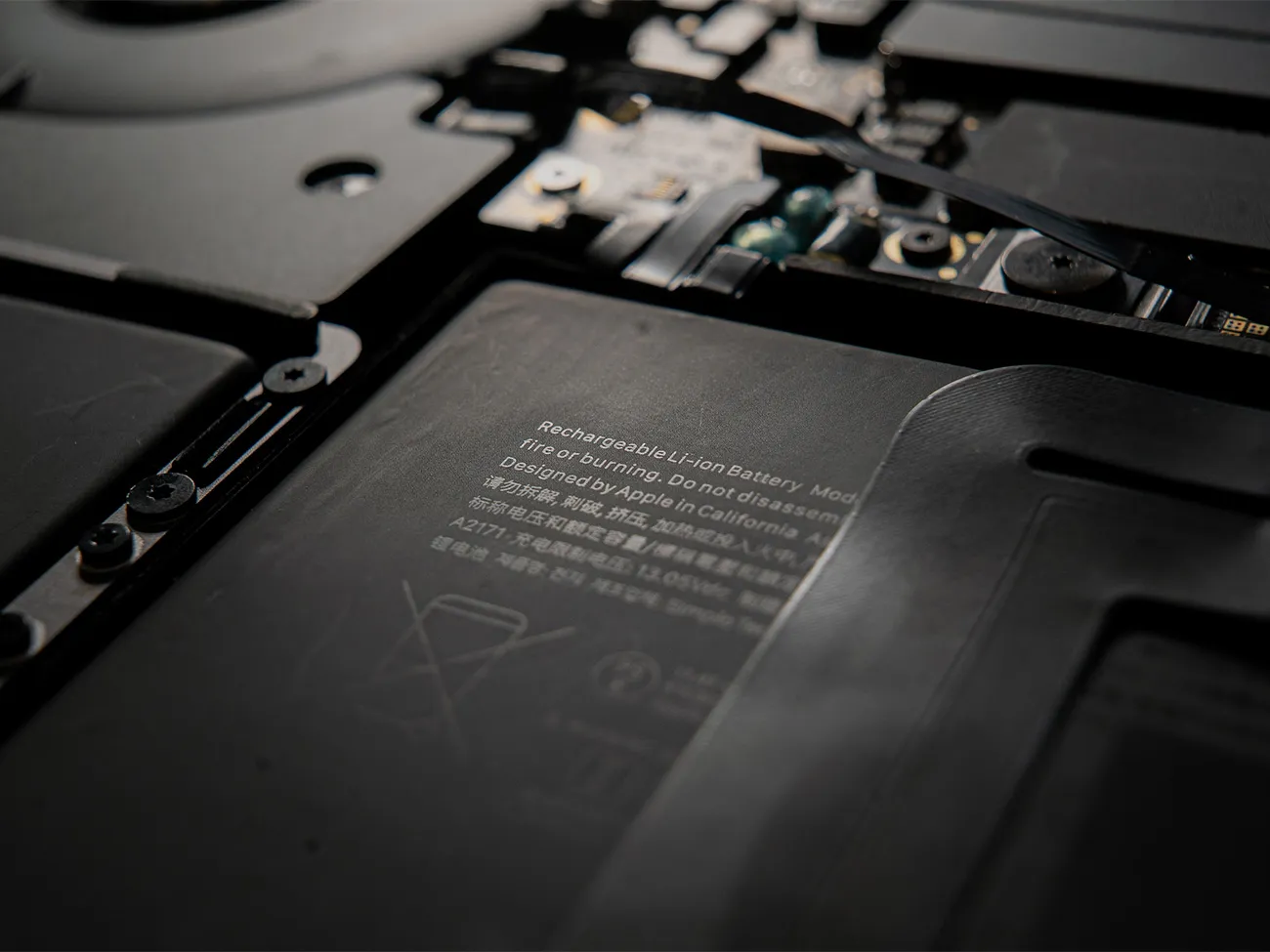
Between 2018 and 2020, Denuo studied the recyclability of various material streams on behalf of the FPS Economy. The aim was to identify practical barriers that make it harder to reuse and recycle these materials, and to use the findings to make ecodesign recommendations. Over a two-year period, a total of thirteen streams were analysed. Almost 70 collection and recycling companies were visited to find out which sorting and recycling barriers they currently face. The study identified more than 100 obstacles that recyclers encounter when trying to recycle their materials to the fullest extent. In this article, we take a closer look at batteries as a material stream.
Battery management is governed at European level by Directive 2006/66. The directive sets out a number of requirements and targets for battery management, covering three types of batteries: industrial batteries, automotive batteries and accumulators, and portable batteries.
The first two types, industrial and automotive batteries, account for the vast majority of tonnage today, both in Europe and in Belgium. These are mainly lead-acid batteries, which achieve very high recycling rates thanks to their simple, standardised design and the market value of the recovered lead.
The third type, portable batteries, encompasses a wide range, from the alkaline batteries typically found in alarm clocks, children’s toys and torches to the lithium-ion (Li-ion) batteries used in laptops, electric bicycles and electric scooters.
The European directive sets various collection targets, for example 45% for portable batteries, as well as specific recycling targets for each battery type, for example 65% for lead-acid batteries. However, the directive is currently under review, as are the possible categories of battery types and the corresponding collection and recycling targets.
The rise of the Li-ion battery
Although lead-acid batteries still account for by far the largest stream today, another type of battery is rapidly gaining ground in Europe and beyond: the Li-ion battery. As our society becomes increasingly electrified, this type of battery is appearing in more and more products, including smartphones, laptops and electric scooters.
Recycling capacity needed
We are used to batteries being sorted and recycled, but this is not yet the case for Li-ion batteries. Belgium currently has no adequate recycling capacity for this type of battery, and investment has yet to materialise. The current climate in Europe is not helping either: major players in other European countries are putting pressure on prices, making investment in Belgium less attractive at present.
Ensuring safe processing
Yet we need this recycling capacity, not only to recover the valuable materials in these batteries for reuse in the manufacture of new batteries, but also because they pose a risk.
Hardly a week goes by without a Li-ion battery causing a fire at a company that collects, transports, sorts or recycles waste. Li-ion batteries present a high risk of fire and explosion. People are unaware of this, and therefore also of the risks they create when they carelessly throw a smartphone into a paper recycling bin or leave an electric scooter in a scrap metal container at a recycling centre. Further down the chain, these batteries can put the safety of workers in our sector at risk and cause considerable economic damage. This is due not only to damage to waste companies’ infrastructure, but also to the valuable materials that go up in flames.
The need for uniformity and ease of disassembly
If we want to collect and recycle our batteries to a high standard, two key conditions must be met: uniformity and ease of disassembly.
Battery design must be harmonised and standardised at European level so that anyone can recognise a Li-ion battery. Today, Li-ion batteries come in all kinds of shapes and designs, and it is sometimes impossible to determine what type of battery they are. As a result, they are often sorted incorrectly: through a Bebat collection point if the battery is loose, or through the Recupel collection point at a recycling centre if it is still inside the product. A uniform design would improve sorting and recycling.
As well as a standard design, it is essential that batteries can be easily removed. Just look at a smartphone to see how difficult it can be to remove a battery from an electronic device. A battery that is easy to remove can be collected separately, allowing it to be processed safely and its valuable materials to be recovered.
These conditions are an absolute minimum for recovering the valuable materials in Li-ion batteries and reducing the risk of fires and explosions in the waste and recycling sector. It can be done. Uniformly designed lead-acid batteries have shown this for a long time. Let us apply that lesson from the past to Li-ion batteries too.
Question about this story? Ask your question
Companies in this story

Keep following this
Get an email when a new story is published. No account needed.
- ThemeCircular processing of electronics and batteries
- SubjectDenuo
- CompanyBebat vzw
- CompanyRecupel







