












Maximising the use of locally recycled materials
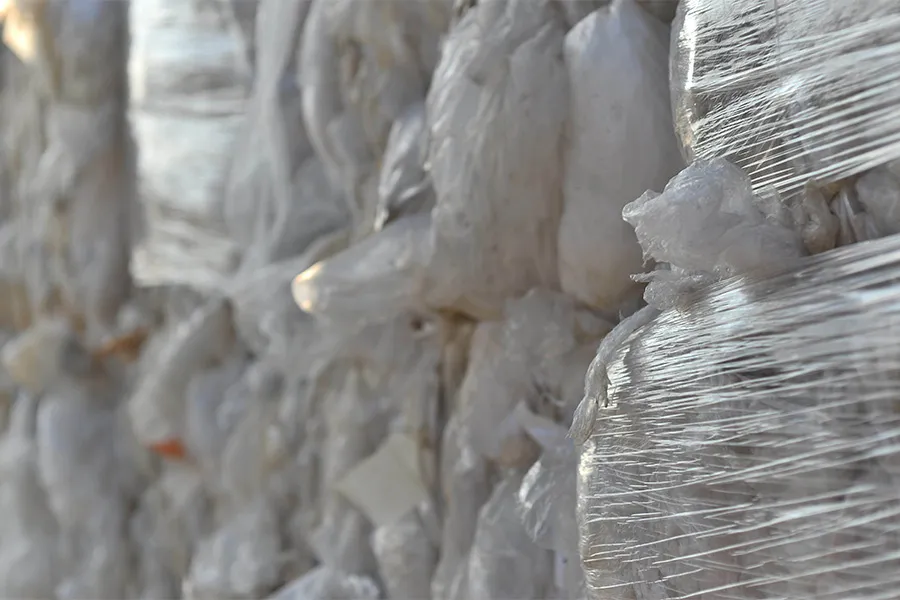
How can we encourage businesses to manufacture more products using recycled materials instead of freshly extracted raw materials? By addressing the price. Price remains one of the main drivers of the economy, and unfortunately circular materials are still often the more expensive option because environmental costs are not adequately reflected in the price. This article discusses these challenges and offers practical solutions.
The continuing influence of material prices can be clearly illustrated with an example. In the wake of the coronavirus crisis, prices for recycled plastics fell below those of their ‘virgin’ counterparts. Demand for recycled plastics then increased, and recyclers began building up stocks. But the price difference later swung back in favour of virgin plastics, leaving many recyclers with overflowing stocks to this day. In other words, price still carries more weight than the many sustainability claims made by manufacturers in recent years
.
Practical solutions
To promote the use of recycled materials, we propose the following practical measures:
1. Ban on incineration and landfill. At European level, efforts should be made to ban the incineration and landfilling of material that can be recycled on a technical and economic basis. Such a ban is already in place in Belgium and has helped to stimulate the circular economy.
2. Funding for European measures. The European Multiannual Financial Framework (MFF) must provide sufficient funding to implement European measures, including the development of measurement methodologies and research by the Joint Research Centre.
3. Tax on products without recycled materials. Introducing a tax on products that contain no, or insufficient, European recycled materials could make a difference. The United Kingdom has already introduced a similar measure, the Plastic Packaging Tax. This tax could be increased gradually in line with the capacity to produce recycled materials.
4. Federal product standards and green procurement. Federal product standards are needed for products not covered by the Ecodesign for Sustainable Products Regulation (ESPR). In addition, the various levels of government can set a good example by introducing green procurement. With the right quality and environmental criteria, such procurement can encourage the purchase of products from the European circular economy.
5. Monitoring claims and certification. Sustainability claims are often made too easily without being backed up by effective action. It is therefore necessary to monitor the use of recycled materials in products, particularly materials from countries outside the EU.
Question about this story? Ask your question
Keep following this
Get an email when a new story is published. No account needed.
- SubjectDenuo







