












Lithium-ion fires are difficult to extinguish
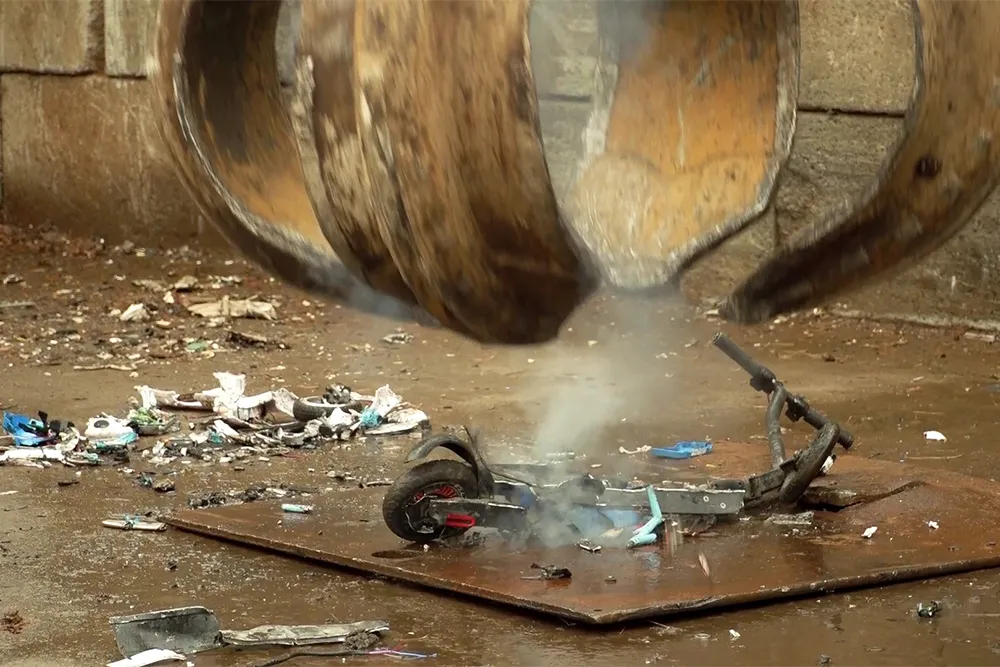
What exactly happens on site with lithium-ion batteries, and what can be done about it? Wim Verbakel of Hulpverleningszone Noord-Limburg and Bram Peetermans of Rematics spoke at Denuo’s battery conference about the scale of the problem and preventive measures to limit the risks.
But first, some figures to put things into context. Demand for energy from batteries is set to increase twelvefold between 2020 and 2030. That is bad news when you consider that the number of fires caused by lithium-ion batteries has tripled over the past ten years. Across Europe, that currently amounts to one fire a day. On average, each such fire costs between 190,000 and 1.3 million euros. So there is plenty more to come, given that the vehicle fleet must be fully electric by 2035. In addition, there is a trend towards making lithium-ion batteries increasingly powerful.
Number of fires doubles
Is it true that lithium-ion batteries are to blame for many fires? That was certainly the view among conference participants. 37% of the audience identified them as the culprit in 40 to 60% of cases. A further 33% put the figure as high as 61 to 80% of fires. It is certainly true that there are more fires. But the emergency services in Belgium do not keep statistics on their precise causes. Major cities abroad, such as London and New York, do. There, the number of fires has almost doubled, largely due to electric bicycles and scooters. Keeping better statistics could therefore be a good starting point for gaining greater insight into the problem from the data.
Leave firefighting to the emergency services
A second point of concern is the firefighting itself. It is far from straightforward, as it turns out. The flames are not the only danger: flammable toxic gases are also released and can quickly make the situation worse. Because lithium-ion batteries can undergo a chain reaction, it is also essential to keep them cool after extinguishing the fire, so that oxygen is not released and the reactions do not start again. The KIWA standards that apply to batteries and indicate how quickly the process can be interrupted unfortunately do not tell the whole story. Much depends on how easily extinguishing agents can reach the cells themselves.
Camera system detects batteries in residual waste
Selective battery collection is the key to preventing all these incidents in future. Batteries must not end up in other waste streams. The start-up Rematics wants to help address this. A camera system mounted on waste collection vehicles identifies materials still present in residual waste in real time. It captures 400 images per second as the waste falls. This creates more movement and therefore provides greater ‘insight’. The developers say the system can detect and identify 70% of materials. One limitation is that it cannot see into the depth of the waste. Button cells will therefore be easier to hide than large batteries. However, the technology is well suited to quickly detecting hotspots and improving sorting behaviour over time.
Safe processing and storage
These and other developments should eventually increase the proportion of batteries collected. However, this requires stricter fire safety measures at facilities where batteries are stored. Although Belgium has no legislation on the matter yet, the principles set out in PGS-37 are often applied in practice. This standard has two parts, covering battery storage and stationary energy storage. One more practical tip: it is a good idea to install a bypass at sorting plants. If heat is detected in a battery, a flap can open, allowing it to fall into a container that is then filled with water.
Question about this story? Ask your question
Companies in this story

Keep following this
Get an email when a new story is published. No account needed.
- ThemeCircular processing of electronics and batteries
- SubjectDenuo
- CompanyRematics







