












Lithium-ion batteries examined and explained
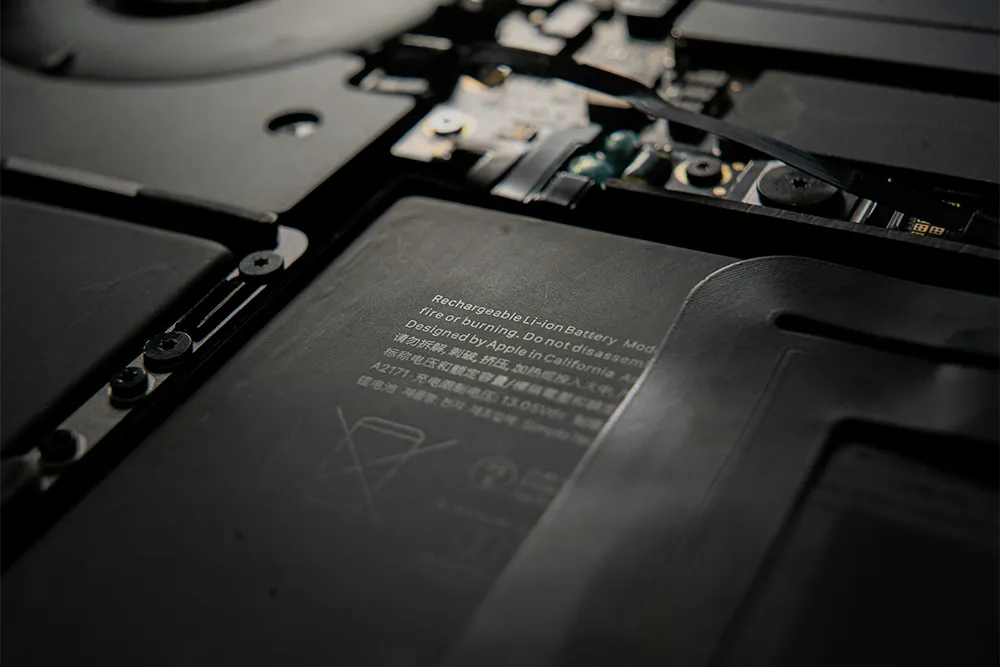
Lithium-ion batteries are turning the recycling industry upside down across Europe. But why is that? What makes them such a fire hazard? Denuo invited Dries De Sloovere, R&D Project Leader at Imo-imomec, a collaboration between imec and UHasselt, to give his academic perspective on this type of battery at the battery conference in late 2023.
First of all, you should not treat all lithium-ion batteries as the same. The term covers a family of batteries whose composition can vary, and so can the hazards they pose during recycling. The basic concept, however, is always the same. Lithium-ion batteries consist of a cathode and an anode, separated by a separator. The separator is a thin, porous plastic film permeated with liquid (and flammable) electrolyte. It prevents the cathode and anode from coming into contact, as contact between the two materials could cause a short circuit.
The search for higher energy density
The materials used for the cathode and anode have evolved over the years. The reason scientists began looking for a new type of battery in the first place was the limited energy density of, for example, lead-acid and nickel-cadmium batteries. This search led them to lithium, which is hardly surprising: it is the lightest metal and has the lowest reduction potential. The downside is its extremely high reactivity. Research therefore focused on controlling it.
A snowball effect when a short circuit occurs
If a short circuit occurs inside the battery, it can trigger a chain of reactions, with the heat generated rising ever higher. Once the temperature exceeds 130 °C, the separator starts to melt. At that point, all the elements needed for a catastrophic reaction are present: oxygen, flammable gases and heat. The batteries can then ignite spontaneously or, under certain conditions, even explode.
Mechanical damage is the main cause
How quickly this happens depends on how fast the heat builds up. Much depends on what caused the initial short circuit. Possible causes include the formation of dendrites, often due to using a poor-quality charger that overcharges the batteries, or a poorly made separator. But the main cause is mechanical damage, for example when a shredder’s teeth bite into a battery. If the battery is fully compressed, it undergoes a massive discharge, releasing a great deal of energy. And then things can happen fast.
The batteries of tomorrow
According to De Sloovere, lithium-ion batteries are not inherently more dangerous than other batteries, unless they contain lithium metal, but that technology is gradually becoming obsolete. Batteries of the future will, however, need to do more to prevent the chain reaction that occurs. He points, for example, to anodes that do not release oxygen, flame-retardant additives in the electrolyte, the development of a non-flammable variant or a solid electrolyte, and separators that can trigger a thermal shutdown. There is no shortage of potential avenues. Nor is there a shortage of funding from Europe. But the research now under way will not deliver concrete, marketable results for at least another ten years. The recycling sector does not have that kind of time.
Question about this story? Ask your question
Keep following this
Get an email when a new story is published. No account needed.
- ThemeCircular processing of electronics and batteries
- SubjectDenuo







