












Working together towards #Zerowaste
BRBS Recycling and Recyclepro join forces to banish the concept of “waste”
In 2020, BRBS Recycling celebrates its 40th anniversary. Founded as the “Belangenvereniging Recycling Bouw- en Sloopafval”, it has since become a trade association at the heart of the Circular Economy, with members active throughout the value chain.
There is a great deal of writing and discussion about waste, recycling and the Circular Economy. All kinds of messages reach us every day through various media: some fleeting, via a tweet, others more in-depth and weighty, in a trade magazine or circular. In a world where the most widely viewed or liked opinion is taken as the truth, BRBS Recycling prefers the printed word. Something that can be read whenever convenient, then shared and discussed around the reading table: a magazine, in other words.
To spread our message more widely, we have joined forces with Recyclepro, a magazine that has been distributed in Belgium for several years and now also has a Dutch edition. We are delighted to be able to reach more readers, and hope this will inspire even more people and increase waste separation and recycling rates in the Netherlands and beyond.
A great example of inspiration is the annual Recyclingsymposium in Gorinchem. We are already busy preparing the 2020 edition, which will be held on Wednesday 18 November. Make a note of the date in your diary!
In the spirit of Reduce, Reuse & Recycle, we would of course like to remind you that this issue is also available digitally at recyclepro.eu. Once you have passed your hard copies on to colleagues, please put them in the paper recycling bin. That way, we save resources and give this issue a new lease of life.
Enjoy reading!
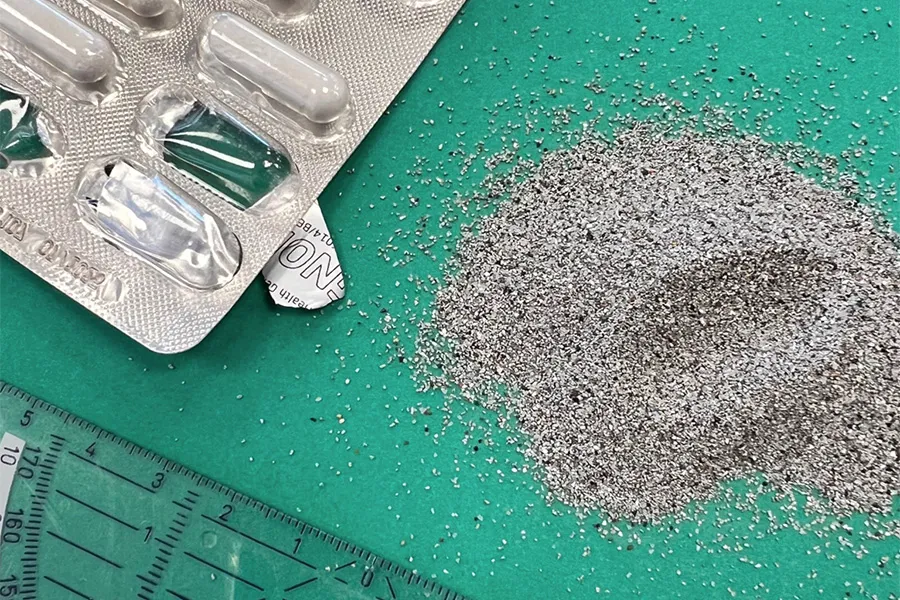
Calculation model encourages the reuse of construction products
The built environment accounts for half of all material use. Reducing its ecological footprint will require more consideration not only of the quantity, origin and scarcity of raw materials, but also the development of a method for calculating the residual financial value of existing construction products and thereby encouraging their reuse.
At present, however, there is no clear way to assess whether reusing construction products can make financial sense. There is therefore a need for a ‘Residual Value Calculator’, a calculation methodology based on factors such as raw material prices, quality, ease of disassembly, transport, and maintenance and repair costs. Once the financial and material residual value is clear to suppliers of construction products, property developers, housing associations and construction project financiers, there will be an incentive to dismantle rather than demolish buildings at the end of their economic life.
Such a transition to sustainable reuse can only succeed if the whole sector, including financial institutions, recognises its value and profitability. Assigning residual value opens up new business models, such as leasing or buy-back. Just as important as developing a residual value methodology is setting in motion a movement that encourages the parties involved to agree on the residual value of construction products during the planning stage. The government could give this movement an additional boost by requiring a minimum proportion of high-quality reused construction materials in new builds and renovations, for example through the Building Decree.
Residual Value Calculator
To provide the necessary insight into the residual value of construction products, TNO and C2C ExpoLAB have developed a prototype of the Residual Value Calculator based on office partition walls. In time, Sara Wieclawska of TNO expects to provide a predictive model covering a broad portfolio of construction products, offering insight into the actual residual value of the various movable, semi-movable and perhaps even immovable assets in a building. She expects this to create an incentive to dismantle rather than demolish, and to consider the ease of disassembly, or ‘Lego-like’ design of the different products.
Design for disassembly
Manufacturers of construction materials also have an important role to play in determining residual value. They are ideally placed to take action to increase it. If, for example, the cost of removing an internal partition fixed with screws and nails makes it financially unattractive, there is clear value in making the wall easier to dismantle. This also drives an essential new movement: towards circular product design at the design stage, or design for disassembly.
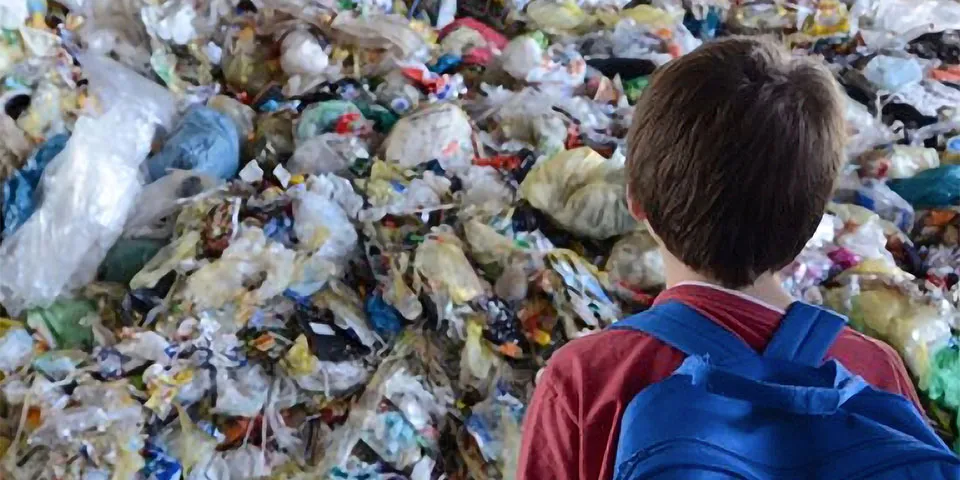
European recycling is still in its infancy
The circular economy offers significant opportunities for Europe, yet reuse accounts for barely 10 per cent of raw materials. A critical report by the European Environment Agency (EEA) calls for greater investment and scaling up.
A circular economy reduces both the amount of waste and the demand for raw materials. It is more efficient, better for the climate and also benefits biodiversity. Europe, an industrialised region that is also highly dependent on imports of scarce raw materials, therefore has much to gain. Yet initiatives remain too small in scale, says the European Environment Agency in its report ‘Paving the way for a circular economy: insights on status and potentials’, which surveys existing initiatives.
A shift is under way
European businesses are increasingly moving towards circular business models. Their main focus is on operational efficiency and reducing waste. The shift from products to services also shows promise. But the biggest barriers to a faster transition to such models are “corporate culture, market factors and system complexity”, the report says. “Available statistics on resource use show that the circular economy is still in its infancy,” it notes. “At macro level, barely 10 per cent of materials used in the European economy are recycled and reused.”
Differences
The averages conceal major differences between materials and countries. Just one per cent of scarce materials such as lithium and silicon is recycled, compared with more than half of silver and lead. There are also substantial differences between individual member states.
Waste volumes grew by three per cent between 2010 and 2016, but the volume of recycled waste also increased by half. Waste incineration with energy recovery rose by 12 to 18 per cent over the same period, while landfilling fell by almost a third.
Scale
The EEA’s research shows that 21 of the 32 member states have already taken measures to support circular initiatives. These are generally laws and market-based instruments focused on recycling, energy efficiency and waste management, while themes such as eco-design, consumption and reuse are often supported through ‘softer’ policy instruments such as information campaigns or labels.
The report notes that the initiatives themselves need more investment, as does the monitoring of them. Much relevant data, such as information on the production and consumption phases in the life cycle of products, is not available in existing systems or government statistics. The report also says that circular economy policy needs to be better integrated with climate policy.
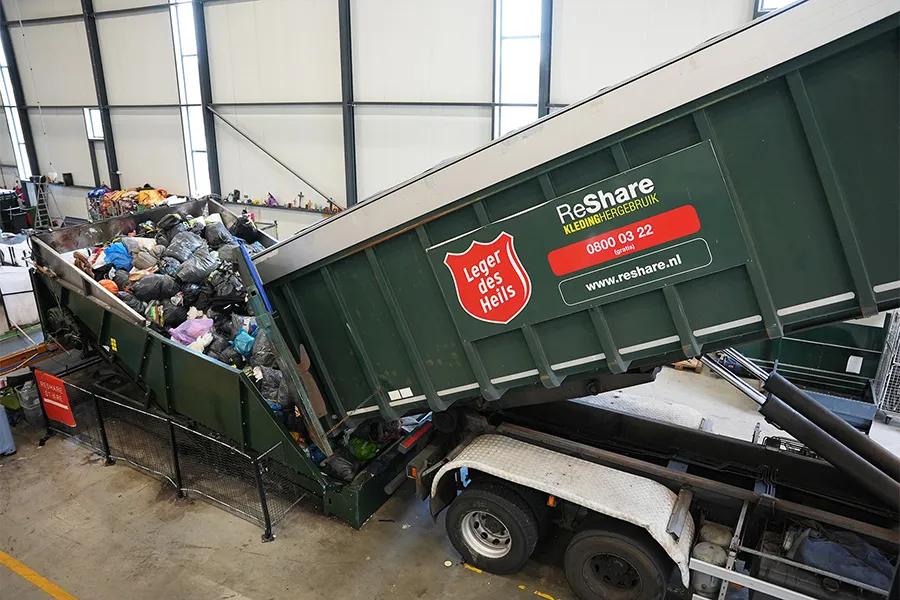
The EU Green Deal: the man on the moon!
Decisive action on waste collection and management
On 11 December 2019, European Commission President Ursula von der Leyen presented the European Green Deal. She called the Green Deal, which aims to make Europe the first climate-neutral continent by 2050, Europe’s “Man-on-the-moon project”.
The Green Deal has a broad scope. Its three main pillars, Zero Emission, Circular Economy and Zero Pollution, cover every sector of the economy.
The initial indications on the Circular Economy point towards an action plan for sustainable products, promoting circular design for all products based on a single methodology and common principles. The action plan will focus in particular on using less material and reusing it before recycling. This will promote new business models and establish minimum requirements to prevent environmentally harmful products from being placed on the EU market. Extended producer responsibility will also be strengthened.
The Circular Economy Action Plan focuses in particular on resource-intensive sectors such as textiles, construction, electronics and plastics. Energy-intensive sectors such as steel, chemicals and cement, as contributors to several key value chains, will be called on to decarbonise and further modernise.
Measures will also be introduced to encourage companies to offer reusable, durable and repairable products, and to enable consumers to choose them. There is even talk of investigating a “right to repair”.
Alongside “Reduce” and “Re-Use”, the policy on “Recycle” states that sustainable product policy will also significantly reduce waste. Where waste cannot be avoided, its economic value should be recovered and its impact on the environment and climate change kept to a minimum or avoided altogether. This requires new legislation, with targets and measures to tackle over-packaging and waste generation. At the same time, EU businesses should benefit from a robust and integrated market for secondary raw materials and by-products. This requires closer cooperation across all value chains, as in the case of the Circular Plastics Alliance. The Commission will consider legal requirements to boost the market for secondary raw materials by setting mandatory recycled content requirements, for example for packaging, vehicles, construction materials and batteries. To make waste management simpler for citizens and ensure businesses have cleaner raw materials, the Commission will propose an EU model for separate waste collection. The Commission considers that the EU should no longer export its waste and will therefore review the rules on waste shipments and illegal exports.
Further details and the presentation of the Circular Economy component are expected in March 2020. In keeping with the “Man-on-the-moon” ambition, this will be at least a three-stage rocket, with a 2050 landing and stopovers in 2030 and 2040. The countdown has begun!
Question about this story? Ask your question
Keep following this
Get an email when a new story is published. No account needed.
- ThemeCircular construction and demolition
- SubjectBRBS Recycling






