












The Netherlands is the first EU country with semipermeable borders
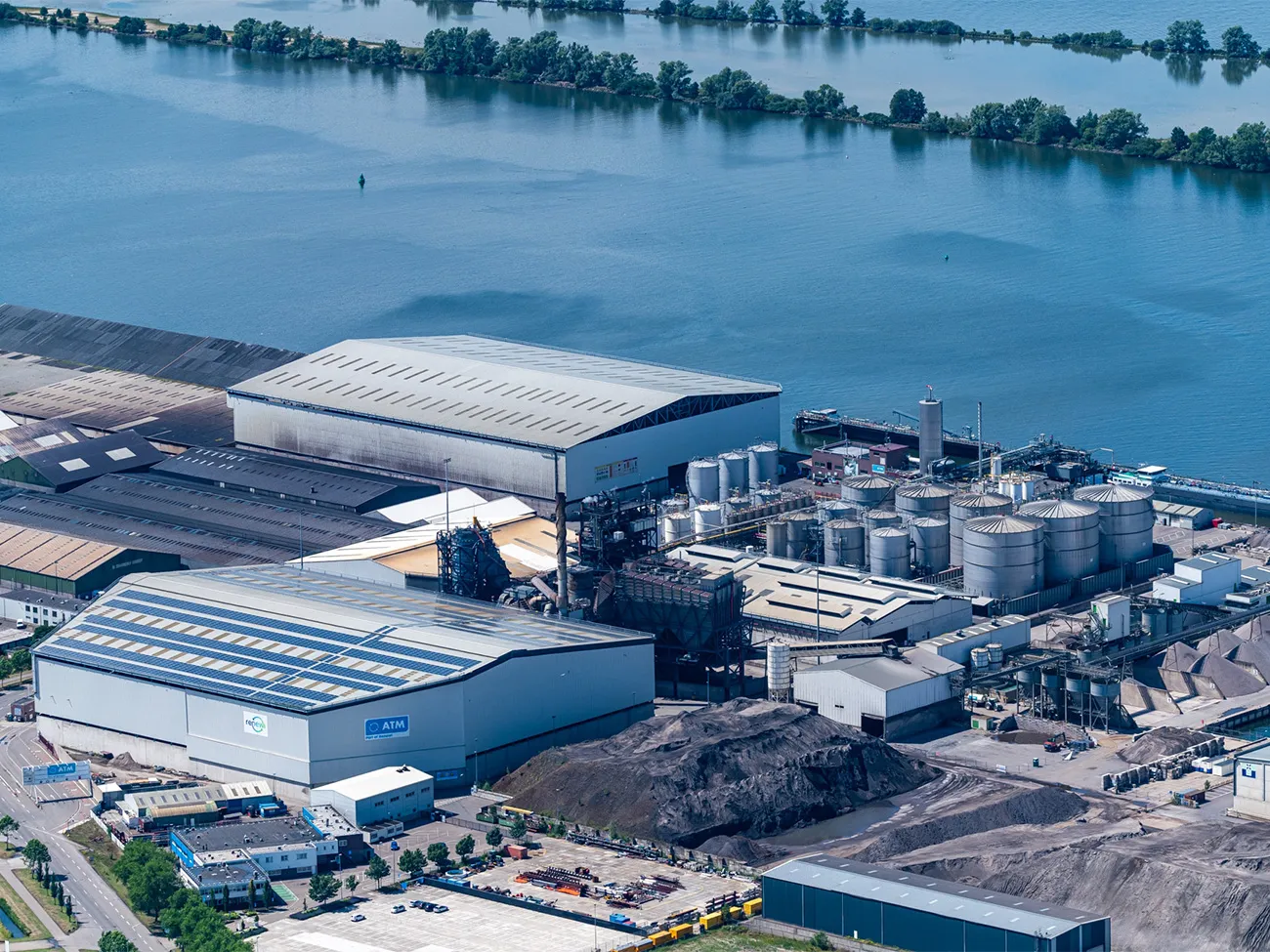
Old asphalt without tar can be recycled into new asphalt. However, asphalt made with (coal) tar, which was used as a binder alongside (petroleum) bitumen until it was banned in 1991, contains high levels of polycyclic aromatic hydrocarbons (PAHs), which are carcinogenic substances. Since 1999, the national government has had a policy of removing tar from the supply chain, and since 2001, recovered tar-containing asphalt granulate (TAG) has had to be thermally treated to remove the PAHs, in accordance with the minimum standard in the National Waste Management Plan. In other countries, TAG is still landfilled or may even still be used untreated. However, the Dutch policy is attracting growing interest abroad too.
Recovering raw materials from tar-containing asphalt
Supporting the circular economy
Thermal treatment of TAG completely burns the PAHs and all other organic components in the asphalt, leaving the other original raw materials, such as sand and crushed stone aggregate, which are then used as high-quality construction materials in sectors including the asphalt and concrete industries. This produces more than 2.5 million tonnes of environmentally responsible construction materials each year, reducing the need for primary raw materials. The thermal treatment plants also use the heat released when the tar is burned to power their own operations and generate electricity.
Semipermeable borders
Under the new regulation, the Dutch borders for TAG are “semipermeable”: open to countries with environmentally responsible recycling processes, namely the thermal treatment of TAG, and closed to countries where the waste is used in an irresponsible way. This concept could be applied to more waste streams than TAG: borders could be open to treatment processes that are more expensive, but are better for the future and for human and environmental wellbeing. Companies invest in high-quality technologies only if they are assured of sufficient supplies and outlets for their products. Without “semipermeable” borders, potentially environmentally responsible raw materials end up in lower-value applications that often carry environmental risks. The regulation on TAG could serve as a good example for other waste streams for which smart, innovative recycling is possible in the Netherlands. It could also be adopted across Europe, helping to strengthen the circular economy.
Question about this story? Ask your question
Keep following this
Get an email when a new story is published. No account needed.
- SubjectBRBS Recycling






