












Recycling geopolymer concrete
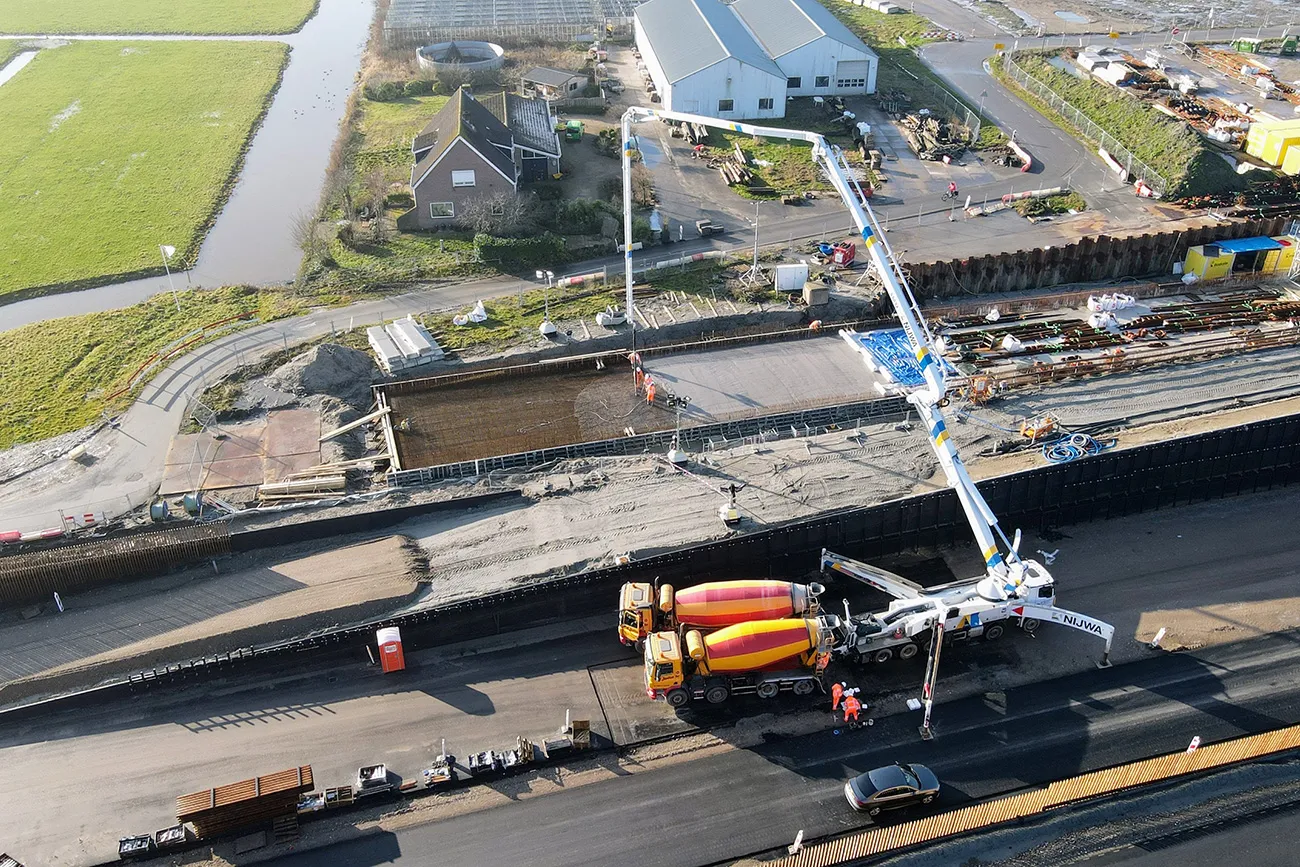
Circular, low-CO2 concrete given a second life
After years of talking about climate measures and the Concrete Agreement, much of the concrete industry is now taking action to become more sustainable. New raw materials for concrete and innovative types of concrete are appearing in specifications, and sustainability is being included in tenders. Innovative recycling methods are also being brought to production readiness. Regulations for assessing and managing quality inevitably follow somewhat later, but work is well under way on those too. The most talked-about option is geopolymer concrete, which could be widely used in the near future, with properties and a service life almost identical to those of cement concrete. But even if it will be another 50 years before we recycle geopolymer concrete on a large scale, we need to start thinking about it now. This article explores the issue.
Geopolymer concrete
What we refer to for convenience as geopolymer concrete is actually alkali-activated material (AAM), but that is a bit of a mouthful. Geopolymer concrete uses powdered minerals of primary or secondary origin (precursors). These are similar to minerals used in composite cements or as reactive fillers in concrete (supplementary cementitious materials, SCMs). But other minerals can also be used, such as steel slags or finely ground glass powder.
These minerals do not react, or react very slowly, with water, unlike cement. Activators are needed to make them react; these are alkaline solutions.
Replacing 100% of the cement can reduce CO2 emissions by 40% to 80% (compared with CEM III/B and CEM I respectively). This means around 90 to 180 kg less CO2 per cubic metre of concrete.
A little chemistry
Cement consists mainly of calcium silicates (abbreviated to CS), which react with water (H) after mixing to form cement stone, or calcium silicate hydrate (CSH), and free lime, or portlandite (CH). In formula form:
CS + H à CSH + CH
Adding blast furnace slag containing alumina (A) gives us:
CSA + H à CASH
Pozzolanic fillers such as pulverised fuel ash and other aluminosilicates (AS) need lime to react and form cement stone:
AS + CH à CASH
In geopolymers, (calcium) aluminosilicates react not with lime but with other alkaline compounds. These are often sodium-based (N), giving us:
CAS + N + H à CNASH
or
AS + N + H à NASH
In reality, it is a continuum, from pure cement (CEM I) via composite cements (CEM II, CEM III) or reactive fillers to geopolymer cement.
Geopolymer concrete in service
We know that fresh geopolymer concrete is highly reactive and hazardous on skin contact. This is due to the activators. In older geopolymer concrete, most of the activators have reacted with the precursors according to the chemical formulae above, making it much less reactive. Research by SGS INTRON has shown that Sqape geopolymer concrete is no more harmful than cement concrete when dust or particles are released during crushing, sawing, drilling and similar operations [i].
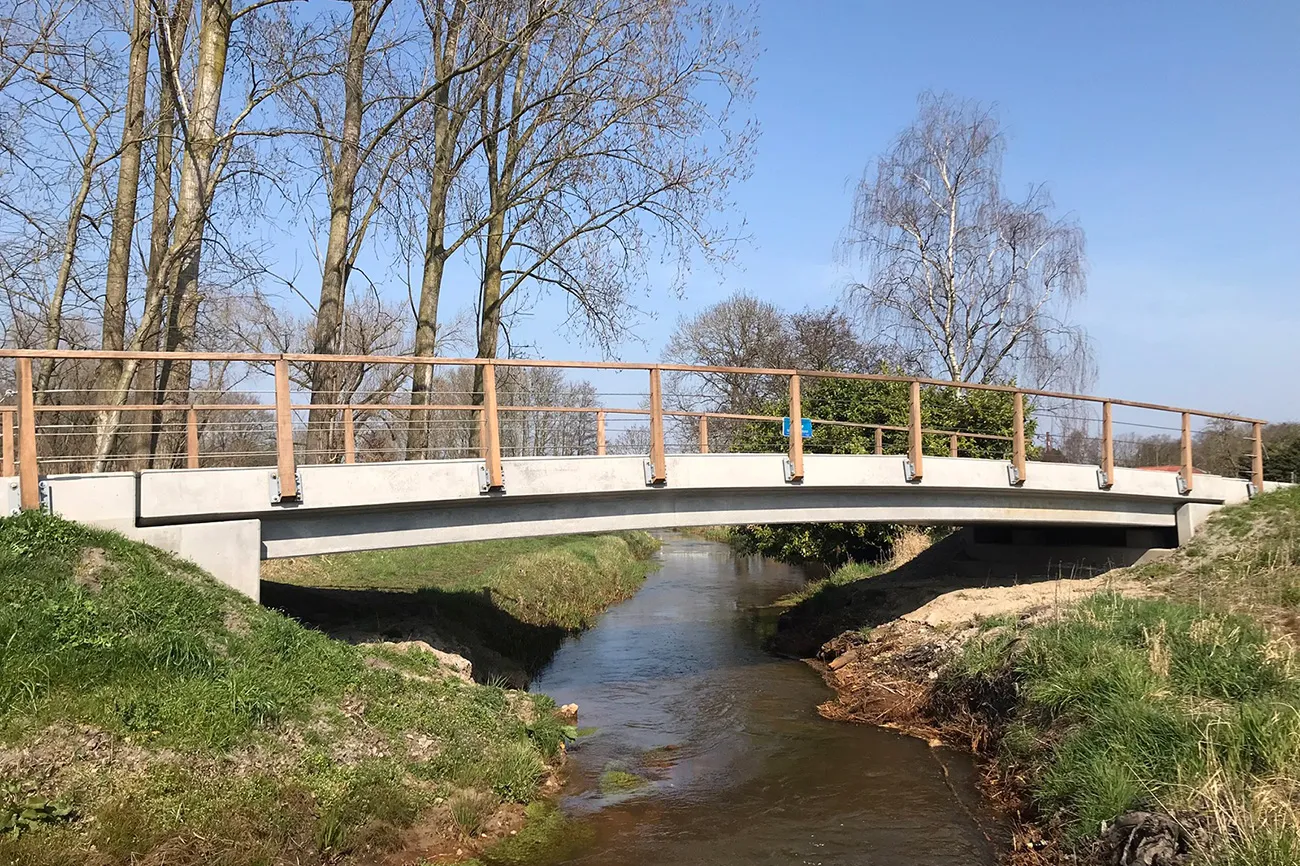
Leaching from crushed geopolymer concrete also complies with the Soil Quality Decree. It can be used freely. It is therefore safe for people and the environment during its service life and when processed into granulate.
Geopolymer concrete aggregate
SGS INTRON has also demonstrated that geopolymer concrete aggregate can be used to make new concrete: new cement concrete and
new geopolymer concrete.
One issue remains to be resolved: how we assess the sodium content (or, more accurately, the sodium equivalent) in concrete aggregate. Sodium in concrete aggregate can be present mainly as a result of seawater or de-icing salts penetrating the concrete. This sodium can dissolve in the pore water of new concrete. Under certain conditions, this can trigger the alkali-silica reaction (ASR)[ii]. This is why a maximum sodium content is specified for concrete aggregate.
Geopolymer concrete also contains sodium, as we have seen. However, there are a few differences between sodium in geopolymer and sodium that has penetrated from seawater or de-icing salt:
Sodium and salts that have penetrated concrete are soluble, whereas most of the sodium in geopolymer concrete is bound in the CNASH or NASH cement stone.
Sodium that has penetrated concrete can be reached through the pores from the concrete surface (that is how it penetrated), whereas in geopolymer concrete it is trapped within the material.
Only a very small proportion of the sodium in geopolymer concrete aggregate is therefore available to contribute to ASR. Various studies have accordingly found that geopolymer concrete aggregate poses no ASR risk unless it is mixed with aggregate that is highly susceptible to ASR[[i]ii].
Regulations
When introducing new raw materials for concrete and innovative types of concrete, we also need to consider how the new concrete mixes will be recycled. To establish a standard approach, CROW CUR Guideline 2:2021, ‘Assessment system for determining the suitability of raw materials for circular concrete’, was drawn up. This is a good start, but its treatment of alkali content is still based on total sodium rather than soluble sodium. CUR Recommendation 89, ‘Measures to prevent concrete damage caused by the alkali-silica reaction (ASR)’, also uses total sodium rather than soluble sodium.
Conclusion
New concrete mixes require us to rethink requirements and specifications. As regards recycling Sqape geopolymer concrete, there is no reason to take special measures. However, the existing guidelines need to be amended with regard to ASR. We still have some time before geopolymer concrete is recycled on a large scale.
[i] See www.sqape.nl
[i]i CUR Recommendation 89, Measures to prevent concrete damage caused by the alkali-silica reaction (ASR), CROW, 2017.
[i]ii Recycling of fly ash: slag based geopolymer cement, Chaliasou, N.A., University of Bath, 2015.
Question about this story? Ask your question
Keep following this
Get an email when a new story is published. No account needed.
- SubjectBRBS Recycling






