












National Circular Economy Programme 2025: moving towards high-quality recycling
The updated National Circular Economy Programme 2025 was published in October 2025. The NPCE sets out three new targets for reducing, substituting and retaining raw materials.
These new targets better reflect the complexity of the circular economy, which cannot be adequately captured by a single figure. The targets set out in the NPCE 2025 align with circularity strategies and provide more information to guide policy than the former general target of halving the use of primary abiotic raw materials by 2030, which the NPCE 2025 is now abandoning. In his foreword, State Secretary Thierry Aartsen of Infrastructure and Water Management (IenW) says that the green lens is being replaced by one that also looks at the circular economy from an economic perspective. Greater consideration must be given to businesses and the sectors themselves. This has also influenced the revised targets.
Updated
The ‘old’ targets dating from 2016 (50% circular by 2030 and fully circular by 2050) have been updated. The strategies to be pursued are:
- high-quality processing of waste into high-quality raw materials;
- substituting finite/scarce raw materials with renewable and recycled materials;
- extending product lifespans;
- reducing raw material use or using raw materials more efficiently.
Examples of high-quality processing cited in this context include:
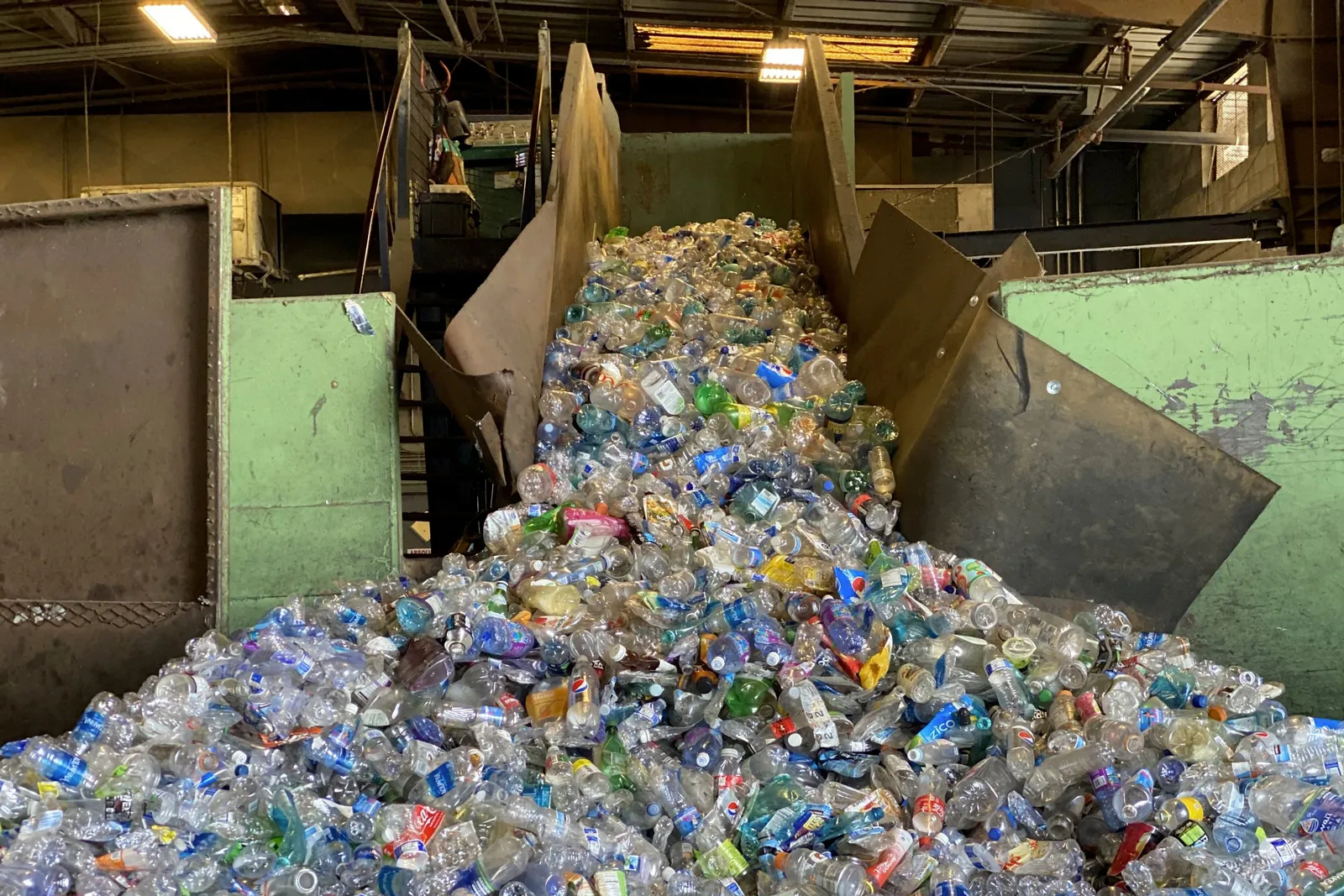
- old plastic PET bottles into new (PET) bottles;
- crushing concrete into recycled concrete aggregate for reuse in new construction products;
- converting food and garden waste into compost.
The aim of high-quality processing is to close loops with as little loss of quality as possible and minimise landfill and incineration. The online visualisation on the NPCE website provides an overview of the status of the 350 measures announced in the programme. One such measure is ‘Preventing the incineration of recyclable material’, which involves taking steps to prevent recyclable material from being incinerated. This measure is due to end on 31 December 2026.

Viable
The government is focusing on measures that remove barriers and on economic models that are viable and self-sustaining. This is in line with European policy, with the Circular Economy Act serving as an example. The new circular economy targets are specified as follows:
- at least 82% recycling by 2035 and at least 15% high-quality recycling by 2035;
- interim target of 80% recycling by 2030 and at least 11% high-quality recycling by 2030;
- increase the share of sustainable bio-based and secondary raw materials to at least 55% by 2035;
- reduce raw material use by 15% by 2035;
- the recycling rate in 2016 was 78%, with high-quality recycling estimated at 5 to 10%.
Work is now under way to determine how these targets can be measured and monitored, and expressed in absolute figures. The aim is to create a dashboard to monitor progress.
Supply chain roundtables
Circular businesses must be able to compete on price and quality, and circular businesses must be enabled to do so. This will be facilitated by supply chain roundtables, which will replace the transition teams, and by ‘sprint teams’. A roundtable will be set up for each product group to drive progress. The aim is eventually to formulate a comparable set of targets for all product groups. The sector organisations will then be responsible for drawing up a plan setting out how they can contribute to these targets. Finally, to support European harmonisation, the government is considering setting up a European internal market for waste and recycling, with harmonised end-of-waste criteria.
Question about this story? Ask your question
Keep following this
Get an email when a new story is published. No account needed.
- ThemeCircular business under changing regulations
- SubjectBRBS Recycling






