












High-quality concrete recycling closes the loop: sustainable widening of the A9
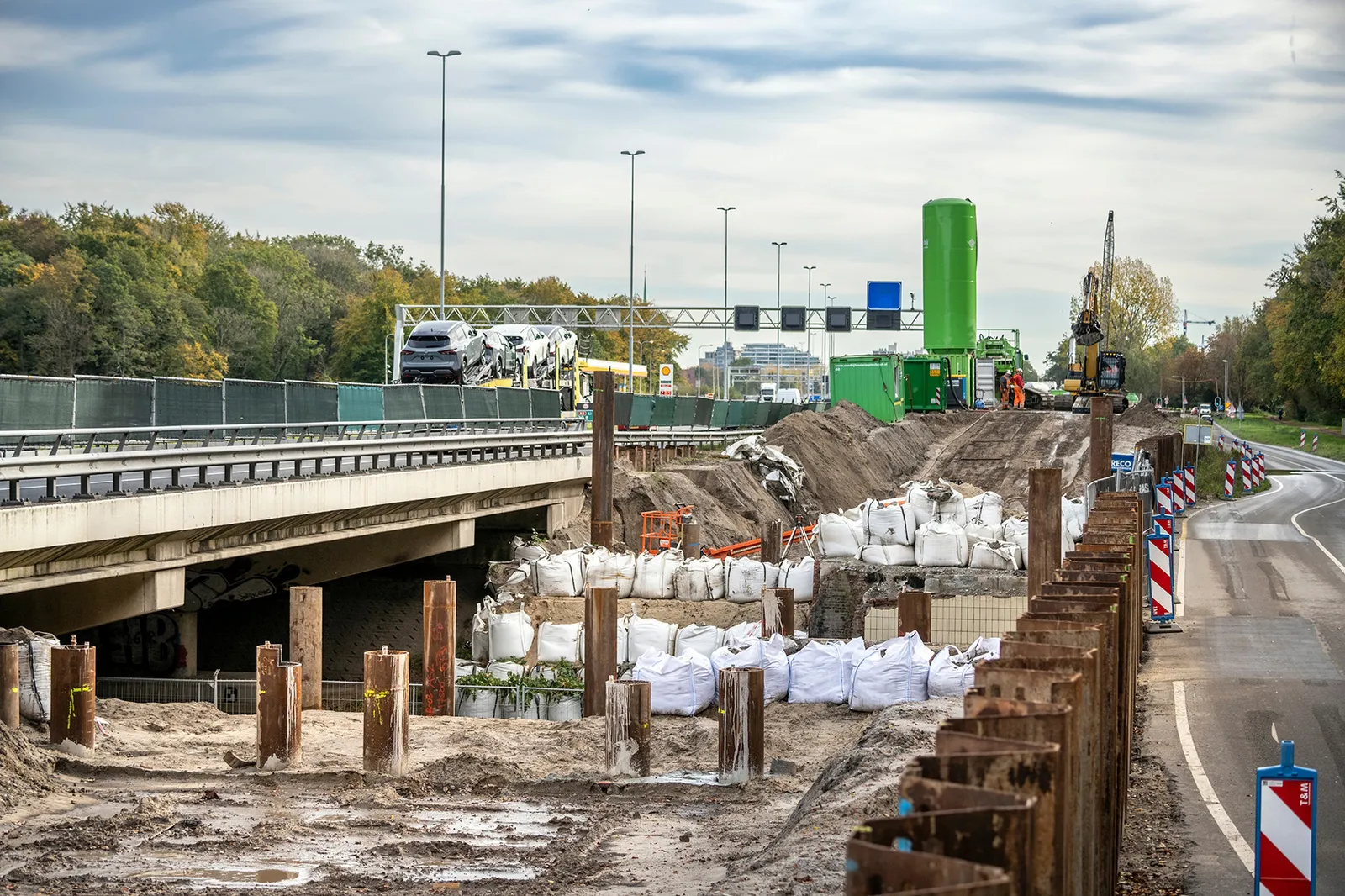
Commissioned by Rijkswaterstaat, the Veenix consortium, with FCC as main contractor, is widening and deepening the A9 between the Badhoevedorp and Holendrecht interchanges. Waste-to-product company Renewi is recycling 40,000 tonnes of concrete rubble from the demolition of two viaducts. This material can be put to high-quality use again in Rijkswaterstaat construction projects as a full-fledged raw material for concrete.
The construction sector faces a major challenge as natural raw materials become less available. By 2030, sand extraction is forecast to fall by 24% and gravel extraction by 44%, partly to prevent soil erosion. Since concrete consists mainly of sand and gravel, this shortage makes the need to use recycled concrete even more urgent. At the same time, the amount of concrete rubble available is increasing sharply due to the demolition of post-war buildings and growing demand for effective concrete rubble separation. By 2030, 15 million tonnes of concrete rubble are expected to be available for new concrete. According to the Betonakkoord, a nationwide initiative to make the concrete supply chain more sustainable, all concrete waste streams must be used fully circularly by 2030. New guidelines also limit the use of recycled concrete in road foundations to a maximum of 5% by 2030. This encourages concrete rubble to be redirected to high-value applications, such as the production of new concrete.
High-value applications through an advanced recycling process
At present, only a small proportion of concrete rubble is reused in new concrete. The technical complexity of the demolition and recycling process calls for a different approach across the supply chain. Concrete consists of a mixture of cement, water, gravel and sand. To recycle concrete, its components must be separated. Renewi has developed an advanced recycling process that produces certified recycled concrete aggregate and concrete sand. These materials meet the highest quality requirements and enable more circular concrete solutions. This technology makes it possible to reuse concrete rubble in new concrete rather than in lower-value applications such as foundation material. It significantly reduces the use of primary raw materials such as gravel, sand and cement, helping to deliver higher-quality, more sustainable construction solutions.
Building a circular future together
According to Statistics Netherlands (CBS), the construction sector is responsible for around 25% of all waste in the Netherlands, most of which is concrete waste. This makes closing the concrete loop crucial. Jan-Pedro Vis, Director Material Management & Outbound Sales at Renewi, says: “Concrete is one of the most widely used construction materials in the world and is responsible for a large share of CO2 emissions. Making concrete more circular is therefore essential, and can only be achieved through collaboration across the supply chain. Lek Sloopwerken demolishes the viaducts, after which Renewi processes the concrete rubble into high-quality circular raw materials for Rijkswaterstaat construction projects. The A9 collaboration is a powerful example and marks an important step towards a circular economy. But there is still a long way to go.” Benny Nieswaag, project manager at Rijkswaterstaat, says: “Reusing concrete contributes to Rijkswaterstaat’s renewal programme and accelerates the transition to a circular economy.”
Road foundations
The demolition of two viaducts along the A9, between the Holendrecht and Badhoevedorp interchanges, will yield 40,000 tonnes of concrete rubble. Renewi processes this rubble into high-quality material that can be used again in concrete for Rijkswaterstaat projects. Renewi is also supplying 130,000 tonnes of recycled mixed aggregate made from mixed rubble. The mixed aggregate can be used for the foundations of new roads.
Question about this story? Ask your question
Keep following this
Get an email when a new story is published. No account needed.
- ThemeCircular construction and demolition
- SubjectBRBS Recycling






