












Co-operation statement on construction materials agreement signed
‘Towards a national agreement to accelerate sustainability’
The Co-operation Statement on the Construction Materials Agreement has recently become a reality. The document is seen as ‘an essential step towards a national agreement to accelerate the sustainability of all construction materials’, and towards a fully circular construction economy in the Netherlands.
Representatives of the ministries of BZK, Infrastructure and Water Management (IenW) and Economic Affairs and Climate Policy (EZK) recently signed the statement, together with a large group of trade associations and supply-chain representatives. It lays the foundations for a future construction materials agreement, providing for co-ordination and potentially even synergies between the sustainability ambitions, plans and actions across the various construction materials supply chains, from brick and concrete to gypsum, timber and steel. To rapidly and substantially reduce the environmental impact of construction and buildings, and make the Dutch construction economy fully circular, insight into one another’s ambitions and activities, and co-operation between the supply chains, are needed. Topics addressed in the construction materials agreement include insight into materials becoming available, the involvement of (public-sector) clients, enforcement, energy infrastructure, reducing transaction costs, encouraging reuse and monitoring.
Circularity
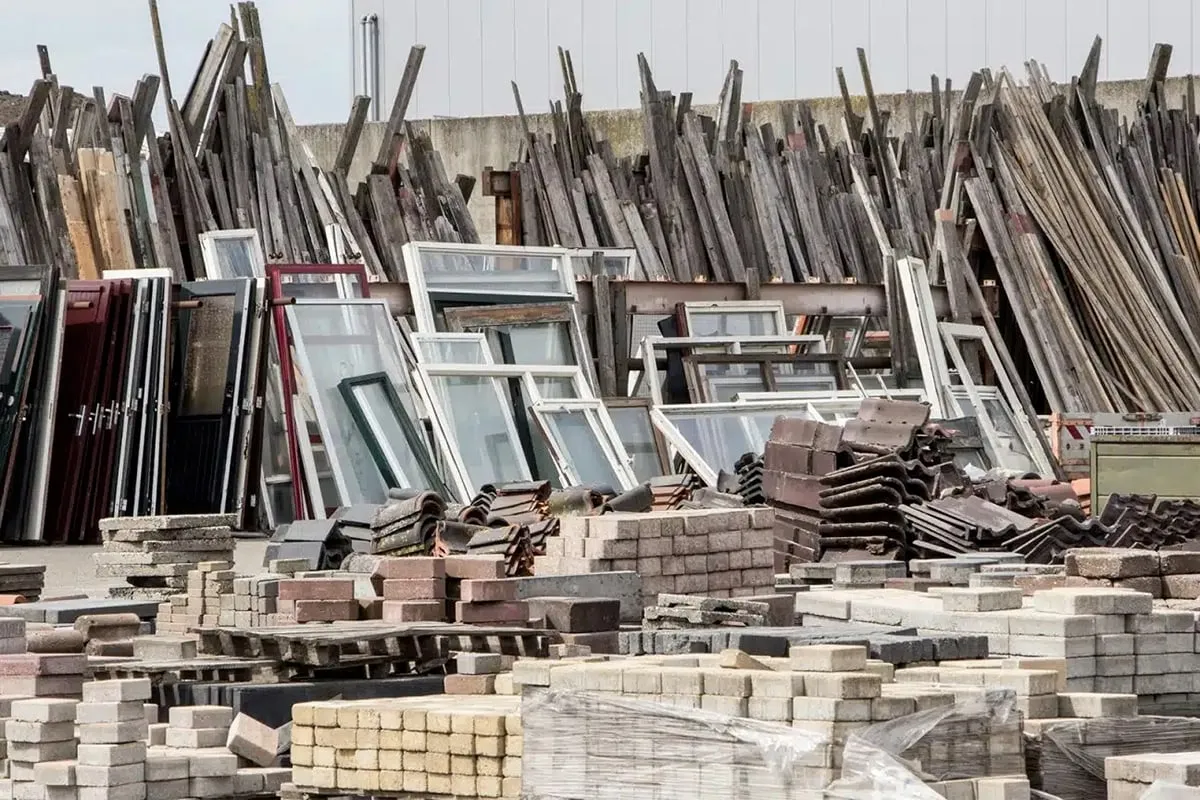
Making the construction sector and construction materials industry more sustainable is essential to achieving a fully circular construction economy. Construction companies need large volumes of materials that also meet applicable environmental standards and quality requirements. At present, only a small proportion of construction and demolition waste is returned to construction in its original form. As a result, the inflow of primary raw materials remains high. The glass sector provides a good example. At the initiative of Bouwend Nederland’s Glass section, the sector has had a voluntary EPR scheme in place for more than twenty years. Extended producer responsibility is a combination of rules that makes companies that manufacture products responsible for collecting and reusing waste from those products as well.
Shared ambitions
The first outlines of the construction materials agreement were already drawn up early last year. The Co-operation Statement now sets out the shared ambitions of central government and market parties, what is needed to make sustainability efforts across the different supply chains visible ‘across the chains’, and the conditions under which an overall acceleration is feasible. Each construction material or product has its own supply chain, and each chain therefore follows its own path. The Environmental Performance of Buildings (MPG) provides a tool for steering circularity at building level. The MPG will soon be tightened and extended to other building functions. But major steps still need to be taken at material level to achieve a circular building, for example on embodied emissions, environmental costs and resource use. “Insight into the challenges and steps within a supply chain is crucial to this,” says Ruben Zonnevijlle of the Dutch Green Building Council (DGBC), which advised the initiating Ministry of the Interior and Kingdom Relations during the development of the Co-operation Statement. The statement also documents the joint actions needed to develop a detailed construction materials agreement. The aim is to have the covenant ready in summer 2025.
Signatories
The Co-operation Statement on the Construction Materials Agreement, signed on 22 May 2024, is supported by: Ministry of the Interior and Kingdom Relations, Ministry of Economic Affairs and Climate Policy, Ministry of Infrastructure and Water Management, Netherlands Enterprise Agency, Koninklijke Bouwend Nederland, VlakglasRecyclingNederland, Stichting Open, Nederlandse Vereniging Toeleverende Bouwmaterialenindustrie, Techniek Nederland, TKI Bouw en Techniek, Transitieteam Circulaire Bouweconomie, Stichting Circulaire Geveleconomie, Betonakkoord Bouwakkoord Staal, Federatie voor de Metaal- en Elektrotechnische industrie, Bouwen met staal, Betonhuis, Cement&BetonCentrum, Mineral Wool Association, Nederlandse Vereniging van Polyurethaan hardschuim-fabrikanten, Nederlandse Branche Vereniging Gips, Stybenex, Centrum Hout, Vereniging Koninklijke Nederlandse Bouwkeramiek, Nederlandse Rubber en Kunststoffen industrie platform bouw, VERAS Sloopaannemers, Vereniging Afvalbedrijven, Branchevereniging Recycling Breken en Sorteren.
Question about this story? Ask your question
Keep following this
Get an email when a new story is published. No account needed.
- ThemeCircular construction and demolition
- SubjectBRBS Recycling






