












BRBS Recycling: the foundation of the Circular Economy
Since the 1990s, the recycling sector has professionalised rapidly. Driven in part by laws and regulations, the government and the recycling sector advise and instruct waste producers, both consumers and businesses, on how best to dispose of their waste. For a long time, the Netherlands has been known as a recycling leader.
Today, it is this same recycling sector that is represented in discussions with the government by its trade associations, such as BRBS Recycling. These discussions cover, for example, revisions to key policy instruments such as the LAP (National Waste Management Plan), the Circular Economy in the various transition agendas, and reducing the incineration of recyclable waste at waste-to-energy plants. Yet in recent years, progress on the recycling rate appears to have stalled.
Around 40,000 men and women in the Netherlands work every day to clear away the detritus of Dutch consumer prosperity. These skilled workers start their shifts before dawn. Whether they are driving trucks, working on sorting lines, operating machinery or planning, they form a chain of people and processes that ultimately results in around 80% of all waste being recycled. Of the approximately 60 million tonnes of waste generated in the Netherlands each year, around 9 million tonnes of Dutch waste are still incinerated or landfilled. Fortunately, we are making good progress towards recycling more and better, and by 2050 the concept of waste should no longer exist: we will be fully circular.
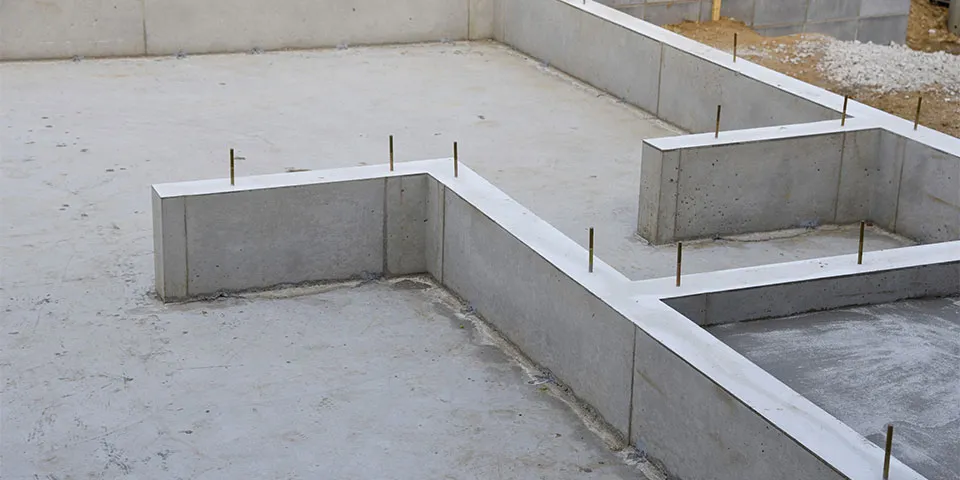
BRBS Recycling was founded in 1980. Since then, the association has campaigned for more and better recycling, particularly of construction and demolition waste, and increasingly of commercial waste and bulky household waste too. The success of these efforts is clear from the fact that the previously mentioned overall recycling rate of 80% consists largely of mineral materials and construction and demolition waste. This waste stream achieves a recycling rate of over 98% by both volume and weight, making it the foundation of the Circular Economy.
And all this without any form of subsidy, extended producer responsibility or chain deficit. It is achieved simply through good regulations, quality standards, market development, and supply and demand. Government intervention in the form of a ban on landfilling construction and demolition waste, supported by the Environmental Management Act and the Soil Quality Decree, was enough to let the market do its work.
It is therefore simplistic to describe the recycling of mineral waste streams and other forms of traditional recycling as “downcycling”, solely because the materials are often used underground. Naturally, the recycling sector would like to see its recycled aggregates used in structures; aggregates certified under BRL2506 are ideally suited to this in terms of quality. This would also pave the way for other freely applicable recycled materials that can be used as road sub-base. The result would be an even higher overall recycling rate, without exorbitant additional costs.
And that is precisely what BRBS Recycling stands for: a clear-headed, straightforward approach to the Circular Economy, promoting more and better recycling and bringing its members together with one another and with the government to build a solid foundation for the circular economy.
Question about this story? Ask your question
Keep following this
Get an email when a new story is published. No account needed.
- ThemeCircular construction and demolition
- SubjectBRBS Recycling






