












Amendment sheet BRL 2506-2: ‘less plastic in rubble’
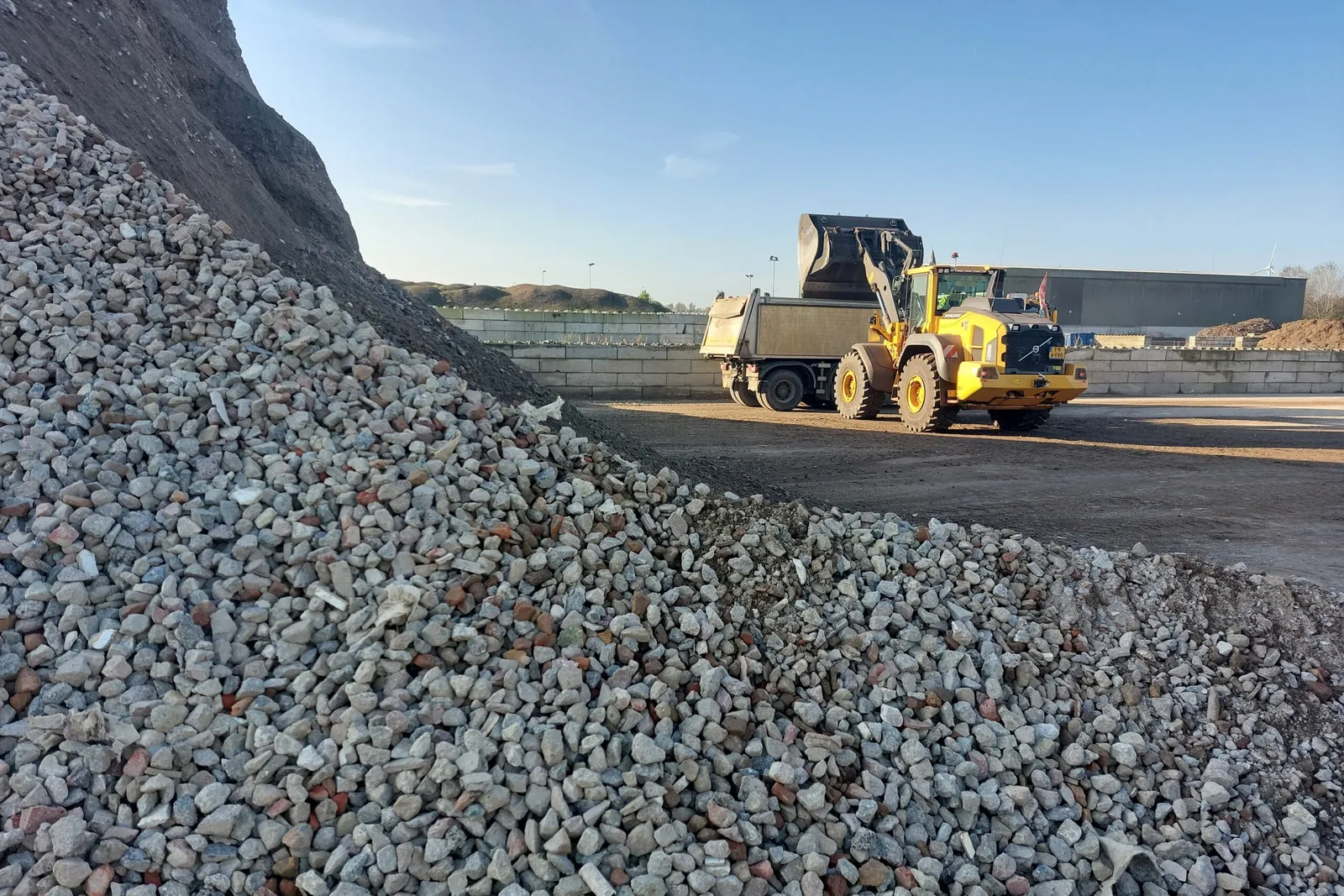
Following the furore in 2023 over the presence of plastic in recycled aggregates, companies took action to improve their products. At industry level, discussions were held with the Ministry of Infrastructure and Water Management, Staatsbosbeheer, Rijkswaterstaat and the parties involved in the College of Experts on Recycled Aggregates (CvD).
The sector indicated its willingness to tighten the requirements on plastic. During this process, the Ministry of Infrastructure and Water Management (IenW) stated that amending the Soil Quality Decree to include a stricter requirement for plastic in construction materials was not an option, as it considered there to be no scientific basis for doing so. Despite this response, the sector pressed ahead with efforts to achieve the necessary tightening within BRL 2506. Initially, the proposal was developed for Part 2 of BRL 2506, and the rules will only come into force once the corresponding amendments to Part 1 have also been fully developed. The proposed amendments to Part 2 were sent out to the market for consultation. Following the processing of comments, the Amendment Sheet for BRL 2506-2 was approved by the CvD. The Ministry of Infrastructure and Water Management is currently conducting a notification procedure in Brussels. The sheet can be officially published afterwards.
In detail
In practical terms, the amendments halve the limit for other constituents in recycled aggregates:
- the limit for X is reduced from 1.0 to 0.5% m/m (X = other constituents: the total of metals, gypsum, pieces of clay, rubber, plastics and other non-stony material);
- the limit for FL is reduced from 10 cm³/kg to 5 cm³/kg d.s. (FL = floating constituents: the total of wood, cellular concrete, paper, plant remains and other lightweight materials);
- a new limit of 0.1% m/m for plastics is introduced.
As these changes show, a stricter set of requirements will apply to the overall group of other constituents. As there is little experience with these stricter requirements, the decision was made to take this step first and then consider whether a further step towards lower levels can be taken in the future.
Changing construction practices
This is not a given, because the current stock of construction and demolition waste is yielding noticeably poorer-quality rubble. This is due to changes in construction practices, with much greater use of the substances mentioned above than in previous years. Examples include pipes for heating and electrical cables routed into walls, insulation materials and bonded materials that often cannot be removed separately. The new amendment sheet also addresses the so-called batch testing regime, which is being tightened as part of these changes. As noted above, a notification procedure is currently under way, and the ministry cannot yet confirm when this amendment sheet will be published. Companies are advised to take the new requirements into account now, so that the target level can be achieved in good time.
Question about this story? Ask your question
Keep following this
Get an email when a new story is published. No account needed.
- ThemeMaking plastics and packaging circular
- SubjectBRBS Recycling






