"It's all about knowing what you're talking about"
Texte Valérie Couplez | Photos Kayak Maritime Services
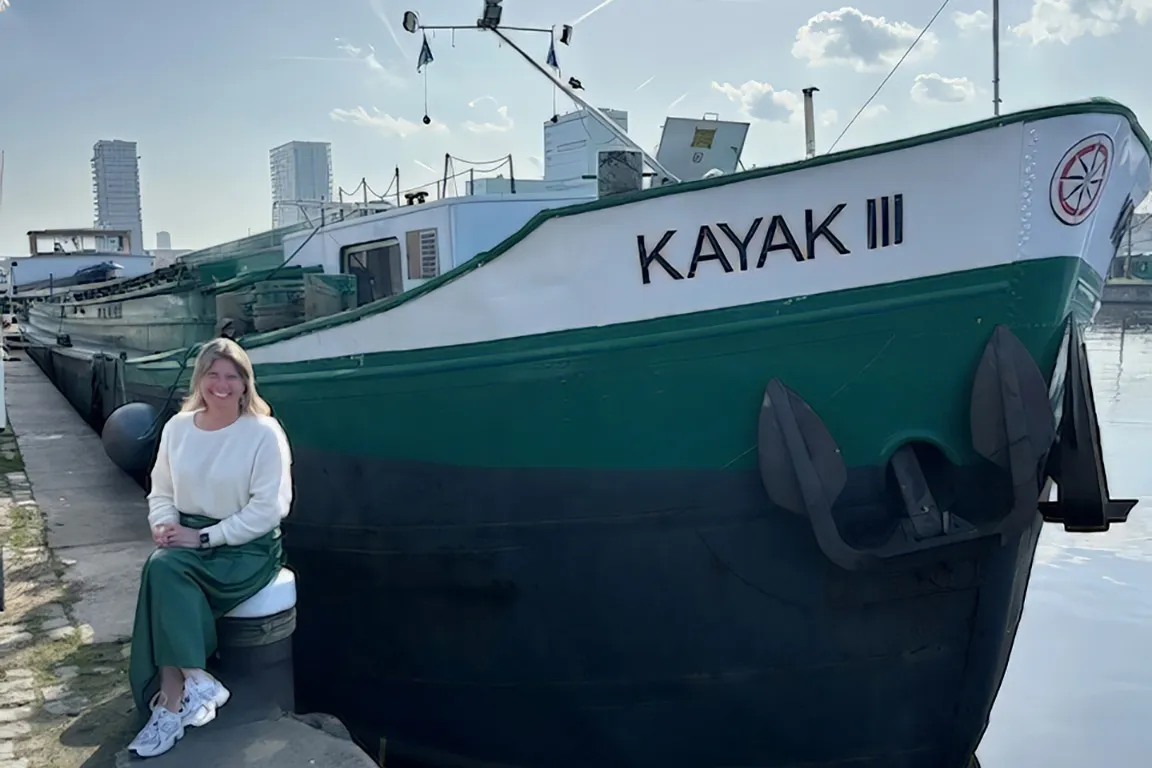
The recycling sector is still too often seen as a man's world. Yet nothing could be further from the truth. More and more women are making their mark in the waste collection and processing industry. We are delighted to introduce them to you. In each issue, we give the floor to a woman working in the sector, so that she can tell us about her job and what makes her enjoy it so much. Elisabeth Lemmens, owner of Kayak Maritime Services, gives the waste from seagoing vessels a second life.
What do the worlds of maritime shipping and recycling have in common? Once you have caught the bug, you can never shake it off. Kayak Maritime Services operates at the crossroads of the two sectors, so it is hardly surprising that Elisabeth is so "hooked". "In the morning, you never know what the day will bring. Some people might hate that, but for me, it is precisely what makes the work so exciting. It is above all about solving problems, and when you manage to do so together with the whole team, you get a great deal of gratitude in return."
24 hours a day, 7 days a week
Kayak Maritime Services was a logistics service provider when it was founded in 1997, but the company quickly expanded its activities to the collection of solid waste from seagoing vessels. Today, this is its core business. Elisabeth is a lawyer by training. It was in fact a request for legal help that led her into the venture. Her sister Karin was at the helm at the time. "She asked me whether I could help her sort out the division of the company when she separated from her husband. I never left. I first took an administrative post, but when you work in a family business that is at its customers' disposal 24 hours a day, 7 days a week, you soon move into an operational role."
A small community
The two sisters managed everything on their own until 2013. Today, Elisabeth runs the company with her husband David Mahieu, supported by a team of fourteen people, which includes a remarkably high number of women. "There is no reason for that to be a disadvantage in the world we live in. It is all about knowing what you're talking about. That is what matters. In the end, it is a small community, and it is not so easy to get in. Our family name is an asset in this respect, because it has long been known in the port. My father used to collect waste oil from ships. When people see that we are able to solve their problems, we are quickly accepted. I consider many customers to be friends."
Recovering even more
Once its customers' waste has been collected, Kayak takes it to sorting centres for processing. "Since ships have paid a contribution and can then deposit their waste free of charge in any port, volumes have risen considerably. It is an important step forward for the environment and for our sector, but there is still a lot to do. At present, 60% of waste is still incinerated. By introducing different bags for different streams, we could recover even more. But that requires action at global level. It is a goal for which we continue to campaign."
Elisabeth Lemmens
Question about this story? Ask your question
Keep following this
Get an email when a new story is published. No account needed.
- ThemeCollecting and transporting waste
- SubjectWoman in the spotlight