Asbestos under control: why secure storage remains an indispensable link in the chain
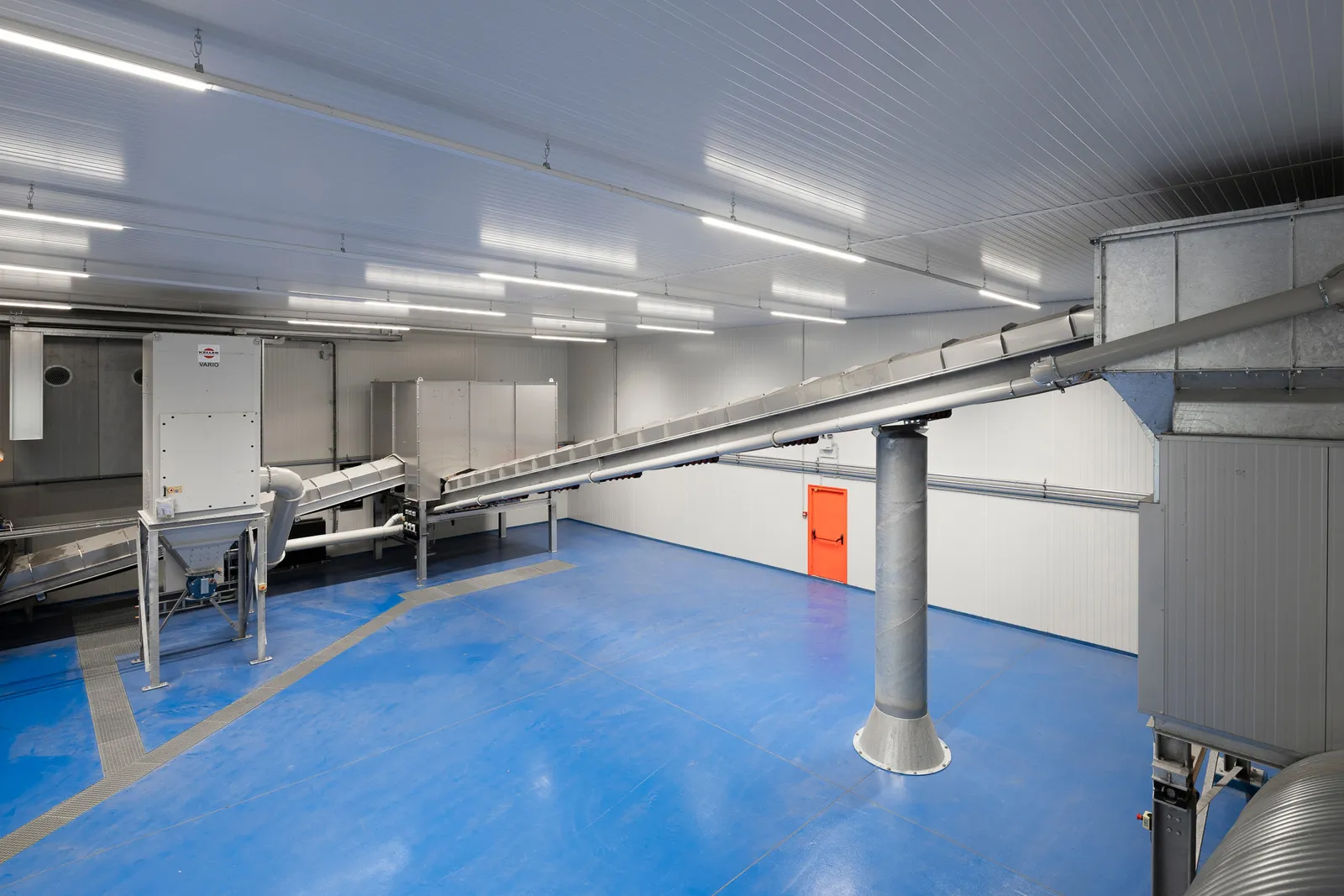
New asbestos cementation line at OVMB: a safe solution for friable asbestos
Some waste streams can be recycled. Others must first and foremost be managed safely. Asbestos clearly belongs in the latter category. Although Flanders has been working for years towards an asbestos-free building stock, society still contains huge quantities of asbestos-containing materials. This raises a crucial question: what should be done with all these materials? At OVMB in Ghent, the answer is clear. With a new asbestos cementation line, the company is investing in the safe, controlled treatment of unbound asbestos fibres. But beyond this facility, a wider message is emerging for waste and recycling policy: some materials require safe, permanent storage.
OVMB: specialist in the safe treatment of complex waste streams
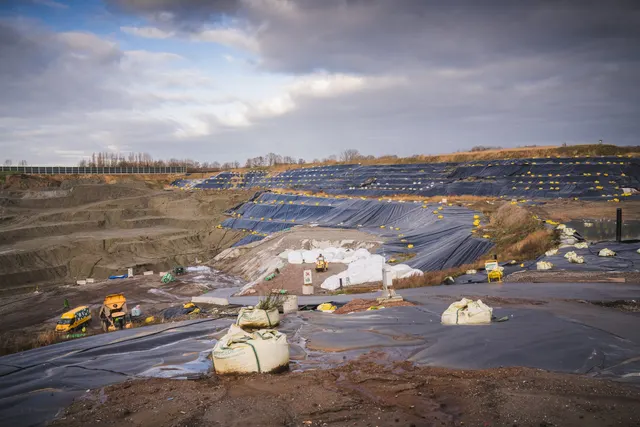
OVMB (Oost-Vlaams Milieubeheer), part of the Eiffage group, has built up extensive expertise over recent decades in the acceptance, treatment and safe storage of complex waste streams. From its sites in Ghent, including the landfill and treatment operations on J.F. Kennedylaan and the Oudetragel site, the company plays an important role in managing hazardous and difficult-to-recycle materials. This experience provided the foundation for a new investment project. After operating a pilot facility for several years, the Eiffage group decided to invest in a full-scale facility for treating unbound asbestos. It has been fully operational since early 2026.
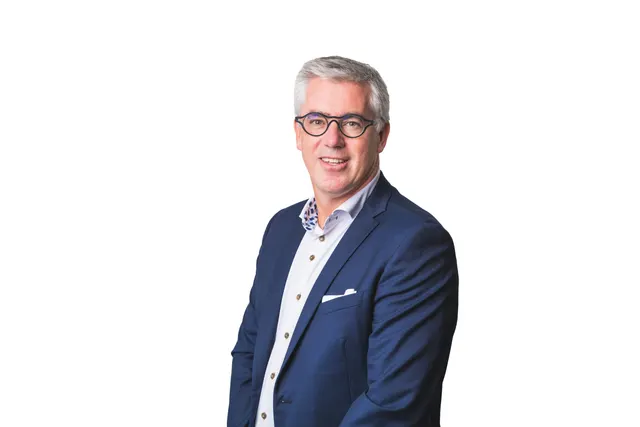
“The facility is the result of more than ten years’ experience with our pilot system,” explains Nadia Casier, deputy director at OVMB. “This period allowed us to refine the process step by step and ultimately build a robust facility that fully meets safety and environmental requirements.” With this investment, OVMB is positioning itself as one of the few operators in Belgium able to treat this complex, high-risk waste stream safely.
Asbestos: a legacy amounting to millions of tonnes
Although the use of asbestos has been banned in Belgium since 2001, the material remains widespread in buildings and infrastructure. According to recent figures, an estimated 3.18 million tonnes of asbestos remain in buildings in Flanders.
Most of it is bonded asbestos, for example in corrugated sheets, slates and pipes. These materials can be removed relatively safely as long as they remain intact. But a smaller and more hazardous proportion consists of unbound asbestos, such as pipe insulation, coatings and adhesive residues. In these applications, asbestos fibres can be released easily, creating an increased health risk.
OVMB’s new asbestos cementation line
To treat this complex waste stream safely, OVMB has developed an entirely new facility at its Oudetragel site, designed on the basis of experience gained with a pilot facility.
Waste containing unbound asbestos is first received and then mechanically reduced in an enclosed area. The released fibres are mixed with cementitious binders and water, fixing them in a stable matrix. Once hardened, the resulting bonded material can be safely sent to landfill.
The facility operates as a hermetically sealed process, with safety as the absolute priority. “No one enters the sealed area during treatment,” says Nadia Casier. “Everything is done mechanically and under high extraction. As soon as a door opens, the facility shuts down automatically. Safety is the number one priority here.”
The facility has a capacity of around 2,000 tonnes per year and is an essential link in the treatment of unbound asbestos in Belgium. There are only two specialist facilities in the country for this waste stream: one at Rematt in Geel and, now, one at OVMB in Ghent.
Circularity where possible, safe storage where necessary
The circular economy is now at the heart of European and Flemish waste policy. Recycling and the reuse of materials are rightly given priority. But not every waste stream can be fed back into a production cycle.
Asbestos is the clearest example. To date, there is no safe and economically viable recycling technology for this material at industrial scale. “For some materials, recycling simply isn’t an option,” stresses Nadia Casier. “Our task then is to ensure they are treated as safely as possible.”
That is why Denuo is calling for waste policy to continue paying sufficient attention to “safe sinks”: facilities and landfills that are essential for waste streams that cannot be recycled or pose a permanent risk. “Landfills are often the last link in the chain that nobody wants to talk about,” adds Nadia Casier. “But for materials such as asbestos, they are absolutely essential. Without this capacity, it is impossible to solve the problem.”
Investing in long-term safety
With this new cementation line, OVMB is helping to make Flanders safe from asbestos. The project also shows that the circular economy is not limited to recycling, but also includes the safe management of materials that cannot be reused.
“We see this as a long-term investment,” concludes Nadia Casier. “As long as asbestos remains in our society, we will need facilities capable of treating it safely.”
Perhaps that is the key lesson: sustainable waste management depends not only on circular solutions, but also on safe alternatives. And that is precisely where companies such as OVMB play a key role.
Question about this story? Ask your question
Keep following this
Get an email when a new story is published. No account needed.
- ThemeRecovering construction waste
- SubjectDenuo