It is high time to switch to sustainable consumption
We are not circular. Of the 106 billion tonnes of materials we use, less than 7% are given a second life. Yet we must commit to this path, because our linear economic model has far-reaching consequences. Six of the nine planetary boundaries that protect our society have already been exceeded because of our consumption of materials. The result is a disrupted climate. If we fully embrace circularity, we can make significant progress in the right direction on each of these boundaries. It is high time to act.
Over the past 50 years, our consumption of raw materials has tripled. If nothing changes, it is expected to rise by a further 60% in the coming decades. The impacts will be felt even more acutely, on the climate, on health and on biodiversity. In reality, these problems can only be tackled by reducing raw material consumption. To do this, we need to decouple economic growth from resource use. We must abandon the idea that more raw materials are needed to increase economic activity and prosperity.
But greater sustainability will not come without effort. Three changes are needed: in the efficiency of raw material use, in energy and in food systems. And this is only possible if wealth redistribution is part of the equation. If high-income countries aim for a 20% reduction, low-income countries will then be able to use more raw materials to develop the foundations of their societies. And this is entirely possible. Looking at the figures since 1970, we can see that growth in our productivity is mainly attributable to labour, not raw materials. We need to place a higher value on them, in both the literal and figurative senses, because if they cost more, we would use them more sparingly.
To build a truly sustainable society, we need serious policy choices. Flanders in particular has one of the best ecosystems. We can therefore aim higher, so that sustainable consumption truly becomes the norm. It is entirely logical that this means phasing out what is unsustainable. But this choice can also give us a new competitive edge. Renewable energy is within reach here, whereas we depend on other regions of the world for fossil fuels. Given that demand for lithium is set to increase 57-fold by 2050 and demand for platinum 970-fold, we simply need to focus more on the raw materials that are genuinely available.
Between 2010 and 2022, we had already begun to decouple in relative terms. Waste generation rose from 2.2 billion tonnes to 2.4 billion tonnes, the recycling rate increased from 42.9% to 46.1%, and our circularity rate rose from 10.7% to 11.5%. These are small steps in the right direction, but it is now time to decouple completely and speed up the process. To do this, we need to move four links back up the chain. The question is not how to collect and process products more effectively once they have become waste, but how to design them safely and sustainably and extend their lifespan. We already do this with vehicles because they are expensive, but less so with appliances. If we become as circular as possible, we will have many advantages when it comes to doing what we can and what we should do.
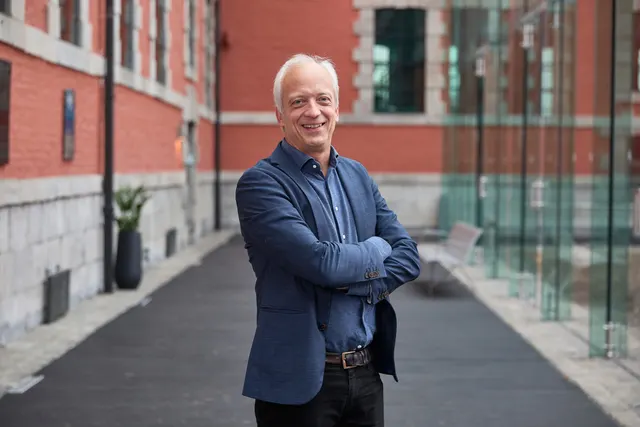
Hans Bruyninckx,
Professor of Environmental Policy at the University of Antwerp
Question about this story? Ask your question
Keep following this
Get an email when a new story is published. No account needed.
- SubjectOpinion