“It’s very motivating and exciting”
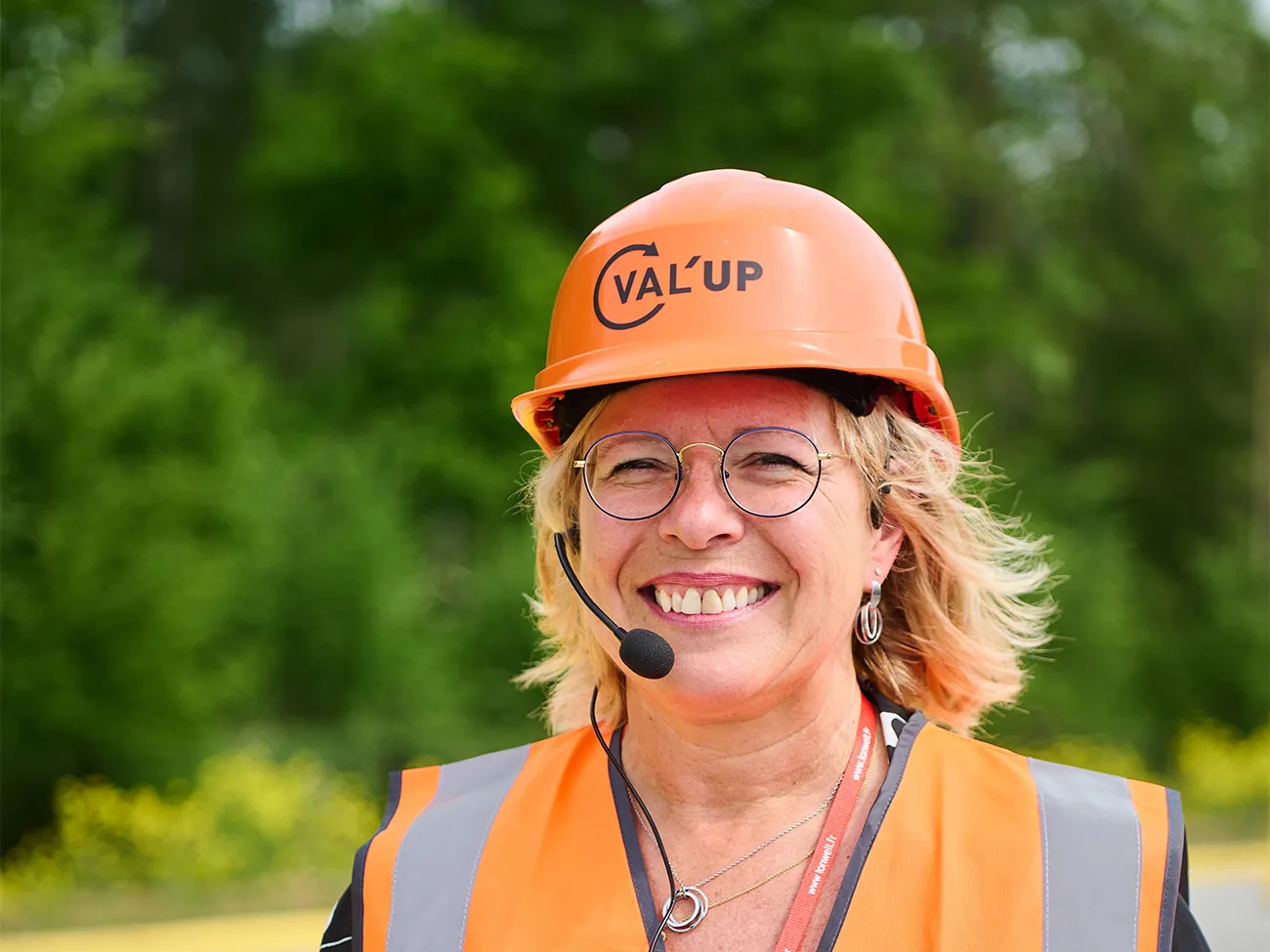
The recycling sector is still too often seen as a man’s world. Nothing could be further from the truth. More and more women are finding jobs and a place in the waste collection and treatment sector. And we are delighted to introduce them to you in detail. In each edition, we give a woman from the sector the chance to talk about her work and what makes it so rewarding. This time, we hear from Nathalie Halbot, director of Val’UP.
Nathalie Halbot is director of Val’Up, the new sorting plant in Ghlin, the result of a partnership between the intermunicipal organisations IDEA and IPALLE and two private companies specialising in environmental services, VEOLIA and VANHEEDE. She joined the project in May 2021, oversaw construction and the establishment of the site’s future organisation, and has managed it since it began operating in November 2021.
It is something of the crowning achievement of a career spanning more than 30 years in the waste sector. “I began my career in the waste sector, and more specifically in hazardous waste, used oils, in October 1989, more or less by chance. With a university degree in chemistry, I joined the laboratories of a used-oil treatment company belonging to the Suez group (now Veolia) when I finished my studies. So I wasn’t an engineer and didn’t have any particular technical skills. But I was quickly won over. I learnt a great deal as I moved from one role to another, and that was essential too, because the world of waste is constantly changing, as are the laws and regulations. This means you have to reassess your approach and find solutions every day, as well as new treatment methods, and so on. It’s very motivating and exciting,” she begins passionately.
A gradual progression.
Nathalie Halbot says she was able to seize the various opportunities offered to her and continually progress in operational roles, without ever encountering any real obstacles or limitations arising from rivalry between the sexes. “In fact, I think that being a woman in a man’s world can even have its advantages. Men and women share the same goal, even if their approaches may differ. The female approach is probably more human and more diplomatic. A woman will try to persuade people gently, without seeking conflict or letting ego get in the way. A little anecdote: I remember feeling a build-up of testosterone during a meeting where most of the people around the table were men. I’d say that a woman always says what she thinks, but with nuance and without resorting to a show of force. In the end, the two approaches, male and female, complement
each other perfectly,” she says.
A sector opening up
Although the waste sector remains a world of engineers, with a largely male workforce, the gender balance is undeniably shifting towards greater parity. Today’s generation is benefiting from the fading distinction between typically male and typically female jobs. “At Val’Up, we have women working as plant operators, baler operators and sorters, including on shifts. The sector is also shedding its less attractive image. The technology is becoming more advanced, automation is everywhere, and awareness of environmental issues is growing. My children are very happy and proud to see their mum doing a job with an environmental purpose, in a sector dominated by men. Young people care about protecting our planet and its resources,” explains Nathalie Halbot.
Does that mean everything is perfect in the best of all possible worlds? Nathalie Halbot responds aptly: “I don’t think there are any barriers within companies. I think the problem lies more with education, the family environment and general perceptions. In this respect, it seems to me that recycling is not yet given enough recognition in education. And there is still a lot of work to do to inform individuals. The plant here in Ghlin sorts blue bags. But does the average citizen know what happens to the blue bag they put out in front of their home? They make an effort to sort their waste carefully, but once the blue bag has been collected, they no longer think about it. What happens to it? How is it recycled? It’s a mystery. Sorting is good, but it only tells part of the story. That’s why I organise visits to the plant, so schools and associations can understand the different sorting stages and the challenges involved, with the aim of informing more people through young people.”
Question about this story? Ask your question
Keep following this
Get an email when a new story is published. No account needed.
- SubjectWoman in the spotlight