New logistics solutions to reduce recycling costs
Texte Valérie Couplez | Photos (CD)²
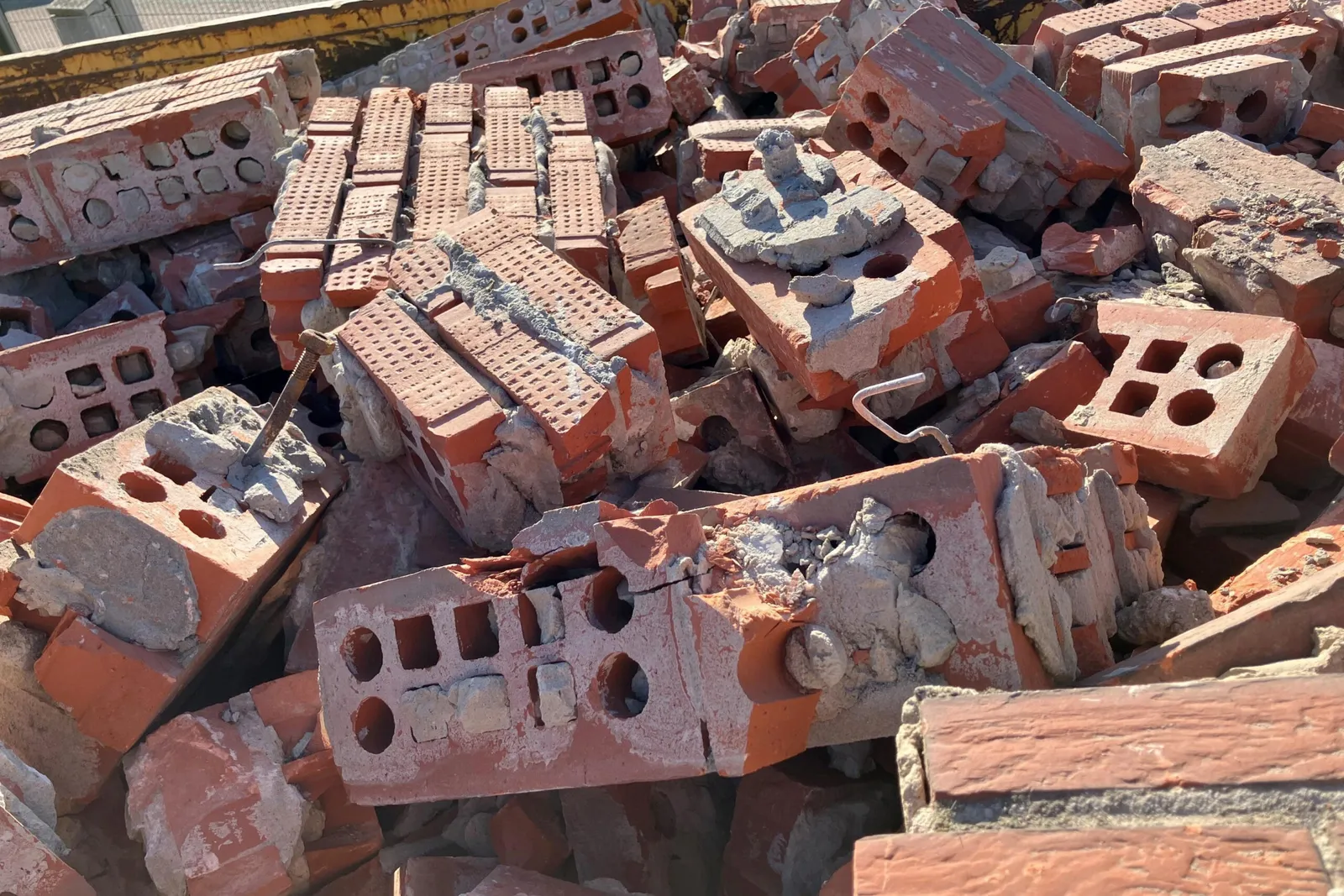
Did you know that 33% of the waste produced in Europe comes from the construction sector? In Belgium, this amounts to 15 million m³, or 20 million tonnes, per year. We now have technologies that can transform this waste back into high-quality raw materials. The main obstacle is logistics. That is why the (CD)² project focused on finding new solutions to improve this process and make it more profitable. “Construction materials manufacturers are currently under considerable pressure to decarbonise their operations, particularly as a result of European and national legislation. This is a real turning point for introducing new ways of working,” says Eléonore de Roissart, R&D Scientist at Buildwise, the project’s lead partner.
New logistics solutions to reduce recycling costs
(CD)² is one of 72 projects selected as part of the Wallonia Recovery Plan. The Plan, which represents a total investment of 13.24 million euros, of which 432 593 euros went to (CD)², aims to reduce waste in the Region while increasing its supply of raw materials. “With the (CD)² project, we want to contribute in a very practical way. We will share the lessons we learn with policymakers, because many current regulations still hamper the growth of reuse and recycling in the construction sector.”
Reducing transport costs
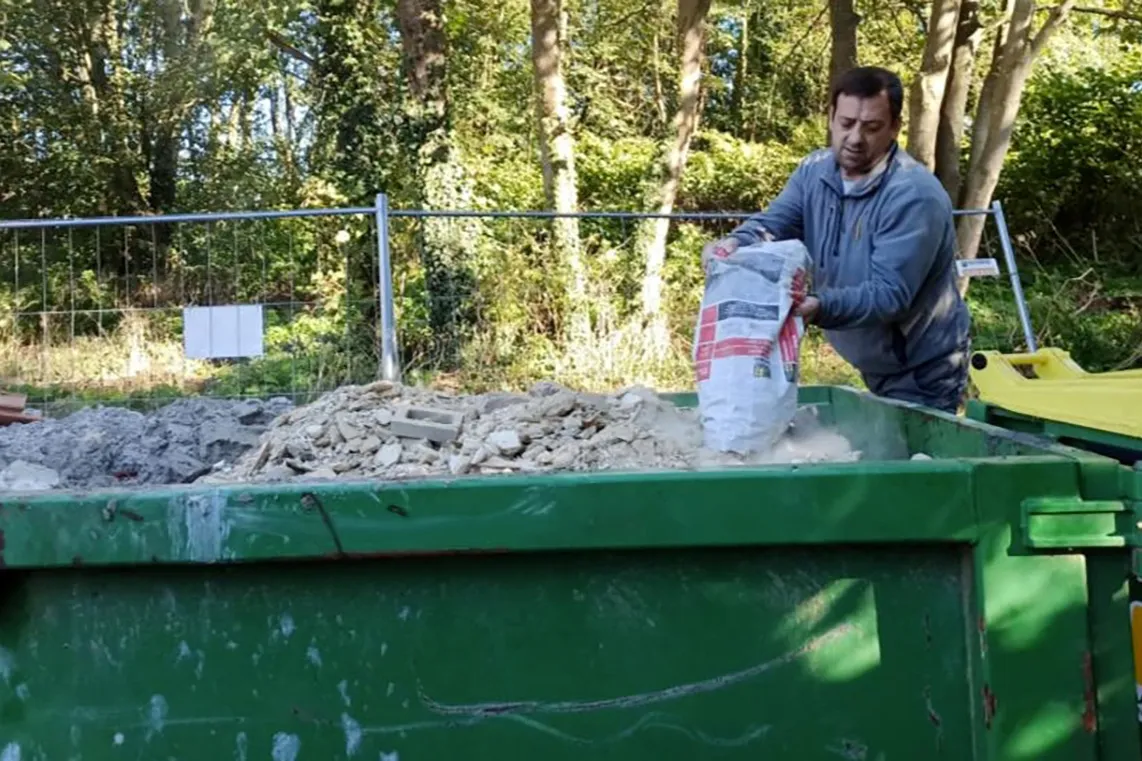
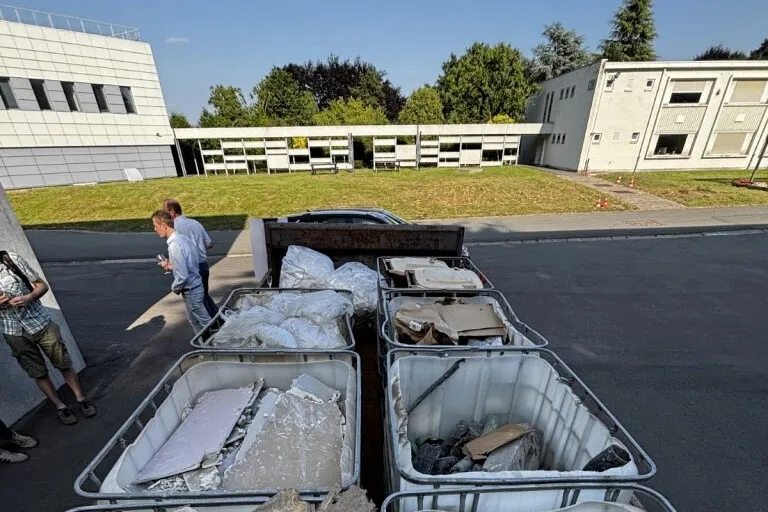
Improving logistics was one of the three research areas of the (CD)² project. Once sorted separately on site, materials must be transported to a facility where they can be recycled in a closed loop, under controlled conditions and without any loss of quality. According to Eléonore de Roissart, the first principle to follow is: “Always keep logistics costs between the construction site and the recycling centre as low as possible. This will have a positive impact on your carbon footprint, but, above all, on your total costs. And this is often where the bottleneck lies.” However, not every construction site is close to a recycling facility capable of processing each separate waste stream. Transport therefore needs to be optimised: stack containers more efficiently to reduce the volume of waste, and use smaller or compartmentalised containers to avoid sending them back half empty. Some waste collectors also run regular collection rounds, picking up small quantities of waste across a given area.
Volume: a key factor
Volume also matters to construction companies, as Eléonore de Roissart explains: “If we have to sort waste streams, we may as well start with those that will be produced in large quantities. That is why it is important to calculate and predict the quantities of construction waste. For example, at a construction site for eight single-family homes, we collected 10 m³ of plaster waste and 10 m³ of rubble from blocks and clay bricks. Containers fill up quickly with quantities like that! We also carried out pilot projects involving the renovation of social housing roofs. In total, 5 million m² of roof tiles were removed, then taken back by Wienerberger to be made into new tiles. Even using the traditional logistics approach, we achieved an excellent result here with minimal effort, simply because of the huge volume of materials removed.”
Setting up hubs
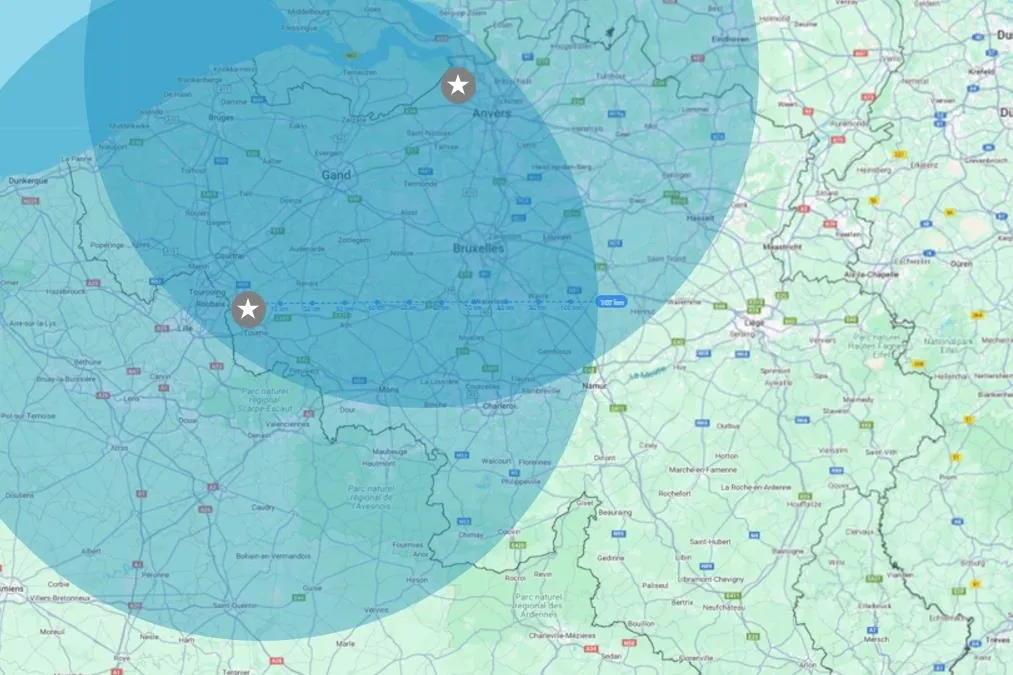
However, volumes of this size are far from the norm. That is why hubs were set up at some pilot construction sites. “This makes it possible to collect more materials before transporting them. The collaboration with building materials supplier SFIC is a good example: it set up its own ‘recycling park’, where contractors could drop off their waste streams when they came to buy new materials. Another trial involved BigMat taking back ceramic offcuts after delivering materials to the construction site. The waste was stored and compressed. Wienerberger, the materials manufacturer, could then collect a large quantity of waste on a subsequent delivery. This is a good way to achieve affordable backhaul logistics and reduce the number of trucks running empty.” Hubs were also set up at other locations, including a large construction site where materials from different sites were brought together, and another where the contractor had its warehouse or office. Collaborations were also established with other businesses: for example, waste wood from the construction site could be sent to a nearby joinery workshop.
Question about this story? Ask your question
Keep following this
Get an email when a new story is published. No account needed.
- ThemeCollecting and transporting waste
- SubjectWaste streams