












Unwanted materials in gravel aggregate: a solution exists
Texte & photos Vanderspek
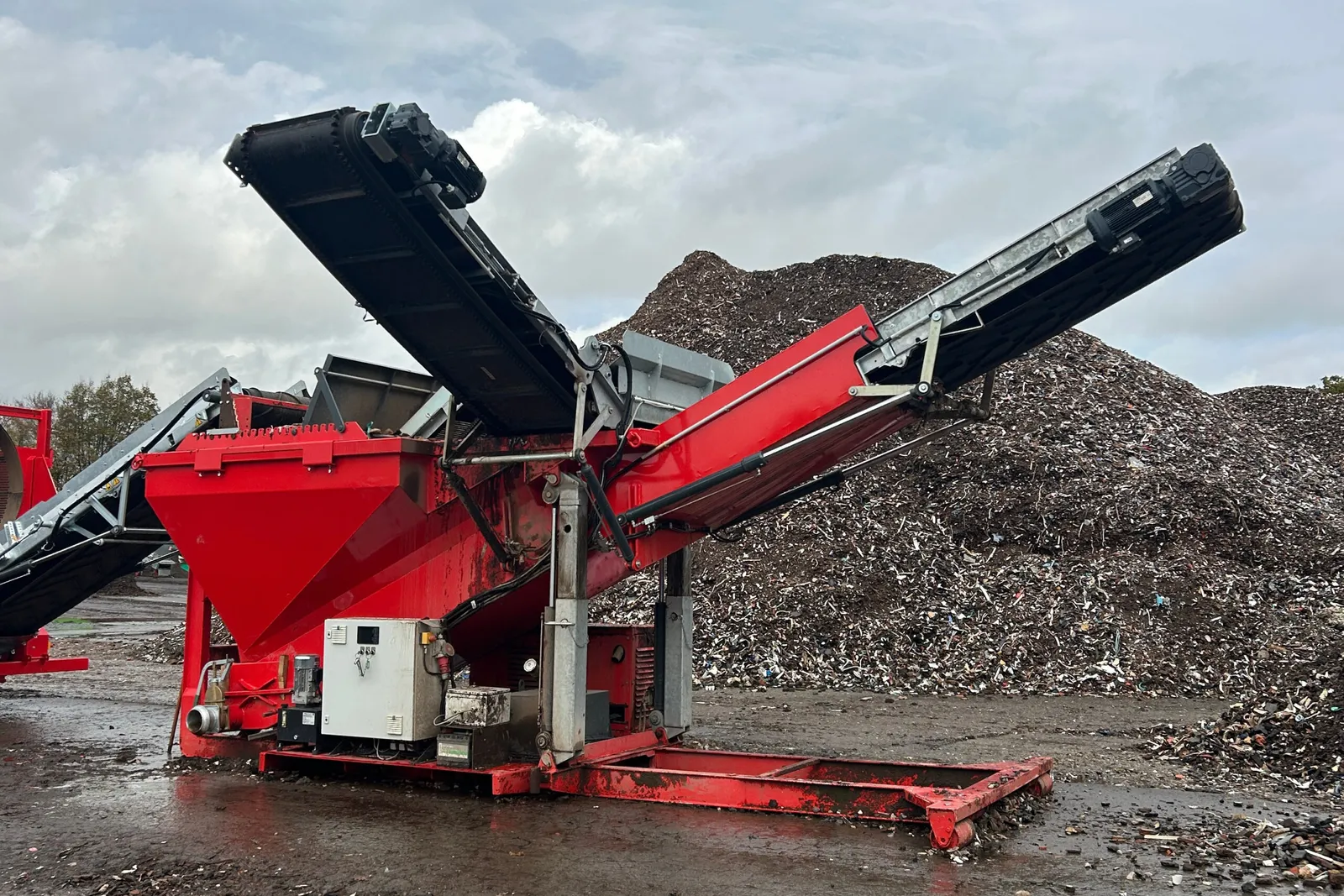
When recycling inert aggregates from concrete and rubble, removing unwanted materials is essential to achieve the best possible finished product. Present contaminants, such as plastic, wood and textiles, must be removed throughout the treatment process. In this respect, the rule is simple: the sooner, the better. At the start of the recycling process, unwanted materials are generally still large and relatively easy to identify and remove.
It is often said that recycling starts at the entrance. Easier said than done, though. At first glance, you can get a good idea of the level of contamination, but you cannot see what is inside the rubble. The location of the treatment operation also plays a role. At a fixed site, the unloading of rubble is better controlled, giving a clearer overall picture of the type and level of contamination.
Mobile treatment sites, on the other hand, may have to process several thousand tonnes from different stages of a project. Often, because space is limited, these end up piled together in one large heap.
Solutions are available for removing various unwanted materials from aggregates, at both fixed and mobile treatment plants. If these materials are large enough, they can initially be removed by hand or with a crane. However, this method is very labour-intensive and is limited to pieces larger than 400 to 500 mm. Once the pieces become smaller, this method is no longer straightforward or effective.
The most commonly used solution is an air separator, which blows out light materials such as wood, plastic and textiles, relative to the rubble. Purpose-designed air separators are available in different widths, depending on the required capacity. Fixed plants often use a rotary drum. The airflow pushes the light materials against the rotating drum, where they are caught and removed.

To do this, the fine sand fraction must first be removed, otherwise it will create an additional dust problem. Once the fines have been screened out, this problem is resolved and optimal separation can take place. A ratio of 1 to 3 is ideal for this purpose. The speed and angle of the airflow, the feed rate and the distance can all be adjusted for optimal operation.
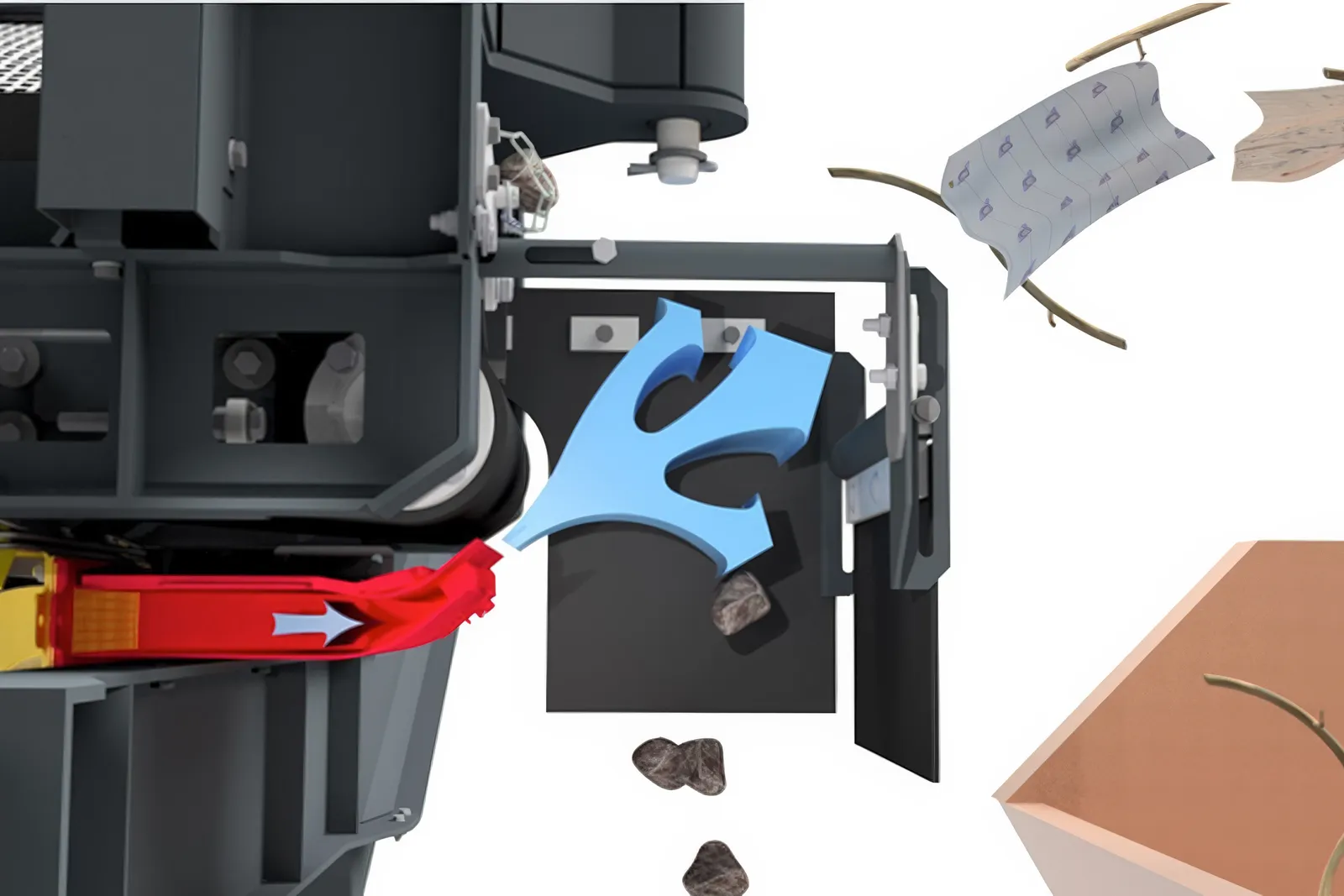
Air separation systems can also be used on mobile plants. In this case, air nozzles are generally installed at the discharge points after the secondary screen, blowing the light fractions diagonally upwards. An air separator on a mobile plant offers slightly fewer adjustment options, but the recirculation of material has the advantage of giving unwanted materials a second chance to be removed on a second pass.
In some cases, an air separator is not the most suitable solution because of the properties of the unwanted materials. One alternative is to separate the materials using a gravity system or water bath. The screened materials are fed into a tank filled with water. Once immersed, the light particles rise to the surface, while the heavy particles sink to the bottom, where they are collected by a screw or conveyor belt.
A screw has the advantage of having fewer moving parts. A conveyor belt, on the other hand, can handle a wider range of piece sizes without becoming blocked. The light, floating fraction is brushed over the edge. This is a simple process, but it has the disadvantage of causing greater water loss. One alternative is to use an open slat conveyor to remove the water first, before discharging the light materials via a conveyor belt.
Iron is also an unwanted material in rubble. It is generally given less attention, but can cause considerable damage if it is not properly removed. Because of its shape, iron can clump together and cause blockages beneath the rotor or on subsequent screens. In addition, the sharp edges of metal pieces can cause holes and tears, or lead to premature wear of conveyor belts.
Iron is removed using magnets. There are different types of magnets, such as ferrite and neodymium magnets, but in the recycling sector they are generally divided into two categories: permanent magnets, which exert a constant attraction, and electromagnets, which can be switched on or off. Magnets are available in different strengths, depending on the application.
In recycling, overband magnets and driven magnetic pulleys are the most commonly used systems. Depending on the situation, an overband magnet can be positioned across or along the conveyor belt. A transverse arrangement is more compact and is often used on mobile plants. A longitudinal arrangement has the advantage of intercepting materials in motion, but requires more space and a more complex structure. Driven magnetic pulleys, by contrast, are very compact because they are integrated into the conveyor frame. However, they are generally used mainly to remove smaller iron particles that, because of their position beneath the rubble, were not picked up by the preceding transverse magnet.
As you can see, there are several ways to remove unwanted materials from aggregates. These methods deliver better analysis results, making recycled aggregates a high-quality alternative and contributing to circularity in the construction sector. What is more, the unwanted materials that are removed are themselves a valuable stream in the recycling chain. Contact your supplier to find out what solutions are available.
Question about this story? Ask your question
Keep following this
Get an email when a new story is published. No account needed.
- ThemeRecovering construction waste
- SubjectNews







