Three regions, one circular ambition: time to remove administrative barriers
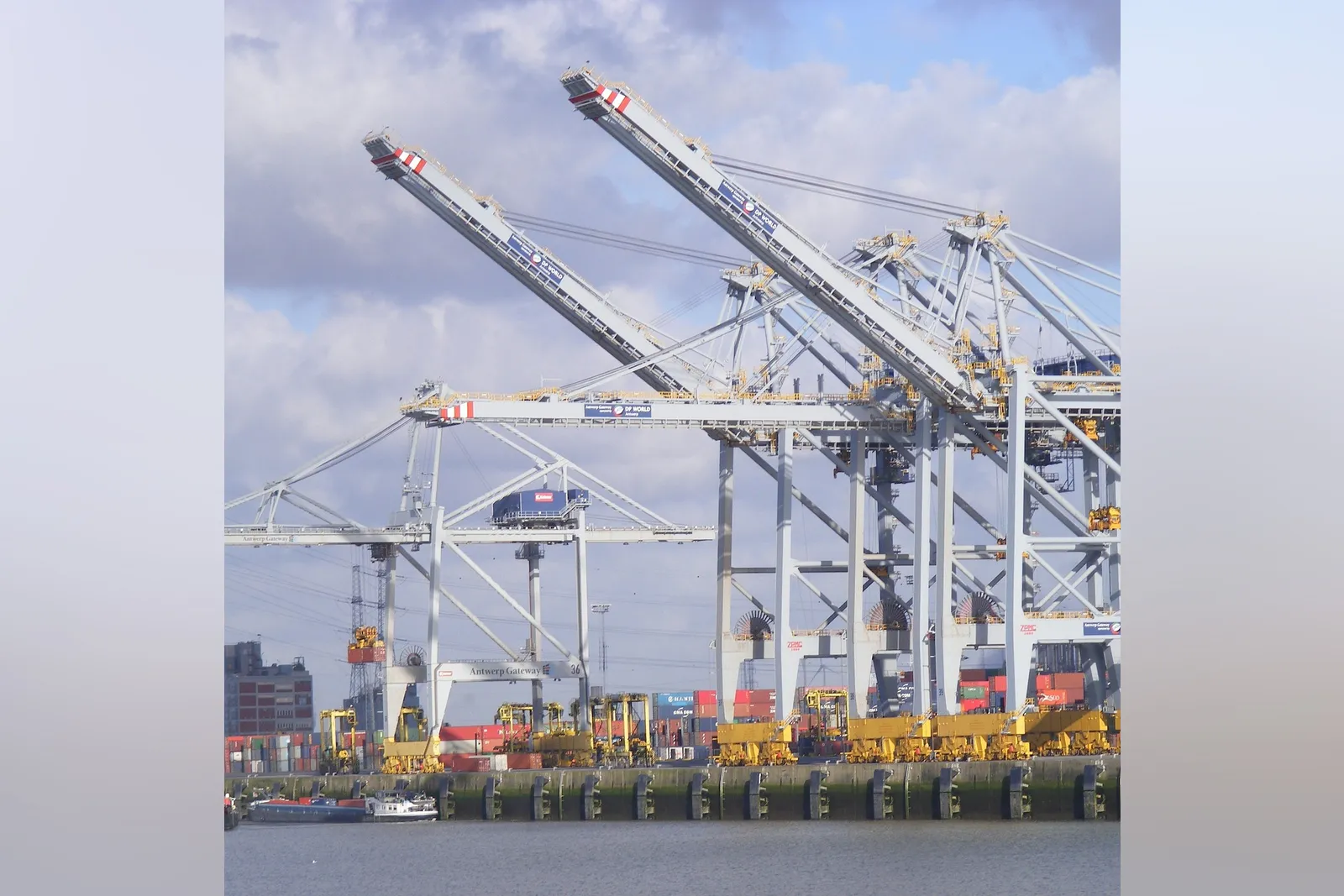
The circular economy does not stop at borders. This is particularly true in our region, where waste and material flows cross borders with neighbouring countries every day. Yet regulations and administrative procedures are still largely organised at local level, whether regional or national. This is increasingly at odds with what is happening on the ground. That is precisely why Flanders, the Netherlands and North Rhine-Westphalia have signed a declaration of intent to give the circular economy in the three regions fresh impetus. The question is no longer whether cooperation is necessary, but how to make it work in practice.
A shared intention and high expectations
By signing this joint declaration of intent, Flanders, the Netherlands and North Rhine-Westphalia have committed to strengthening their cooperation on the circular economy on a structural basis. The declaration builds on existing bilateral initiatives and lays the foundations for a more coordinated approach, with a particular focus on batteries, construction materials and chemicals. Denuo sees this as a positive signal: cooperation across the real market is essential if circularity is to deliver both economic and environmental benefits.
Simplifying administration
The declaration of intent explicitly recognises that regulations and administrative burdens too often hold back the development of the circular economy. Denuo, VSOR and BW2E see this as the main opportunity for action. Cross-border waste shipments, permits and notification requirements are complex, time-consuming and often interpreted differently from one region to another. The result is legal uncertainty, additional costs and delays, without any demonstrated environmental benefit.
The federations are therefore calling for a targeted approach to bring about a structural reduction in administrative burdens:
- Greater harmonisation to eliminate duplicate checks and overlapping procedures.
- Faster procedures for established, reliable flows.
- A more risk-based approach to inspections.
- Circularity requires trust, not an administrative overload.
Fair rules for a level playing field
A second area of concern is a level playing field. Today, businesses operating in several regions face divergent definitions, classifications and interpretations of European rules. This undermines investment certainty and discourages the development of innovative circular business models.
Denuo, VSOR and BW2E are calling for permits, certificates and quality assurance schemes to be mutually recognised wherever possible. A recycling operation recognised as safe and high-quality in one region should not be considered risky in another.
Speaking with one voice at European level
The declaration of intent also provides an opportunity to strengthen the regions’ common position towards Europe. Flanders, the Netherlands and North Rhine-Westphalia face the same challenges in implementing European legislation, particularly the Waste Shipment Regulation (WSR).
We therefore call on Flanders, the Netherlands and North Rhine-Westphalia to align their positions towards Europe more closely and, wherever possible, to adopt common positions when transposing and implementing European legislation. What is recognised as a safe, high-quality recycling operation in one region cannot suddenly be considered risky in another.
Working with the sector is essential
Finally, Denuo, BW2E and VSOR stress that this interregional cooperation can succeed only if the sector is involved on a structural basis. Businesses have essential practical knowledge of logistics, treatment and how the market operates. This expertise is vital to translating policy objectives into concrete, realistic and effective solutions.
An opportunity to seize
The declaration of intent is a strong political signal. The next step is to remove the administrative barriers that are currently holding back circular cooperation. If simplification, harmonisation and collaboration with the sector are at the heart of the approach, this cross-border cooperation can become a genuine catalyst for the circular economy. Denuo will follow this issue closely and, alongside VSOR and BW2E, is committed to turning this ambition into tangible reality.
Question about this story? Ask your question
Keep following this
Get an email when a new story is published. No account needed.
- ThemeStrengthening recycling competitiveness
- SubjectDenuo