At last, a breakthrough on a European vehicle passport?
Texte Valérie Couplez | Photos Febelauto et iStock
For 25 years, Febelauto, the Belgian organisation responsible for managing end-of-life vehicles, has been calling for the introduction of a vehicle passport. “If we want to avoid losing valuable materials, we need to be able to trace cars from A to Z,” says Catherine Lenaerts. The director of Febelauto is pleased that the federal coalition agreement mentions the creation of such a passport, and hopes that politicians will take action, preferably at European level.
Catherine Lenaerts immediately points to the trend in end-of-life vehicle collection figures since 2014. “It is striking that, despite all the modern technologies at our disposal, the trend over the past ten years has been predominantly downward. This means that too many vehicles are slipping through the net, which benefits no one.” The first casualty is the environment. “Vehicles treated here in Belgium are recycled at a rate of 98% and reused at a rate of 24%. These high rates are mainly thanks to our particularly advanced post-shredding technology. It enables us, better than any other technology, to give all these valuable materials a second life. Calculations we commissioned show that this can reduce emissions by as much as 83%, or 3 392.3 kg of CO2 per vehicle. So it is worth making a greater effort to keep end-of-life vehicles in our country,” concludes Febelauto’s director. She points to another important argument: safety. “There is a reason why a vehicle is declared end-of-life in Belgium. Allowing it back on the road elsewhere could put lives at risk. In many cases, buyers in another country are unaware that the car has been officially taken off the road.”
The chassis number as a unique identifier
An effective traceability system is essential to ensure that end-of-life vehicles are treated appropriately. And that is precisely where the problem lies. “In Belgium, we have made things more difficult by linking the registration number to a person rather than to the vehicle itself. Such a system makes it much harder to trace a car. But it is not impossible, because every car has a unique identifier: its chassis number. For 25 years, we have been sending this number to the Vehicle Registration Directorate, enabling a certificate of destruction to be issued for every end-of-life vehicle treated at an approved recycling centre. The chassis number could therefore provide the ideal starting point for such a system. If an egg can be traced back to the farm it came from, it should be just as possible to trace a car’s entire history, especially with the digital technologies available today.”
Political will
So why have we still not got there? Catherine Lenaerts points to a lack of political will. “To bring about change, politicians need to make a clear commitment and provide the necessary financial and human resources. That is why we are pleased to see the coalition agreement finally mention the creation of a vehicle passport. After 25 years of tilting at windmills, we hope things will finally move forward.” There is no need to create a legal framework: one already exists. The 2010 law establishing the Crossroads Bank for Vehicles provides for every change in a vehicle’s life cycle to be recorded. “That is exactly what we need to introduce a traceability system. Being able to follow every stage is essential. But because the implementing Royal Decree was never adopted, the law has remained a dead letter all these years.”
A European solution would be ideal
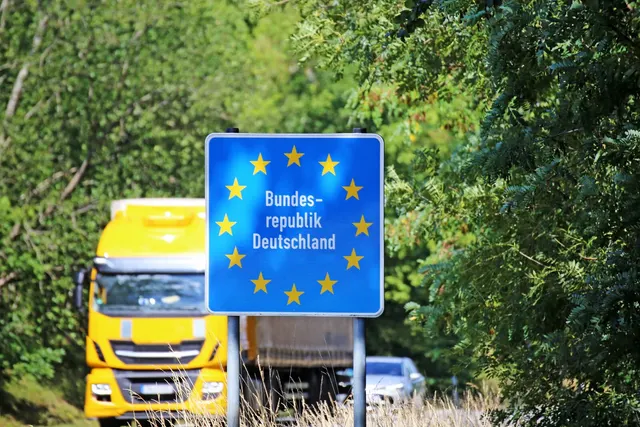
Catherine Lenaerts is, however, primarily calling for a European-level solution. The new regulation on end-of-life vehicles even envisages three passports: one for circularity, another for vehicles and a third for batteries. “The division of responsibilities between two directorates-general, DG Environment and DG Move, means there needs to be genuine interaction if we are to find an effective solution for all Member States. Tools already exist that could serve as a starting point.” Our interviewee cites EUCARIS, the system used by several European countries to exchange information on vehicles, driving licences, insurance documents and traffic offences. “The solution could involve linking up or expanding existing digital systems. But if we wait for each Member State to act individually, nothing will happen. The disparities are still too great. We are relying particularly on the Netherlands to provide the impetus. There, more human and financial resources are available.”
Figures on the rise
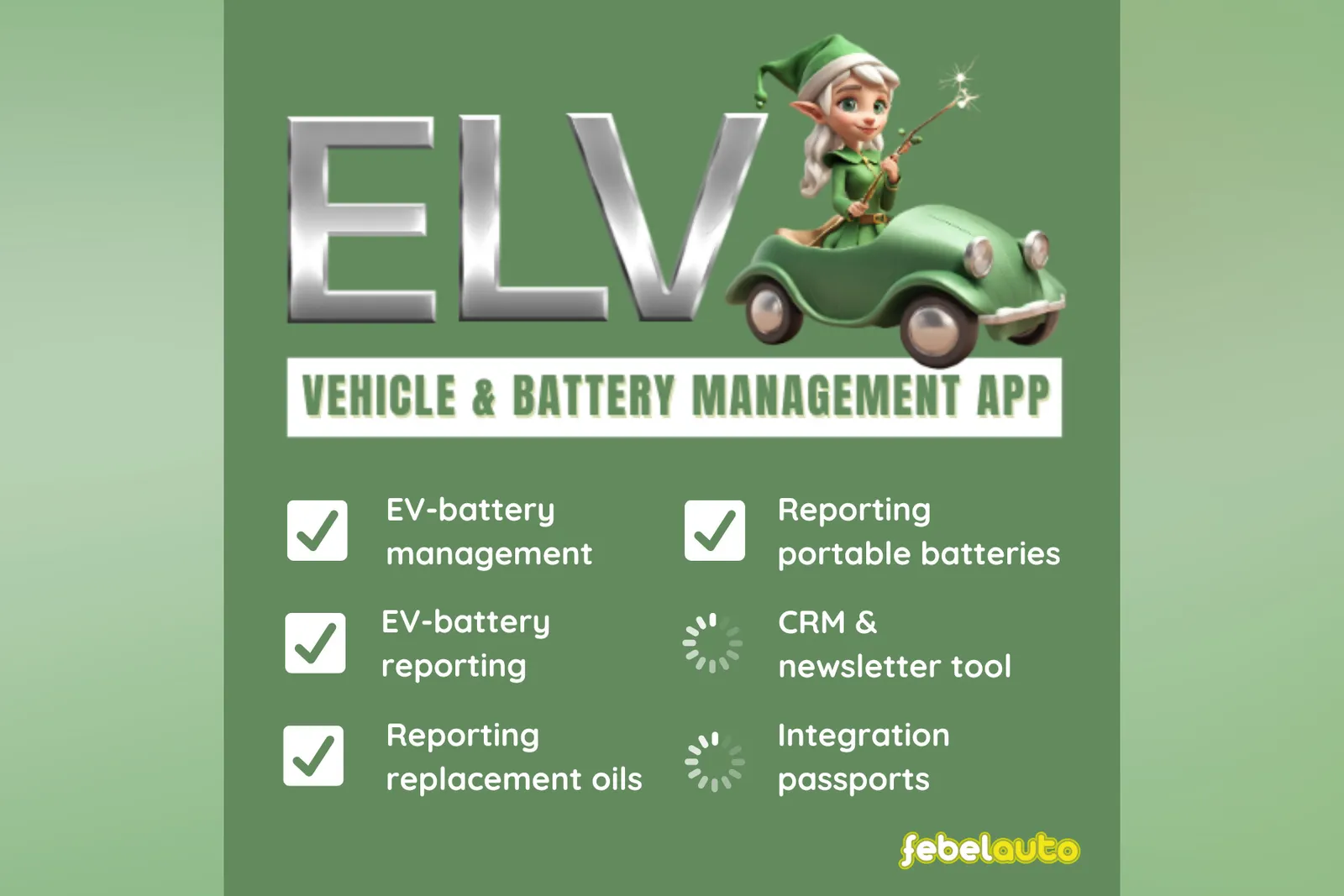
Despite the many challenges on the ground, Febelauto’s director remains optimistic. “Last year, the figures began to rise again: the number of end-of-life vehicles increased from 63 592 to 69 116, a rise of 8%. For batteries, thanks to our dedicated end-of-life vehicle app, we already have a 100% digital system to ensure their traceability for recycling. We have also configured this tool so that other passports can be integrated in due course. We are therefore fully prepared to move towards a single digital system that centralises all traceability data. This would be an important step towards greater transparency and would help keep unscrupulous operators out.”
Question about this story? Ask your question
Keep following this
Get an email when a new story is published. No account needed.
- ThemeRecycling metals and vehicles
- SubjectWaste streams