What do car manufacturers think of the new rules?
Texte Valérie Couplez | Photos EuRIC et Volvo Cars
In search of sustainable steel
The new end-of-life vehicles legislation explicitly calls on car manufacturers to take greater responsibility. For Volvo Cars and its director of circular economy, Ragnar Crona, that goes without saying. “Volvo has a long history of safety. Sustainability will become just as important a topic in the years ahead. It is at the heart of everything we do.”
Volvo Cars did not even have to wait for the new end-of-life vehicles legislation to take action. Its ambitions were already clear: by 2025, half of its sales should come from electric cars. The company also wants to reduce CO2 emissions per car by 40% and is already incorporating 25% recycled materials into its new cars. Ragnar Crona: “99% of emissions associated with car production come from the value chain. Scope 1 and Scope 2 emissions account for just 0.3 tonnes of CO2. We therefore need to look at how our raw materials are produced (18.1 tonnes of CO2) and how we can achieve more sustainable use throughout the car’s lifetime (27.9 tonnes of CO2). But we will also need to adapt our business model so that we do not earn more by producing more. We want to become a leading company in circular and responsible business. That is our mission.”
Driving the circular automotive industry
Ragnar Crona welcomes the new end-of-life vehicles legislation with open arms. “This directive can spur the creation of circular initiatives for the automotive industry. And we will need them to achieve our targets. The proposed mandatory separation of materials will, I hope, lead to an increase in recycled materials for our industry. But it also means Volvo will have to pick up the pace. With what is available today, we will not have enough materials to meet the requirements for recycled plastics. We achieve 25% recycled materials in the car. But it is impossible to close the loop with a quarter of these materials without chemical recycling. Not even with monomaterials. We still have time ahead of us. Within five years, we hope more materials will be available. It is a question of investment.”
Finding more sustainable steel
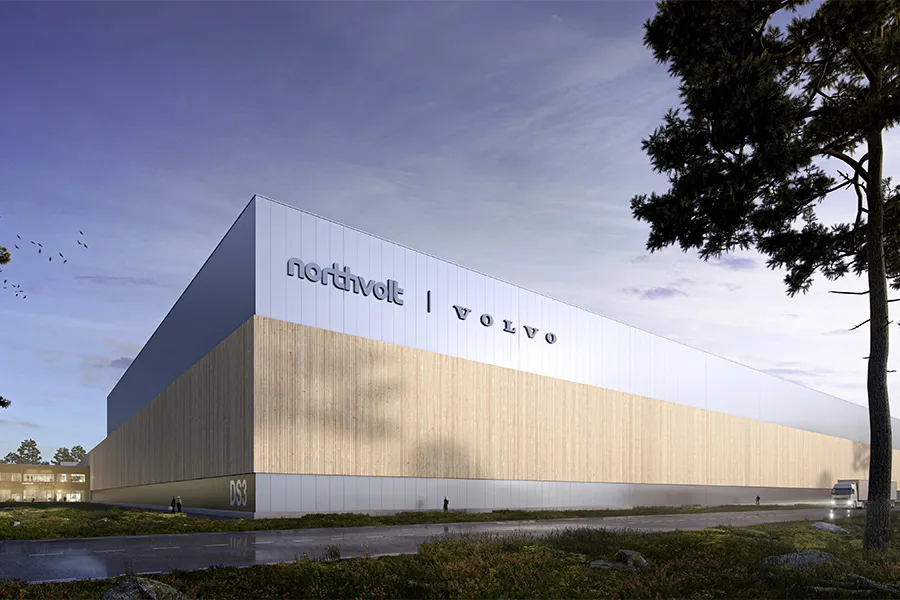
But Volvo Cars’ top priority is to find greener steel. “Everyone talks about batteries. And indeed, in the production of an electric car, 29% of CO2 emissions come from the battery. But it will be years before the first batteries come back. We have enough time to establish a production chain around these batteries. The situation is different for the steel and iron in our cars (19%). There are fewer opportunities to simply replace these materials with a more sustainable alternative. There is no shortage of initiatives. Volvo has set up a joint venture with Northvolt to produce and recycle batteries together. We are also working with SSAB to develop fossil-free steel.”

Not tackling EPR alone
The directive refers to extended producer responsibility. However, Volvo Cars has no intention of taking on this challenge alone. “If every manufacturer wants to recover its own materials, this will lead to highly inefficient logistics processes. Perhaps with the exception of Sweden, where we have the largest market share. No, we see more benefits in an ecosystem, although for now we can only guess what form it will take. But of course, we are in talks with dismantlers and recycling companies to see how we can shape this ecosystem. Circularity requires collaboration.”
Question about this story? Ask your question
Keep following this
Get an email when a new story is published. No account needed.
- ThemeRecycling metals and vehicles
- SubjectWaste streams