The asbestos protocol finally puts an end to legal uncertainty
Texte Valérie Couplez | Photos iStock

Is the transport of bonded asbestos waste subject to ADR rules or not? Until recently, this question seemed largely open to interpretation. The competent authorities said one thing, while industry federations said another. In neighbouring European countries, the same ADR rules also appeared to be interpreted differently from one country to the next. In Flanders, this legal uncertainty is coming to an end. All the parties have come together to develop a constructive alternative solution that continues to make safety the number one priority while remaining pragmatic.
For years, there has been debate over whether special provision 168 of the ADR regulations constituted an exemption from ADR rules for the transport of bonded asbestos waste, and exactly how it should be interpreted. However, those who failed to comply with ADR rules risked fines of several thousand euros if the relevant inspection body followed a different interpretation. Embuild, Bouwunie, Denuo, VVSG, VAB-ABD, OVAM and DEMOW jointly drew up the new asbestos protocol in response to this ambiguity, following more than a year of constructive discussions. The protocol was formally converted into ADR exemption 2024/42, which came into force on 1 October. In practical terms, this means that these transports within Flanders can now operate under the new ADR exemption 2024/42, which includes a number of very specific measures to ensure the safe transport of asbestos. The standard ADR rules can still be applied as well.
Safety comes first
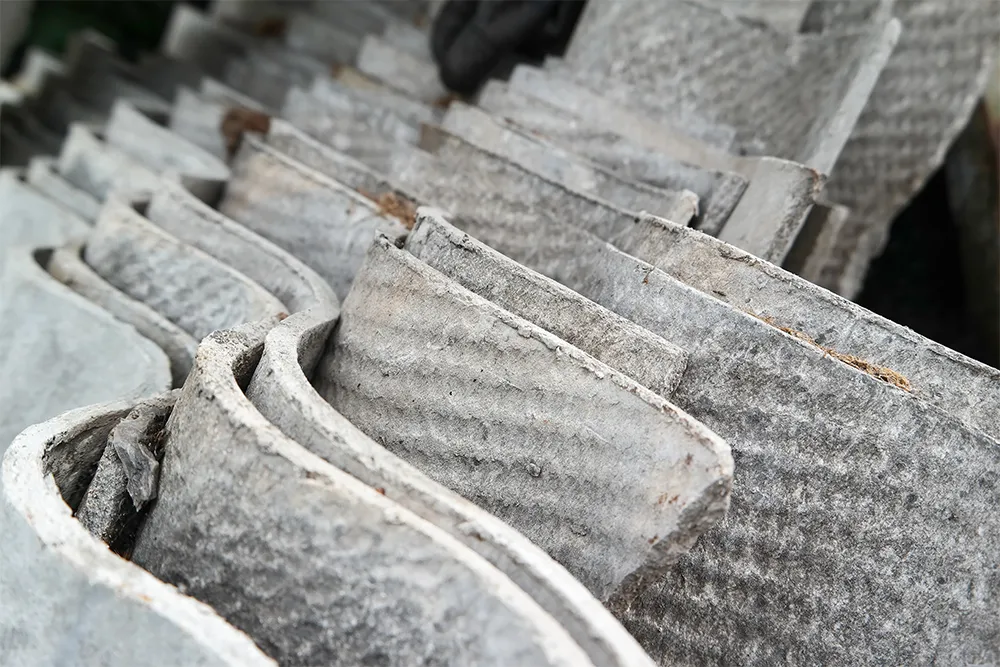
First of all, the new rules do not mean that transport was previously unsafe. Bonded asbestos waste has always been transported in sealed, dust-tight bags. However, ADR regulations do impose additional obligations on those transporting bonded asbestos waste, and these are not always as relevant to this specific type of transport. The ambition to make Flanders asbestos-safe as quickly as possible would require a large number of additional ADR-trained drivers to transport these extra tonnes in the years ahead. Those drivers simply are not available today. A pragmatic but equally safe approach was therefore needed. The parties mentioned above accordingly came together in a constructive spirit.
Driver training
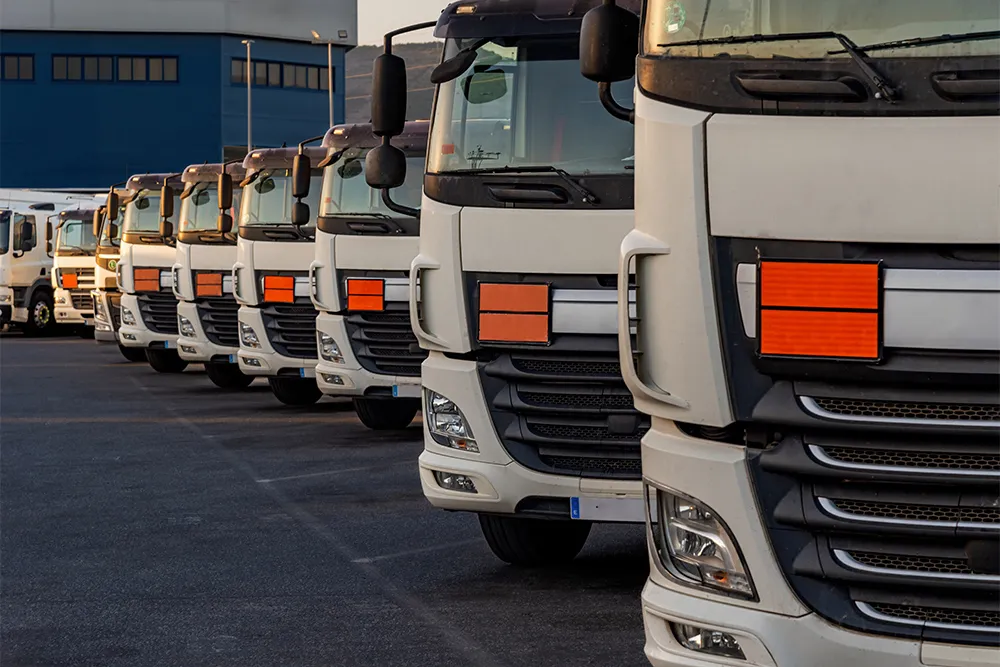
The main requirements of the asbestos protocol, in force since 1 October, are summarised in Article 6. They apply first of all to asbestos-containing materials that can be dismantled using the simple handling method. The best-known examples of these products are asbestos cement sheets and corrugated sheets. The signage required for ADR transport, the familiar orange-coloured panels, must be displayed on the lorry. Drivers must also complete specific training under code 95 (7 hours) or as part of the simple handling training. In practical terms, this training will cover asbestos, its dangers, how to handle it safely and what to do in the event of an emergency. Companies have one year to ensure their drivers complete this training. Drivers without ADR certification can also take the training and thereby drive under the asbestos protocol.
Conditions for using big bags
The second major concern is the use of big bags to package asbestos. These must ensure that no respirable asbestos fibres are released during transport. Small quantities of asbestos waste (up to 3 m³) must be carried in UN-approved big bags. For larger quantities, container bags may be used, provided they meet the conditions set out in Annex II of the protocol. These include requirements for thickness (160 mm) and a preference for a zip closure. Decisions were based on practical considerations: what is available on the market and what poses the least risk. Drivers must also have the correct PPE and documents (training certificate, individual licence, transport document, etc.).
Could the protocol be extended to other regions?
The sector has already breathed a sigh of relief at the prospect of finally having a clearer framework in which safety remains the top priority. The first transports under the new rules of the asbestos protocol are expected to get under way in the coming weeks. Companies will need a little time to prepare for the new rules. The asbestos protocol also provides for consultations every six months to assess whether everything is going well or whether further adjustments or clarification are needed. The intention is also to start discussions with the authorities in the other regions to establish a similar approach in Brussels and Wallonia.
Question about this story? Ask your question
Keep following this
Get an email when a new story is published. No account needed.
- ThemeDecontaminating waste and soil
- SubjectWaste streams