Recycling batteries better
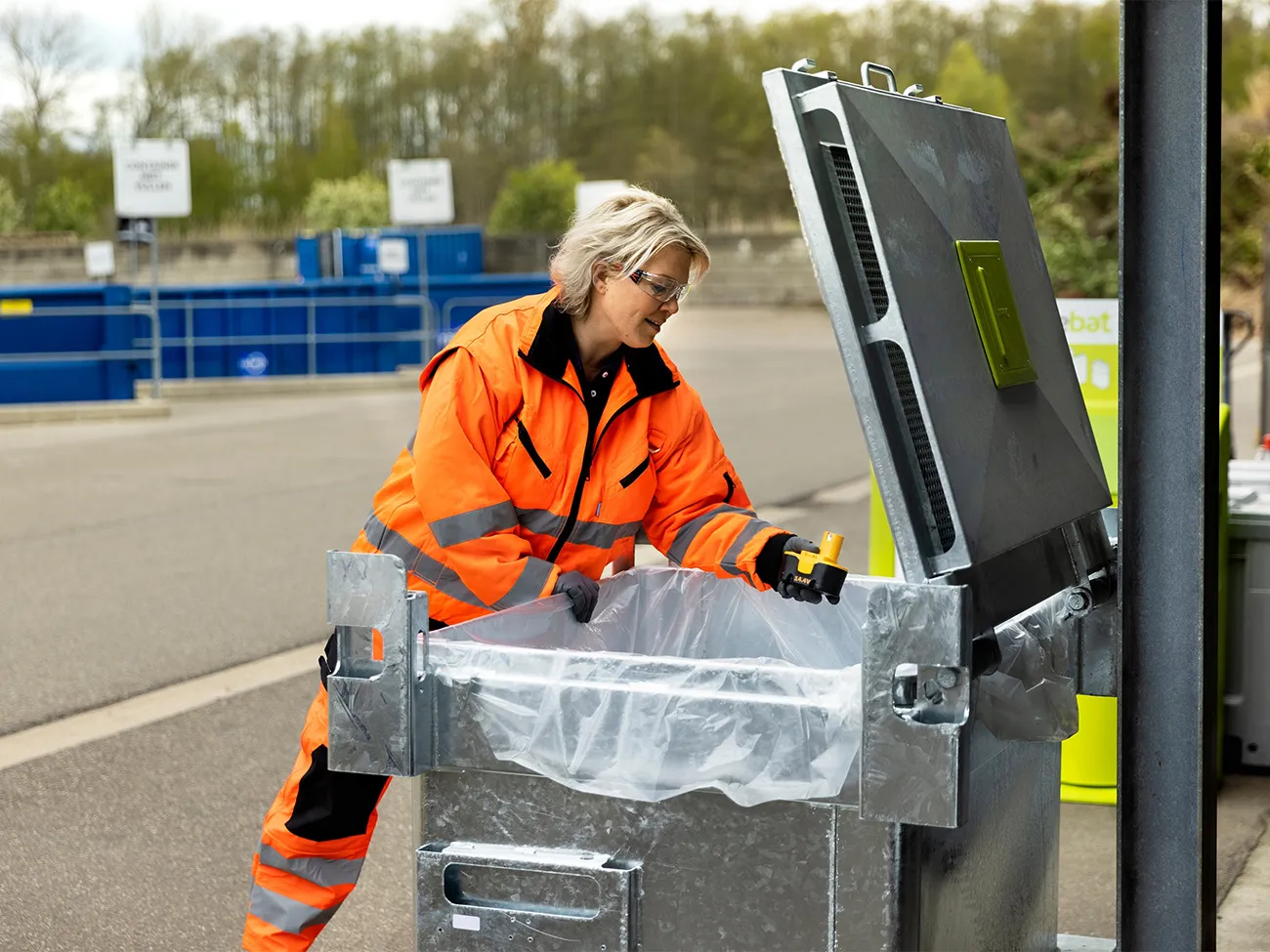
Today, one battery is still found in every 100 kg of household waste. That is one too many, especially if it is a lithium-ion battery. The management organisation Bebat is therefore continuing to do everything in its power to collect and sort more batteries as simply and safely as possible.
Founded in 1995, Bebat implements extended producer responsibility for batteries. Today, more than 4 000 companies, manufacturers of batteries or products containing batteries, are affiliated with the organisation. In Belgium, 3357 tonnes of batteries were collected in 2020. This makes us the European leader. Bebat also handles the next stage of the process: sorting the batteries. All collected batteries end up at Sortbat in Tirlemont, where 500 000 cells pass through every day. Nele Peeters: “An initiative that began ten years ago. Through four steps, manual, magnetic, mechanical and electronic sorting, we aim to supply recyclers with the cleanest possible streams of chemical families. Sortbat can boast exceptionally good figures, with a purity of 99.5%. A European record, wouldn’t you say?
Lithium-ion is still in full development
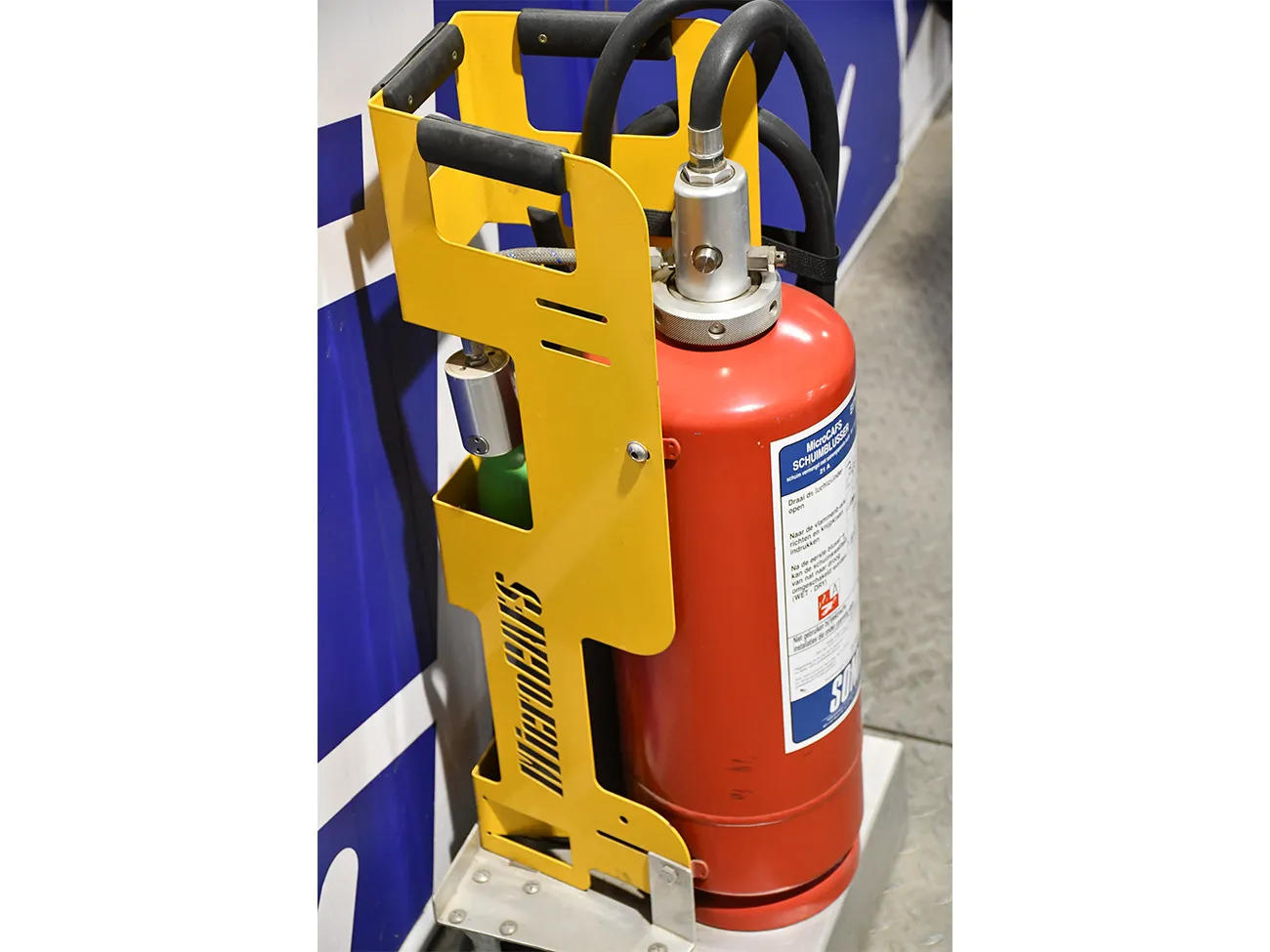
However, Bebat is far from resting on its laurels. The organisation is doing everything in its power to encourage everyone to increase and improve battery recycling. The management organisation is well aware of the problems posed by lithium-ion batteries. “Unlike conventional alkaline batteries, lithium-ion batteries contain solvents, which are flammable substances. In addition, the lithium they contain can trigger a chemical reaction when it comes into contact with water or oxygen. That is why collection and recycling professionals need to handle them with due care,” explains Hendrik Hendrickx. They are becoming increasingly popular, partly because of their high energy density, which allows them to release a lot of energy in a short time. “Furthermore, this is a technology that is still in full development. Manufacturers themselves are actively seeking a different chemical composition, to improve performance and reduce costs, but certainly also to increase safety. Solid-state batteries, for example, which contain no liquid electrolyte, are expected to hold great promise. We are also seeing batteries increasingly integrated into devices. Consumers can no longer remove them themselves, which means recyclers have an additional dismantling step to carry out, something they need to factor into their processes.”
Purpose-designed containers for better fire safety
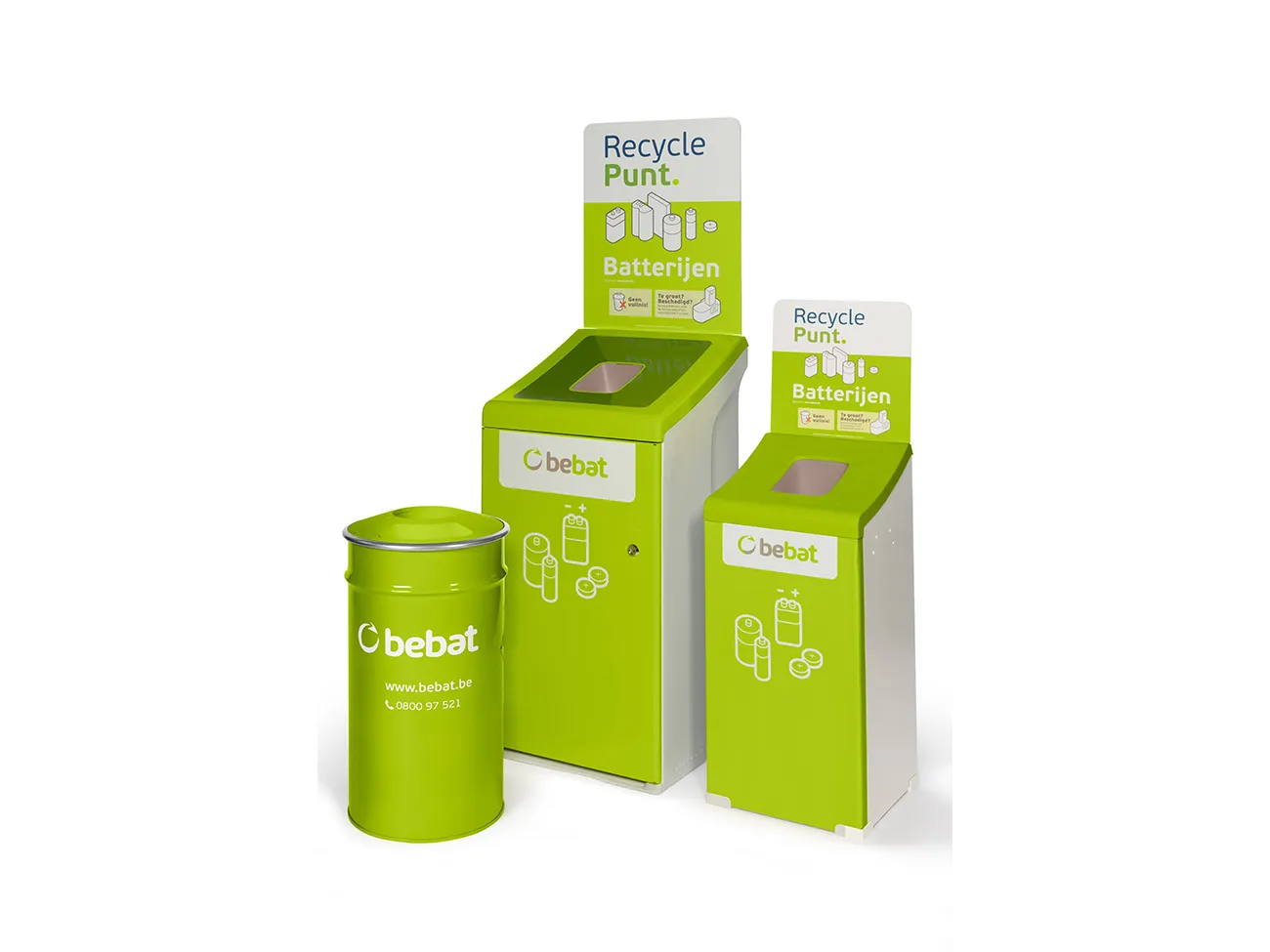
In the end, only 10 to 13% of used batteries end up in household waste. “Contamination is present in all waste streams. It is not that the sorting of lithium-ion batteries is less effective than that of other chemical families. Rather, when a sorting error occurs, it creates additional risks during treatment. In any case, we are seeing battery use become more popular,” says Hendrickx. To improve the efficiency and safety of collection, Bebat therefore had new containers developed. Peeters: “Last year, we took a close look at the collection process to see what we could improve. Powerful, large batteries can now be taken to recycling parks. Smaller batteries are still welcome at our other collection points, including schools and retail outlets.” Bebat has around 24 000 collection points in total. The organisation has also adapted the design of its containers to make things clearer. If batteries do not fit through the conical opening, they must be taken to a recycling park. “The containers were also fitted with telemetry, both to monitor when they need emptying and to keep an eye on the temperature. An alarm is triggered if the temperature inside the container rises. They are also designed to help extinguish flames in the event of a short circuit. Recycling parks are equipped with special ASP containers for collecting large and/or damaged batteries. Their construction allows them to contain a fire for up to 10 hours,” Peeters adds.
Raising awareness is crucial
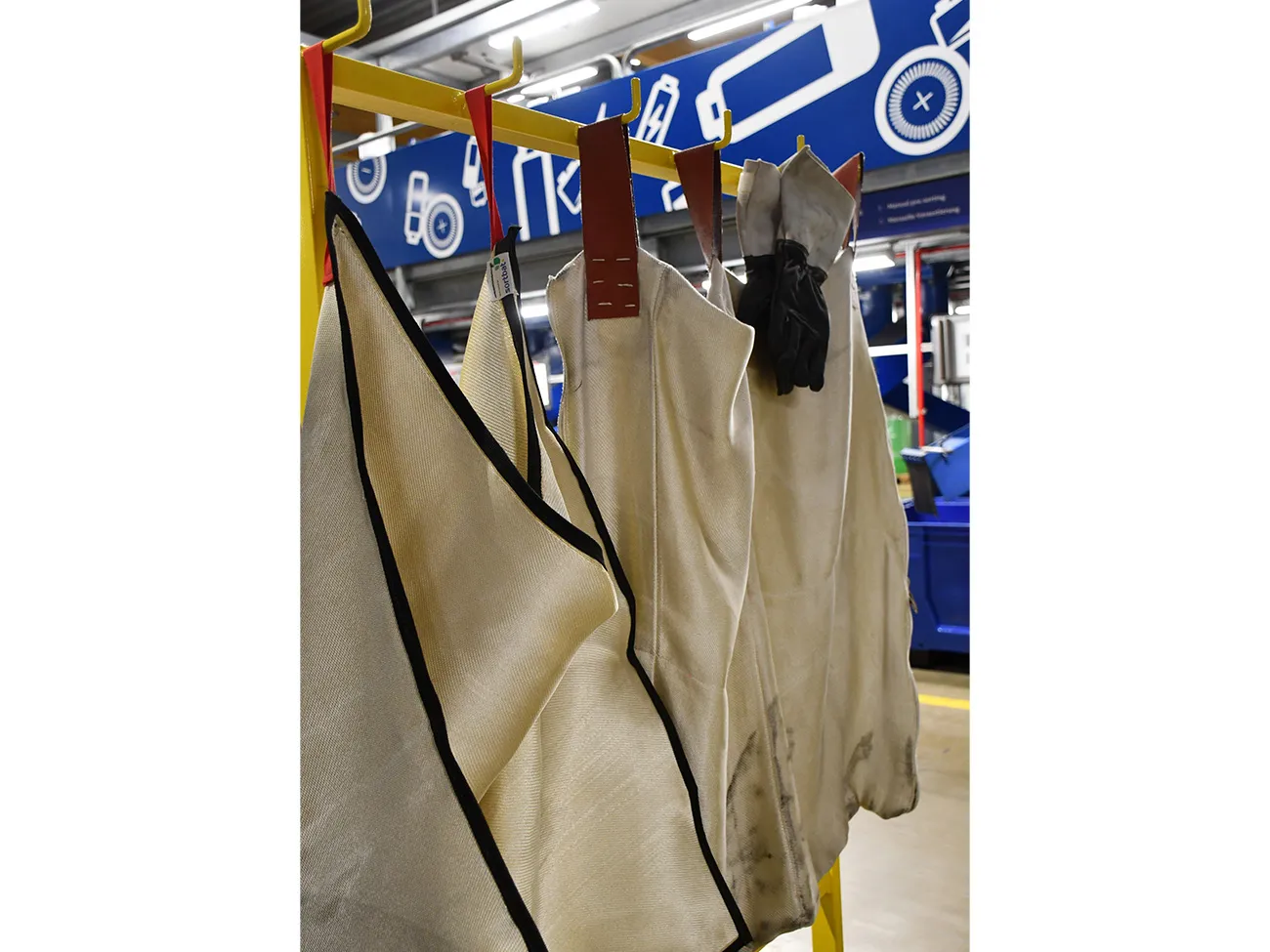
At its Sortbat sorting centre, Bebat is also setting a good example when it comes to optimising fire safety, starting with compartmentalisation. Hendrickx: “If an incident occurs, the damage is confined to part of the building.” Technology also plays a key role, with sniffers and opto-thermal cameras to detect smoke, fire blankets readily available throughout the site and suitable fire extinguishers (CAFS extinguishers). “But the most important thing is still making people aware. For example, we provide extensive training for our staff to help them identify hazards and learn to follow the correct procedures. After each shift change, containers are removed from production and placed in special storage areas. And of course, we focus on consumer awareness campaigns so that people can already sort batteries correctly at source,” Peeters concludes.
Question about this story? Ask your question
Companies in this story

Keep following this
Get an email when a new story is published. No account needed.
- ThemePreventing recycling risks
- SubjectWaste streams
- Companybebat