












An ambitious vision for Belgium
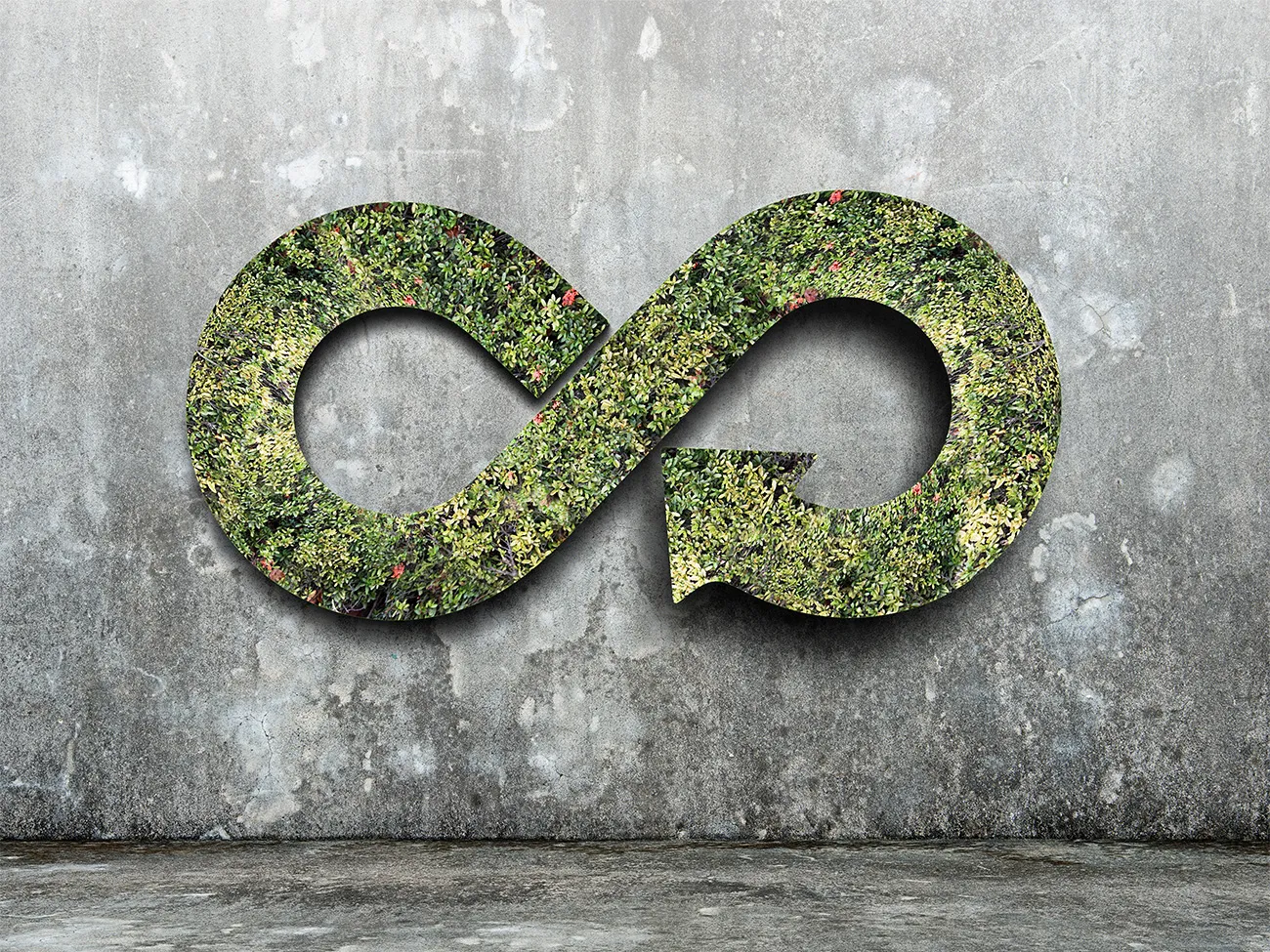
In collaboration with its member federations, the Federation of Enterprises in Belgium (FEB) has developed a vision for circularity and what it could mean for businesses. The ‘Vision Circular Economy 2030’ document aims to set out a roadmap for the next ten years, with circularity driving growth and prosperity. Vanessa Biebel, Executive Director of the Sustainability and Circular Economy Competence Centre, outlines the document’s main priorities.
Circular economy
This is not the first time the FEB has attempted to set out a vision for sustainability. Three years ago, it had already brought together information on energy and mobility. “As the FEB, it is important to point the way forward. Circularity, however, is an exceptionally broad subject that is difficult to sum up from a single perspective. That is why we are proud to have received input from so many different sectors in order to arrive at a shared vision,” says Biebel. And this vision can certainly be described as ambitious. The FEB wants Belgium to retain its current leading position and strengthen it further in the long term. “Because this is how we can guarantee the competitiveness of our businesses, create new jobs and, at the same time, secure our own supply of raw materials.”
Achieving five ambitions requires collaboration
To achieve this, the FEB has set out five ambitions: maximising the availability of materials; becoming a leader in circular design and production, circular use models and high-quality materials recovery; and making effective use of the catalysts for the circular economy. “These ambitions remain very broad, but they all point in the same direction,” explains Biebel. Achieving them will above all require greater cooperation. “Between the different administrations, both federal and regional; between the public authorities and businesses; and between businesses in all sectors. It is important for Belgium to speak with one voice in Europe to ensure a level playing field between all Member States. With this vision, we are already setting a good example.”
A supportive policy framework is needed
The FEB expects the authorities in Belgium to do everything they can to provide a supportive policy framework. Biebel says: “The feasibility of this vision is closely linked to a focus on two catalysts: innovation and an open economy. Set goals and targets, but give businesses enough room to decide how best to achieve them. Enable innovation rather than slowing it down. This is more necessary than ever. Waste does not stop at borders either. That is why it is important to create an open Europe, so that each waste stream can be treated to the highest possible standard. Covid-19 exposed many problems, including the material shortages that occurred and the resulting price rises. We must seize this momentum to drive a sustainable recovery and accelerate the transition to a circular economy.”
Benchmarking using indicators
The FEB also wants to work on benchmarking. Using the ten indicators proposed by Eurostat, it plans to produce a dashboard from next year onwards, and every two years thereafter. “This should give us an idea of how far we have come, both in relation to our own ambitions and compared with other countries. The indicators can also help identify and overcome potential legal barriers. The path to a circular economy will in any case be a step-by-step process. We are determined to work with all federations and stakeholders to make it a reality,” concludes Biebel.
Question about this story? Ask your question
Keep following this
Get an email when a new story is published. No account needed.
- SubjectNews







