Lithium-ion batteries examined and explained on a scientific basis
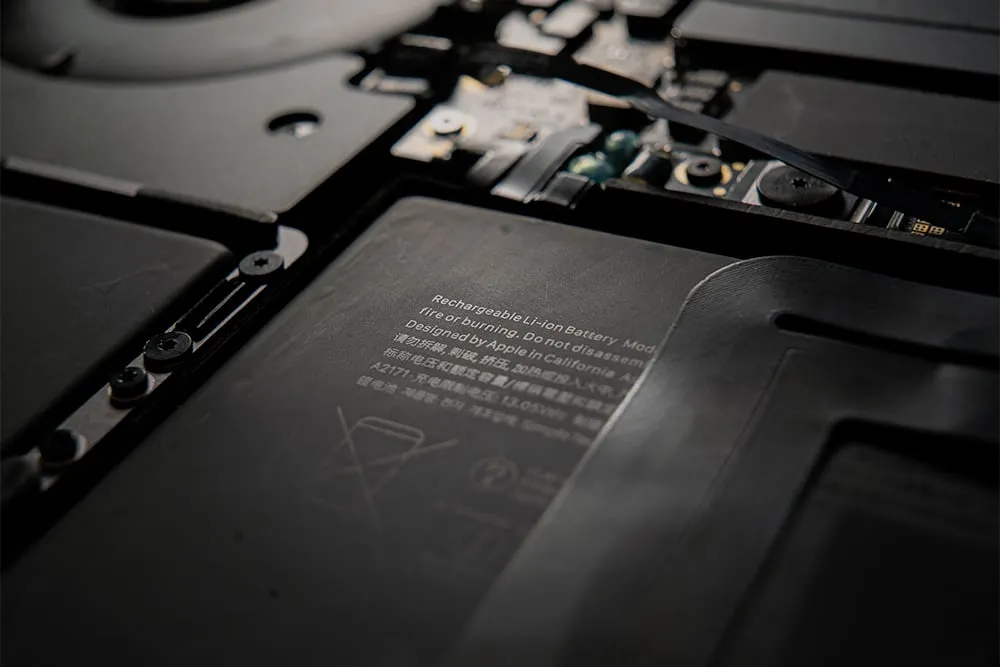
Lithium-ion batteries are transforming the recycling industry across Europe. But how does this happen? Why do they pose such a fire risk? Denuo invited Dries De Sloovere, R&D project leader at Imo-imomec, a collaboration between imec and the université d’Hasselt, to give his academic perspective on this type of battery at the battery conference on 6 November 2023. His work includes the DESINe (Design & Synthesis of Inorganic Materials) project.
The structure of lithium-ion batteries
Lithium-ion batteries should not be compared with one another or treated as a single, simple type of battery. The term is an umbrella name for a large family of batteries whose compositions can vary, and therefore so can the hazards they pose during recycling. However, the basic concept is always the same. Lithium-ion batteries consist of a cathode and an anode, separated by a separator. The separator is a thin, porous plastic film permeated by a liquid, flammable electrolyte. It must prevent the cathode and anode from coming into contact, as this could cause a short circuit.
The quest for greater energy density
The materials used for cathodes and anodes have undergone several changes over the years. The search for a new type of battery began because the energy density of batteries such as lead-acid and nickel-cadmium batteries was limited. This search led scientists to lithium, which is hardly surprising: it is the lightest metal and has the lowest reduction potential. The downside is its extremely high reactivity. Research has therefore focused on taming it.
A snowball effect in the event of a short circuit
If a short circuit occurs inside the battery, it can trigger a chain reaction, with the heat generated increasing steadily. When the temperature exceeds 130 °C, the separator begins to melt. All the elements are then in place for a catastrophic reaction: oxygen, flammable gases and heat. The batteries may then ignite spontaneously or, in some cases, explode.
Mechanical damage as the main cause
How quickly this happens depends on how quickly heat builds up. The cause of the initial short circuit is an important factor. Possible causes include dendrite formation, often due to using an unsuitable charger that overcharges the batteries, or a lower-quality separator. But the number one cause is mechanical failure, such as a shredder’s teeth breaking the battery. If the battery is fully compressed, a massive discharge follows, releasing a large amount of energy. Things can then catch fire very quickly.
The batteries of tomorrow
According to Mr De Sloovere, lithium-ion batteries are no more dangerous in themselves than other types, unless they contain lithium metal, but that era is over. Nevertheless, future batteries will need to do more to counter the chain reaction that occurs today.
He points, for example, to anodes that do not release oxygen, flame-retardant additives in the electrolyte, the development of a non-flammable variant or a solid electrolyte, and separators capable of providing thermal shutdown.
There is no shortage of possible approaches, or of funding from Europe. But the research now under way will not produce tangible, marketable results for around ten years. The recycling industry does not have that kind of time.
Question about this story? Ask your question
Keep following this
Get an email when a new story is published. No account needed.
- ThemePreventing recycling risks
- SubjectDenuo